Sign in to save

Bookmark this page so you can find it later.

Sign in to save

Bookmark this page so you can find it later.

Chemistry high-school May 21, 2026

Why Does Water Boil Faster at High Altitude?

Pressure changes the boiling point
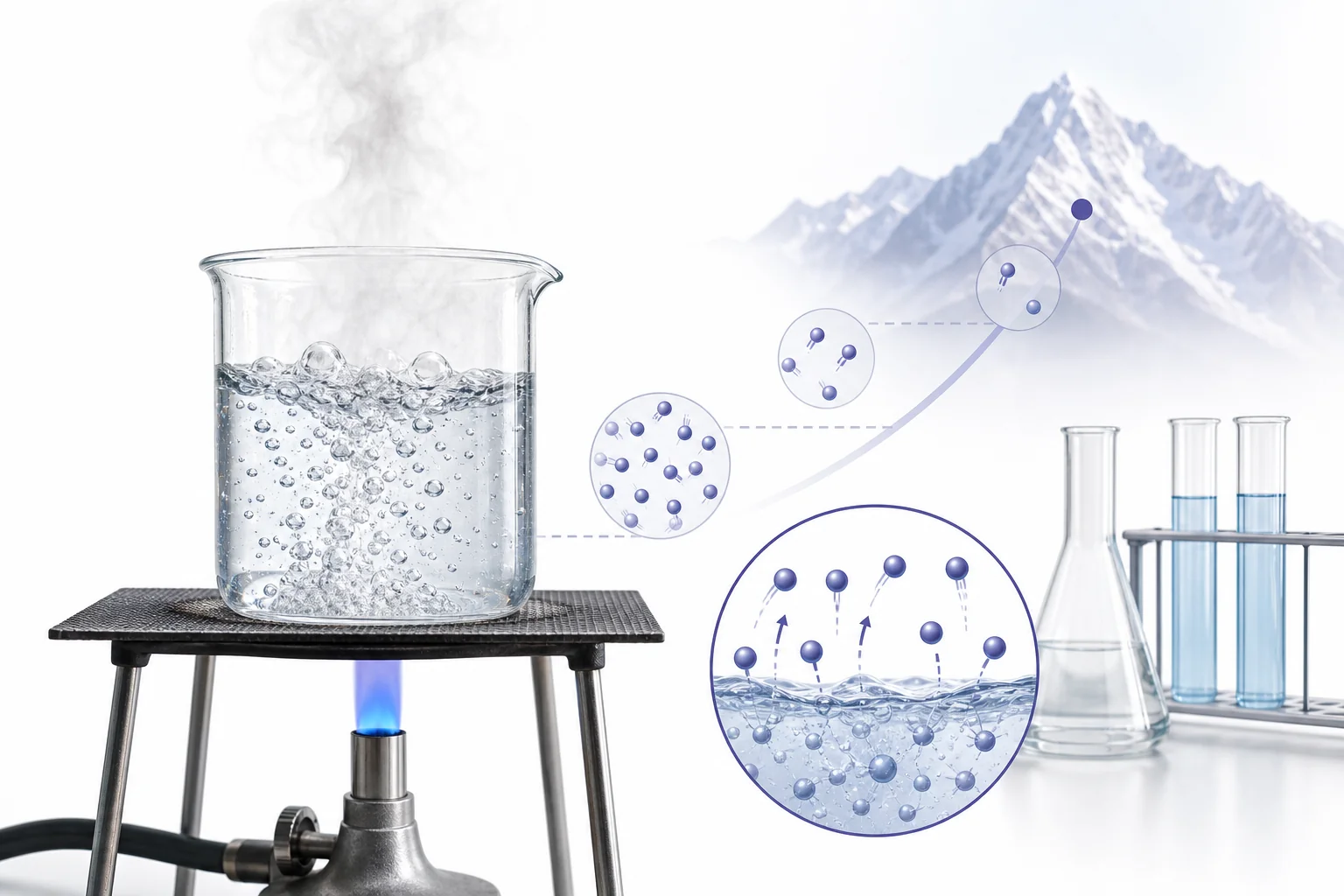
A pot of water boiling on a mountain stove with a lower atmospheric pressure gauge beside it

Water starts boiling at a lower temperature when the air pressure is lower. High places have lower air pressure, so water reaches boiling sooner. The water may boil faster, but food can cook more slowly because the boiling water is not as hot.

Big Idea. NGSS HS-PS1-3 connects boiling point changes to how particles interact and how pressure affects matter at the bulk scale.

A pot of water can begin bubbling sooner on a mountain than it does near the ocean. The key is not the stove. The key is the air above the water. At sea level, air presses down harder on the surface of the liquid. At high altitude, there is less air above you, so the pressure is lower. Water boils when its vapor pressure matches the pressure pushing on it. With less outside pressure, water does not need to get as hot before bubbles can form and rise. That is why boiling can start at a lower temperature. This helps explain a common kitchen surprise. Pasta, rice, and eggs may take longer to cook at high altitude, even though the water began boiling sooner. The word boiling describes bubble formation, not how hot the water is. Chemistry links the visible bubbles to particle motion, energy, and pressure.

Boiling needs a pressure match
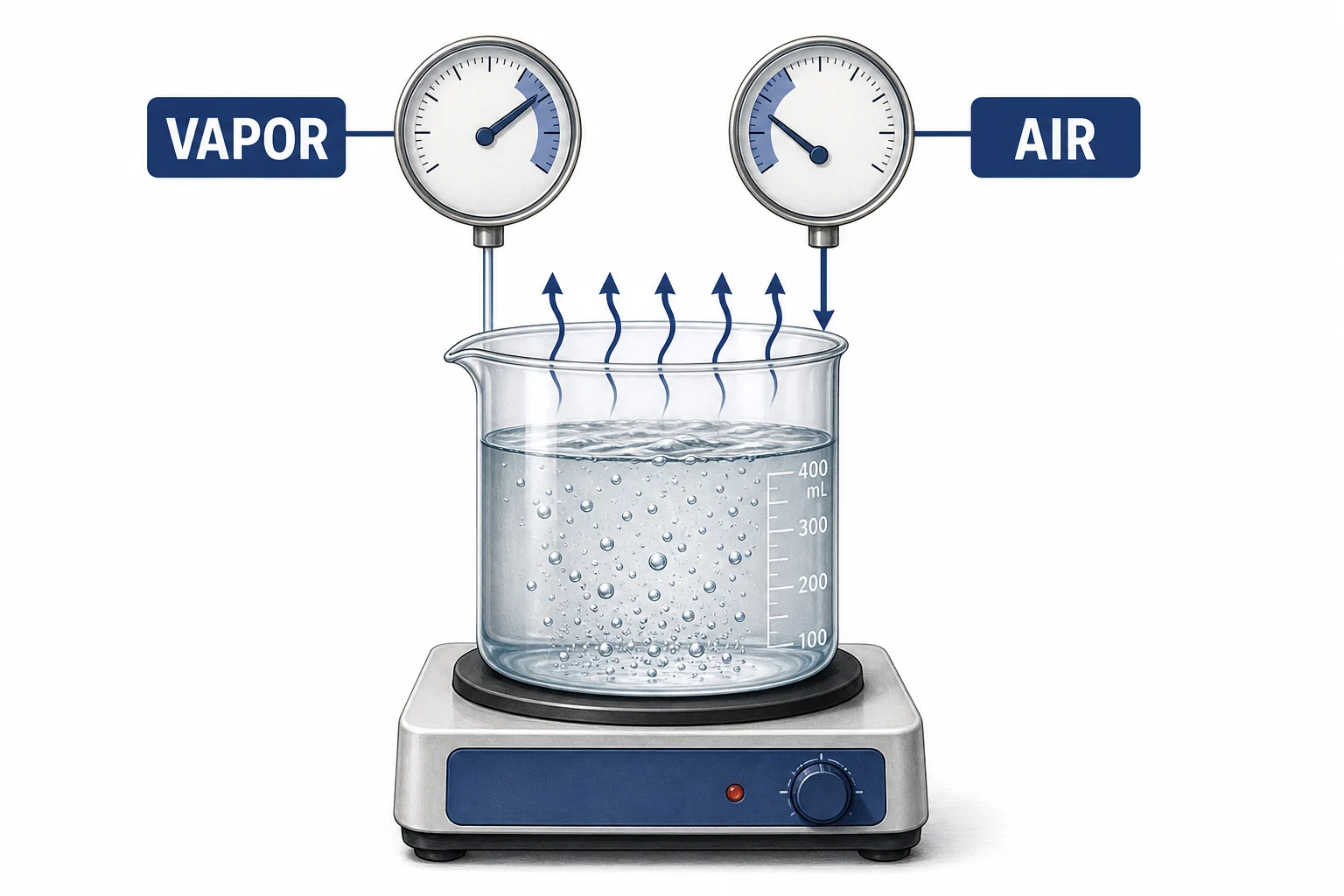
Diagram showing vapor pressure from water matching the air pressure above the liquid as bubbles form
Boiling starts when vapor pressure matches air pressure
Liquid water is always losing some molecules from its surface. Those molecules become water vapor. As temperature rises, more water molecules have enough energy to escape. That raises the vapor pressure of the water. Boiling begins when vapor pressure becomes strong enough to match the pressure around the liquid. Then vapor bubbles can form inside the liquid instead of only at the surface. At sea level, the surrounding air pressure is about one atmosphere. Water must reach about 100 degrees Celsius for its vapor pressure to match that. At a mountain town, the outside pressure is lower. The match happens at a lower temperature. This is why boiling point is not a fixed property under every condition. It depends on pressure. The chemistry idea is simple. Particles move faster when heated, but the outside pressure sets the temperature at which bubbles can survive.

Boiling is a balance between water vapor pressure and outside air pressure.

Altitude lowers air pressure
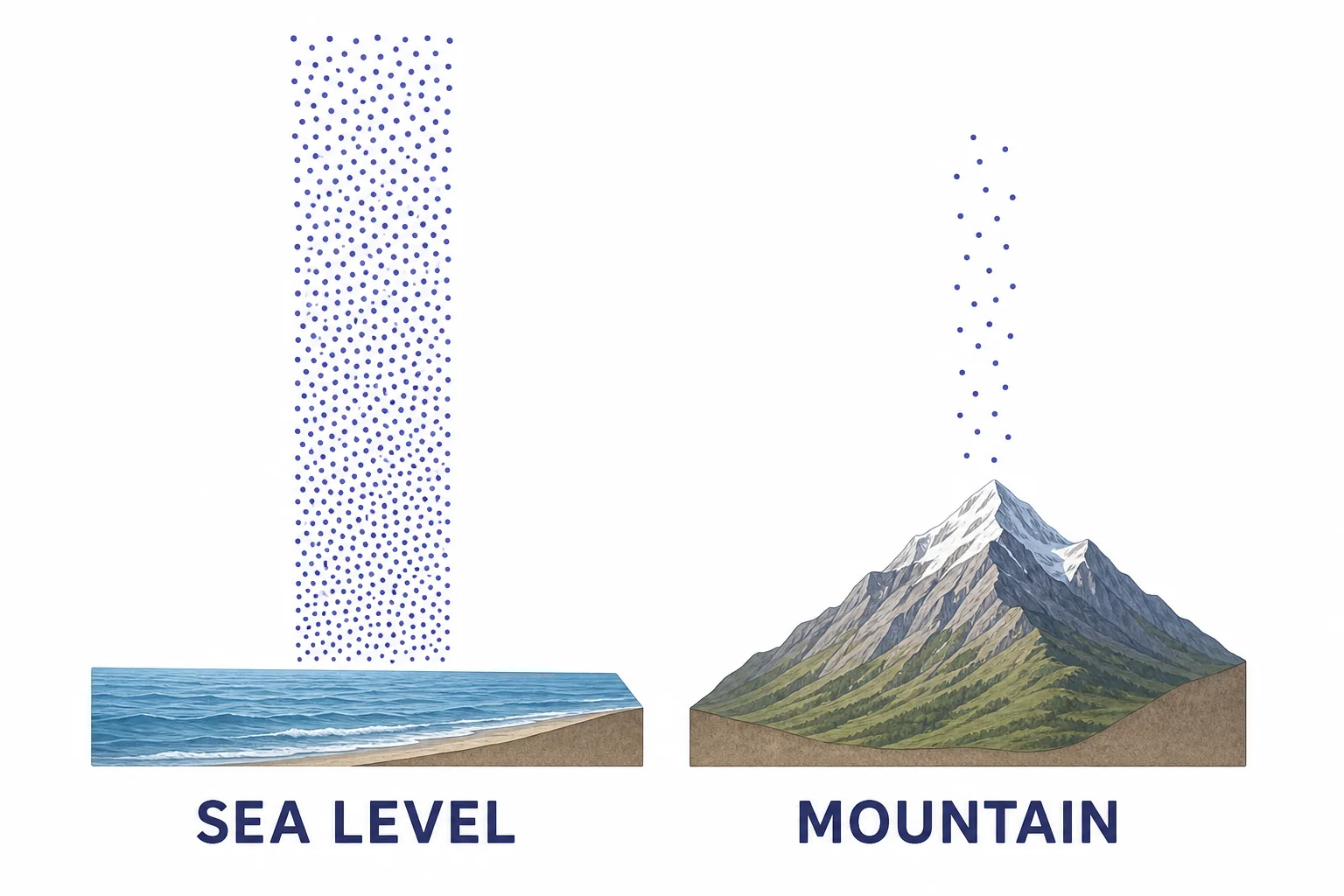
Comparison of a sea level location and a mountain location with different air columns above them
Higher altitude means less air above you
Air pressure comes from the weight of the air above a place. Near sea level, there is a tall column of air overhead. That column presses on everything, including the surface of a pot of water. On a mountain, part of that air column is already below you. Less air remains above you, so the pressure is lower. The change is steady enough that weather reports and cooking guides can estimate boiling temperatures from altitude. The air is not gone at high altitude. It is just thinner, which means fewer gas particles strike each square centimeter each second. Those impacts are what we measure as pressure. A lower outside pressure makes it easier for water vapor bubbles to expand. Because the bubbles do not need as much energy to survive, the boiling point drops. This is a pressure effect, not a change in the chemical identity of water.

Less air above a place means lower atmospheric pressure.

Lower pressure lowers the boiling point
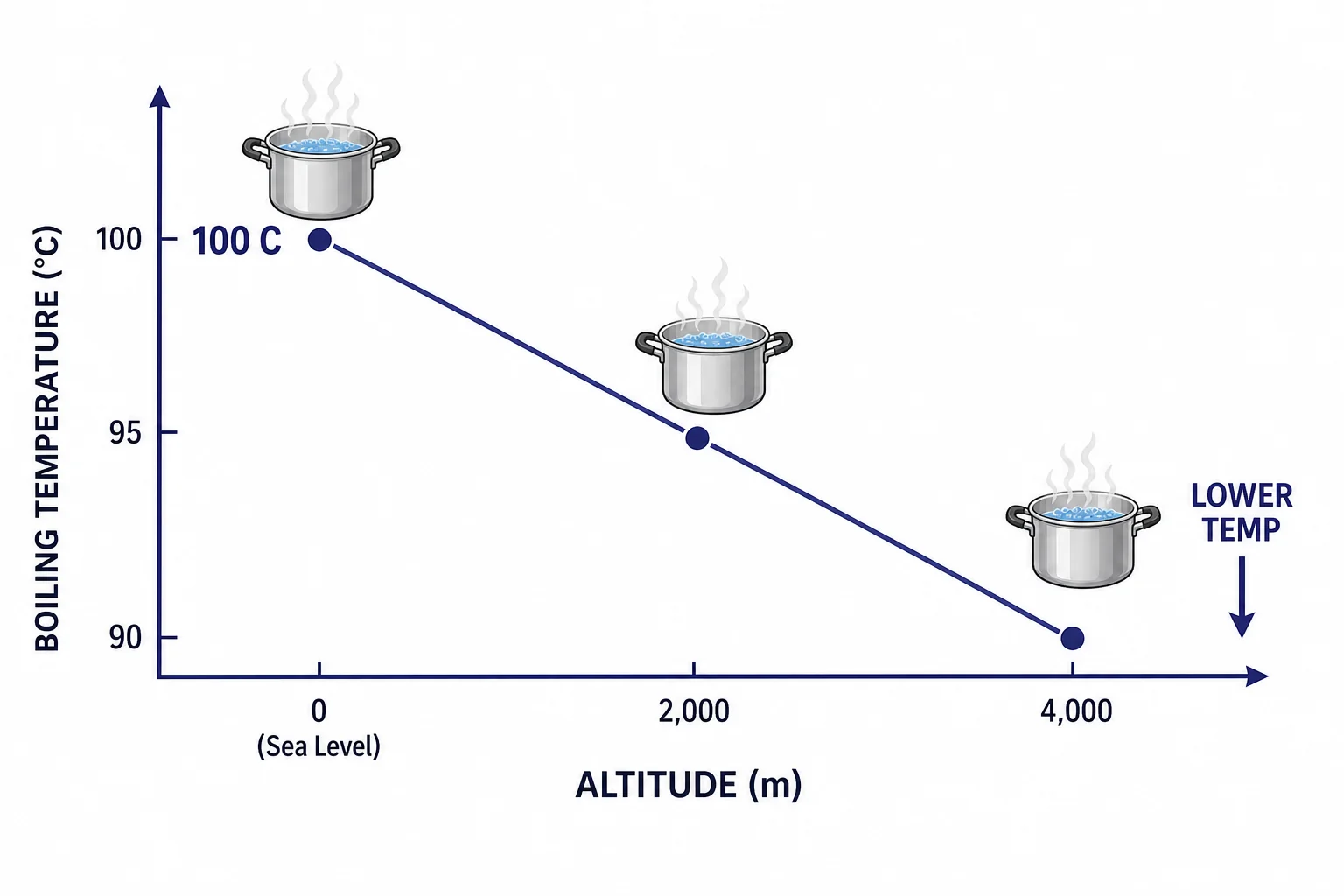
Graph showing water boiling point decreasing as altitude increases
Boiling point decreases as altitude increases
At sea level, pure water boils near 100 degrees Celsius. In Denver, which is about 1,600 meters above sea level, water boils near 95 degrees Celsius. At even higher elevations, the boiling point can drop more. The pattern is not magic. It follows the same vapor pressure rule. Heat raises the vapor pressure of the water. Lower air pressure means the target is easier to reach. The equation idea can be written as $P_{\\text{vapor}} = P_{\\text{air}}$ at the boiling point. This is also why a pressure cooker works in the opposite direction. A pressure cooker traps steam and raises the pressure above the water. The boiling point rises, so the liquid water can become hotter than 100 degrees Celsius before it boils strongly. High altitude and pressure cooking are two sides of the same pressure story.

A lower pressure match happens at a lower temperature.

Boiling sooner is not cooking faster
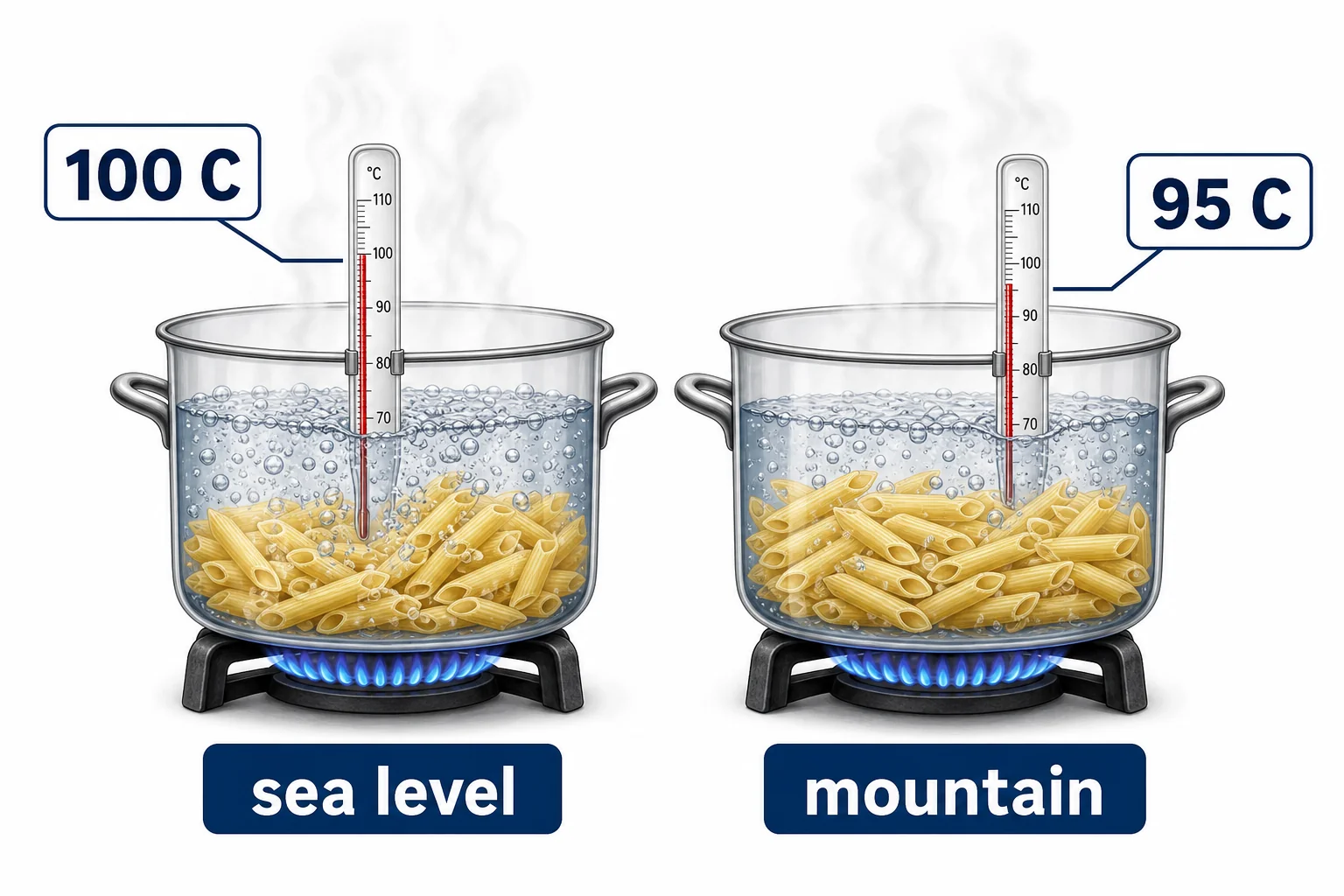
Two pots boiling at different temperatures with pasta cooking more slowly in the cooler high altitude pot
Boiling can start sooner while cooking takes longer
The phrase boils faster can be confusing. At high altitude, water can begin to boil after less heating because the boiling temperature is lower. That does not mean the boiling water transfers more heat to food. In fact, the boiling water is cooler than boiling water at sea level. Many foods cook by reaching a certain internal temperature and by letting chemical and physical changes happen over time. Starch in pasta absorbs water and softens. Proteins in eggs unfold and set. Tough plant tissues break down. Cooler boiling water slows many of these changes. That is why high altitude recipes often call for longer cooking times or different equipment. The bubbles are not the whole story. Bubbles show that water vapor is forming inside the liquid. They do not guarantee that the water is at the same temperature in every kitchen.

Bubbles show boiling, but temperature controls cooking speed.

A lab you can model safely
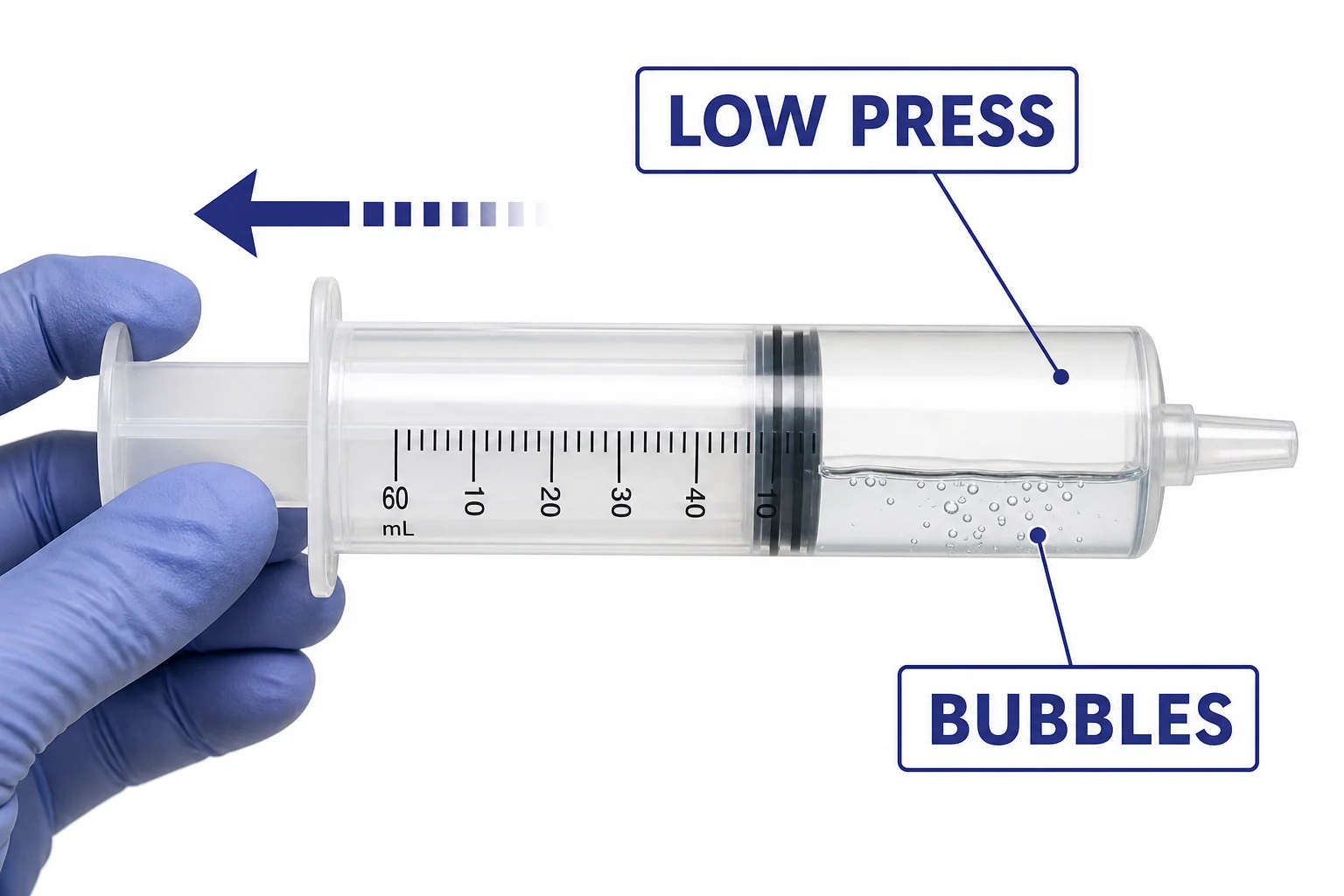
A syringe model showing warm water forming bubbles when the plunger lowers pressure
Lowering pressure can make warm water bubble
Students can model the idea without traveling to a mountain. A sealed syringe with a small amount of warm water can show how pressure affects phase change. When the plunger is pulled back, the pressure above the water drops. If the water is warm enough, tiny bubbles may appear because the lower pressure lets some water change into vapor. This is a classroom model, not a cooking setup. It makes the invisible pressure change visible. Another safe comparison uses data. Students can graph altitude and boiling point for several cities. The graph should slope downward as altitude increases. They can connect each point to the particle model. At higher altitude, fewer air particle collisions push on the liquid surface. That lowers the pressure needed for bubbles to grow. The same concept helps explain pressure cookers, vacuum chambers, and why recipes change in mountain towns.

Changing pressure can change when boiling begins.

Vocabulary

Atmospheric pressure
The force from air particles pushing on a surface because of the weight of the air above it.
Vapor pressure
The pressure made by vapor particles above a liquid when particles leave the liquid and enter the gas phase.
Boiling point
The temperature at which a liquid boils because its vapor pressure matches the pressure around it.
Altitude
Height above sea level.
Phase change
A change from one state of matter to another, such as liquid water changing into water vapor.

In the Classroom

Altitude boiling point graph

25 minutes | Grades 9-12

Give students boiling point data for several cities at different elevations. Students graph the data, identify the trend, and explain it using pressure and particle collisions.

Syringe pressure model

20 minutes | Grades 9-12

Use a teacher controlled syringe demo with warm water to show bubbles forming when pressure is lowered. Students sketch the particle model before and after the plunger is pulled.

Pressure cooker comparison

15 minutes | Grades 9-12

Students compare high altitude cooking with pressure cooking. They write a short explanation of why one lowers the boiling point while the other raises it.

Key Takeaways

  • Water boils when its vapor pressure matches the surrounding air pressure.
  • Air pressure decreases with altitude because there is less air above you.
  • Lower air pressure lowers the boiling point of water.
  • High altitude water can boil sooner but at a lower temperature.
  • Food often cooks more slowly at high altitude because the boiling water is cooler.