How Do Fossils Form?
From buried remains to rock records
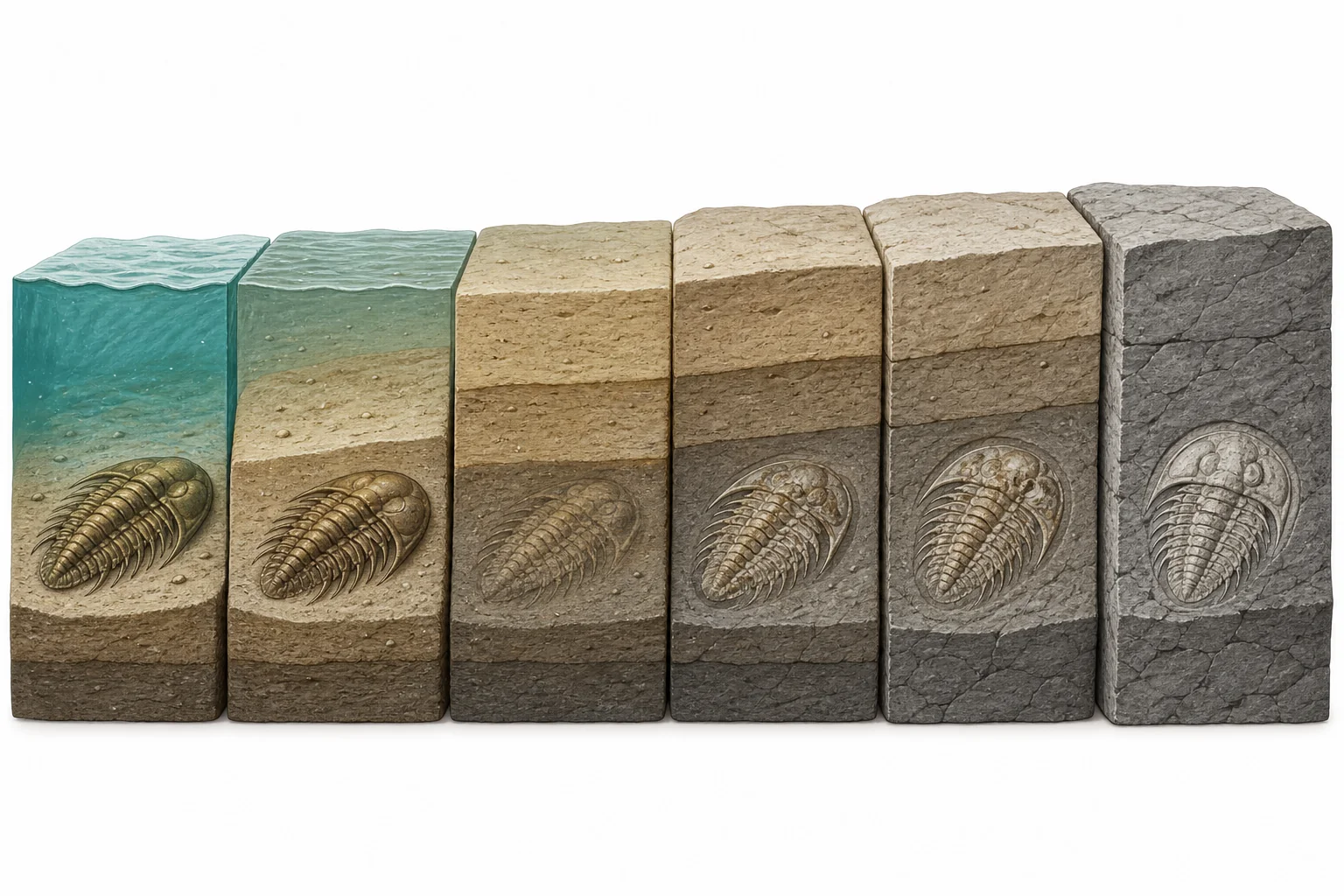
Fossils form when dead plants or animals are buried quickly by mud, sand, or ash. Over a very long time, the buried parts can leave a mold or be changed into rock by minerals in water. Many dead things never become fossils because they rot, are eaten, or are crushed before they are buried.
A fossil is a clue from life long ago. It might be a bone, a shell, a leaf print, a footprint, or even animal waste that hardened in rock. Fossils do not form from most living things. A dead organism usually gets eaten, broken apart, or rots away. Fossil formation needs special conditions. Quick burial is one of the most important. Mud, sand, or ash can cover remains and protect them from air, waves, and scavengers. Then time does the slow work. Layer after layer piles up. Water moves through the buried material. Minerals can fill tiny spaces, harden around a shape, or replace parts of the remains. This process takes far longer than a human life. Fossils help scientists compare rock layers and learn how life and environments changed across deep time.
Quick burial starts the process
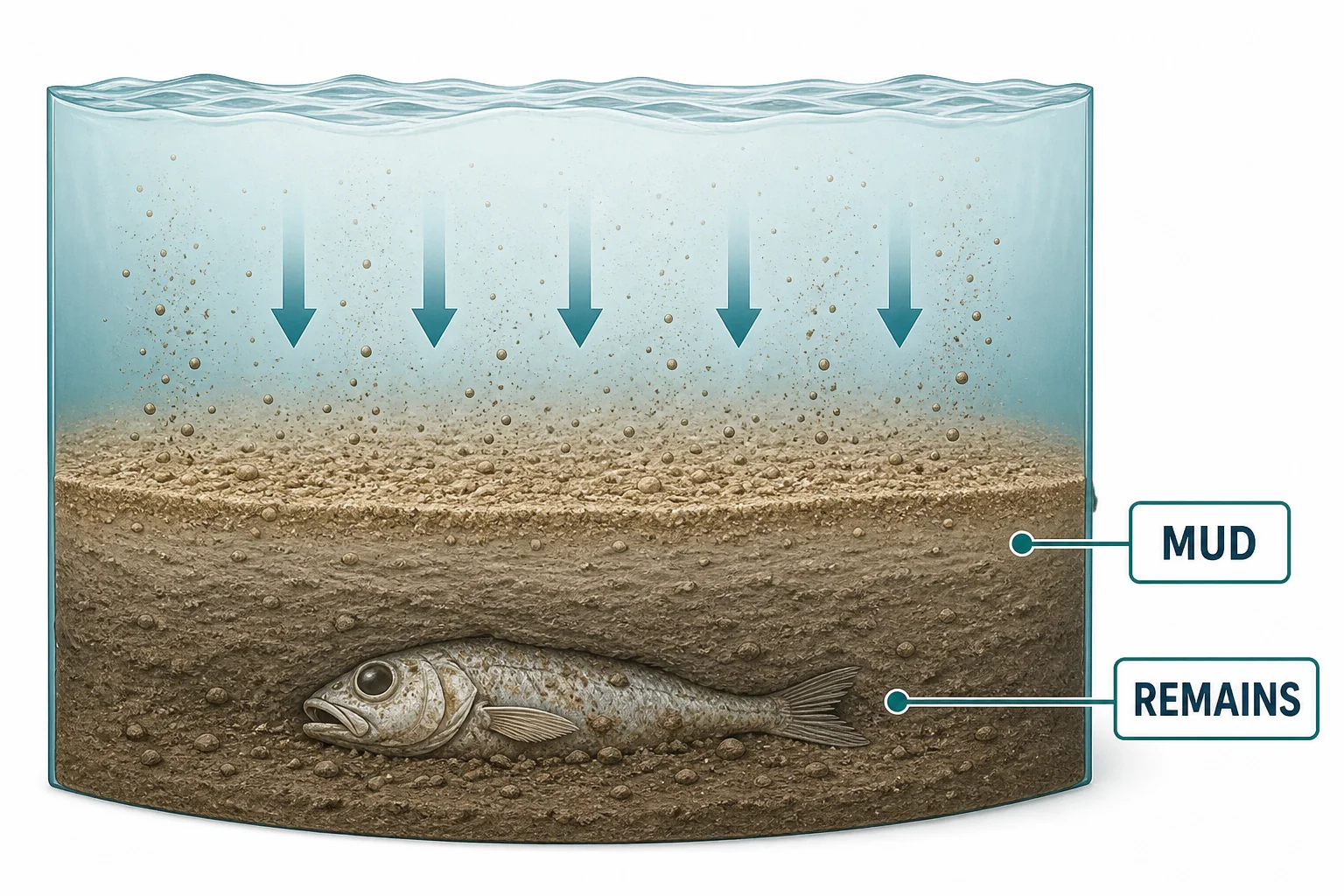
Fast burial gives remains their best chance to last.
Layers build over time
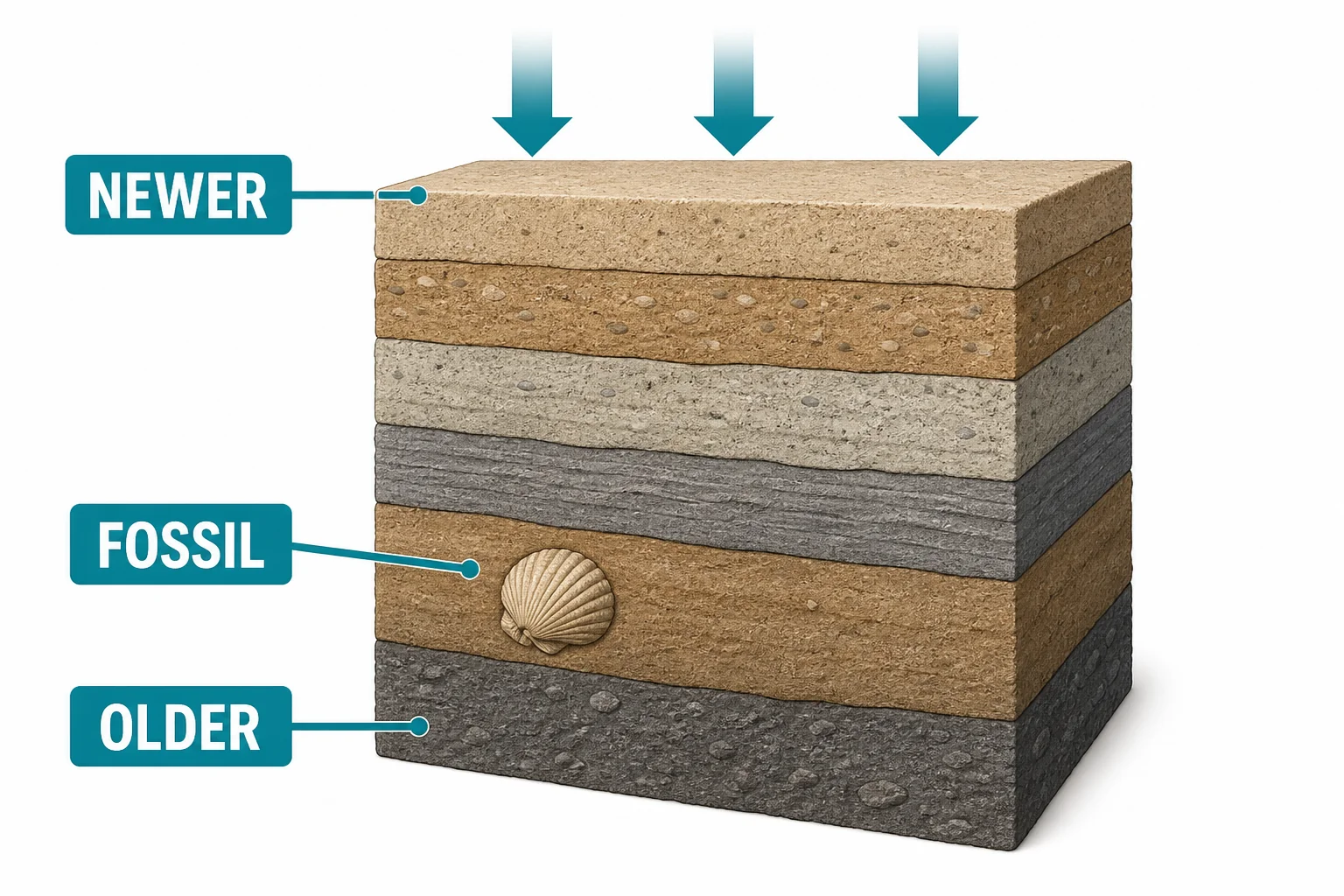
Sedimentary layers can preserve both fossils and the order of events.
Minerals fill tiny spaces
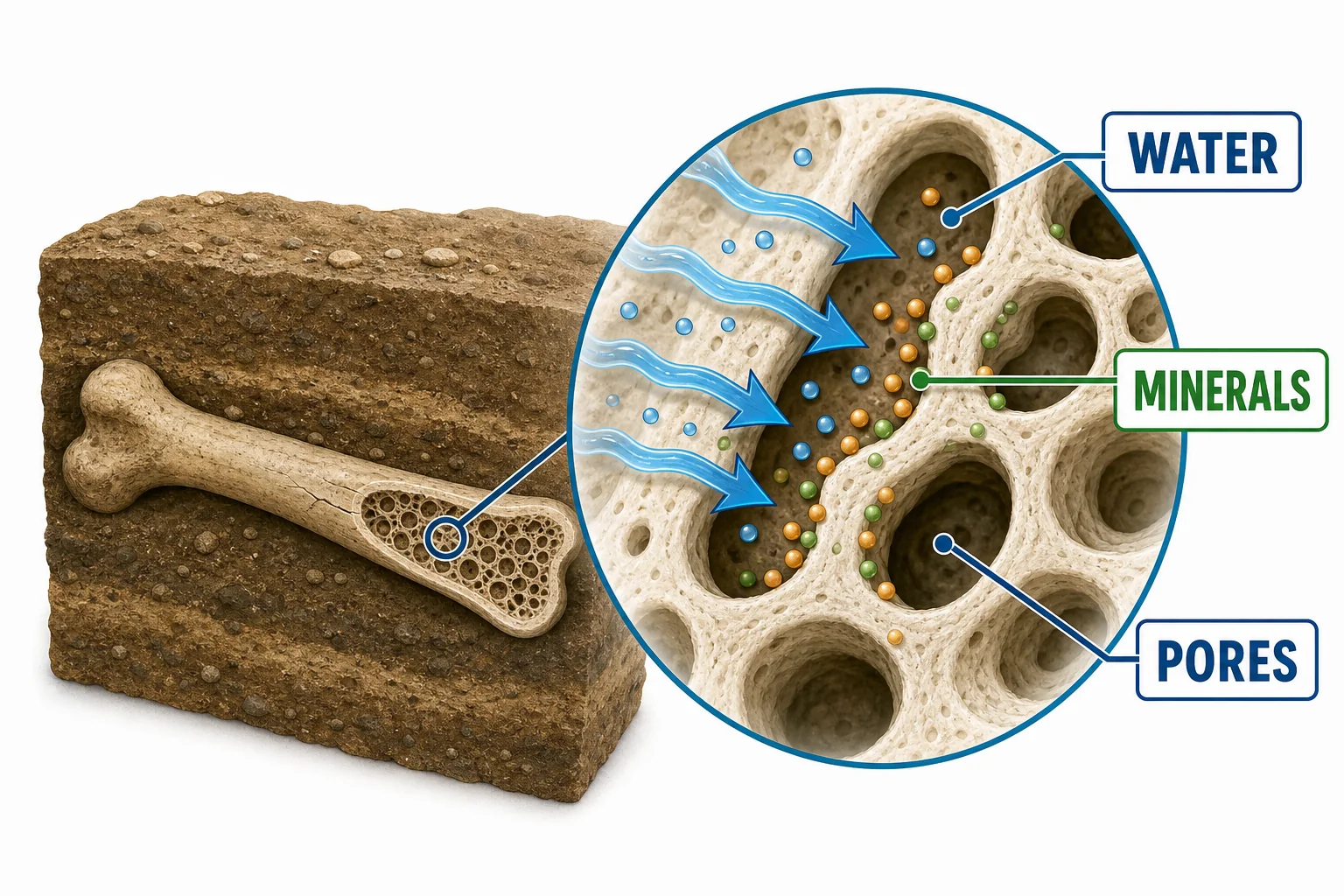
Minerals can turn hard parts into stone-like fossils.
Sometimes the original material is replaced
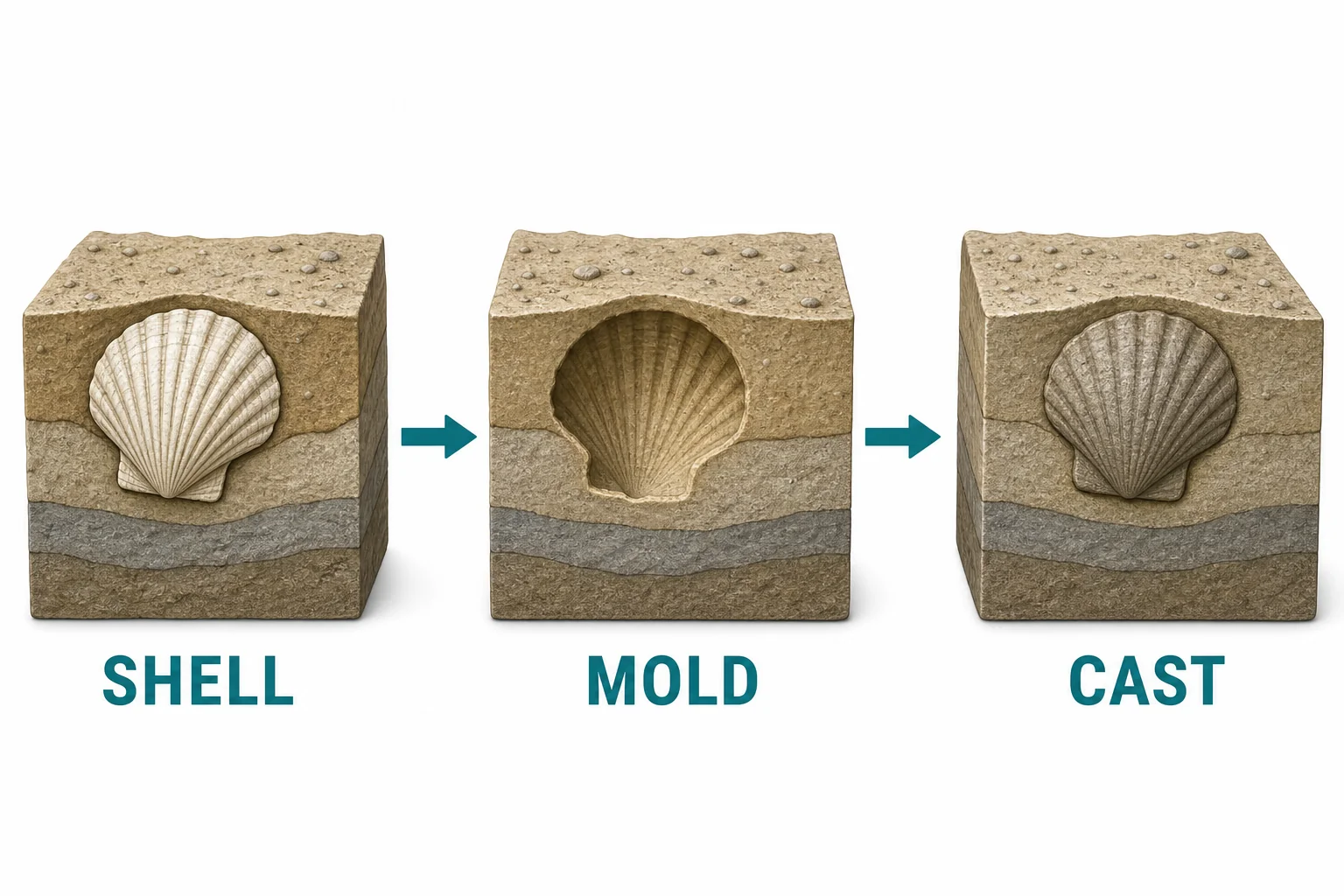
A fossil can be a copy of a shape, not the original body.
Fossils show deep time
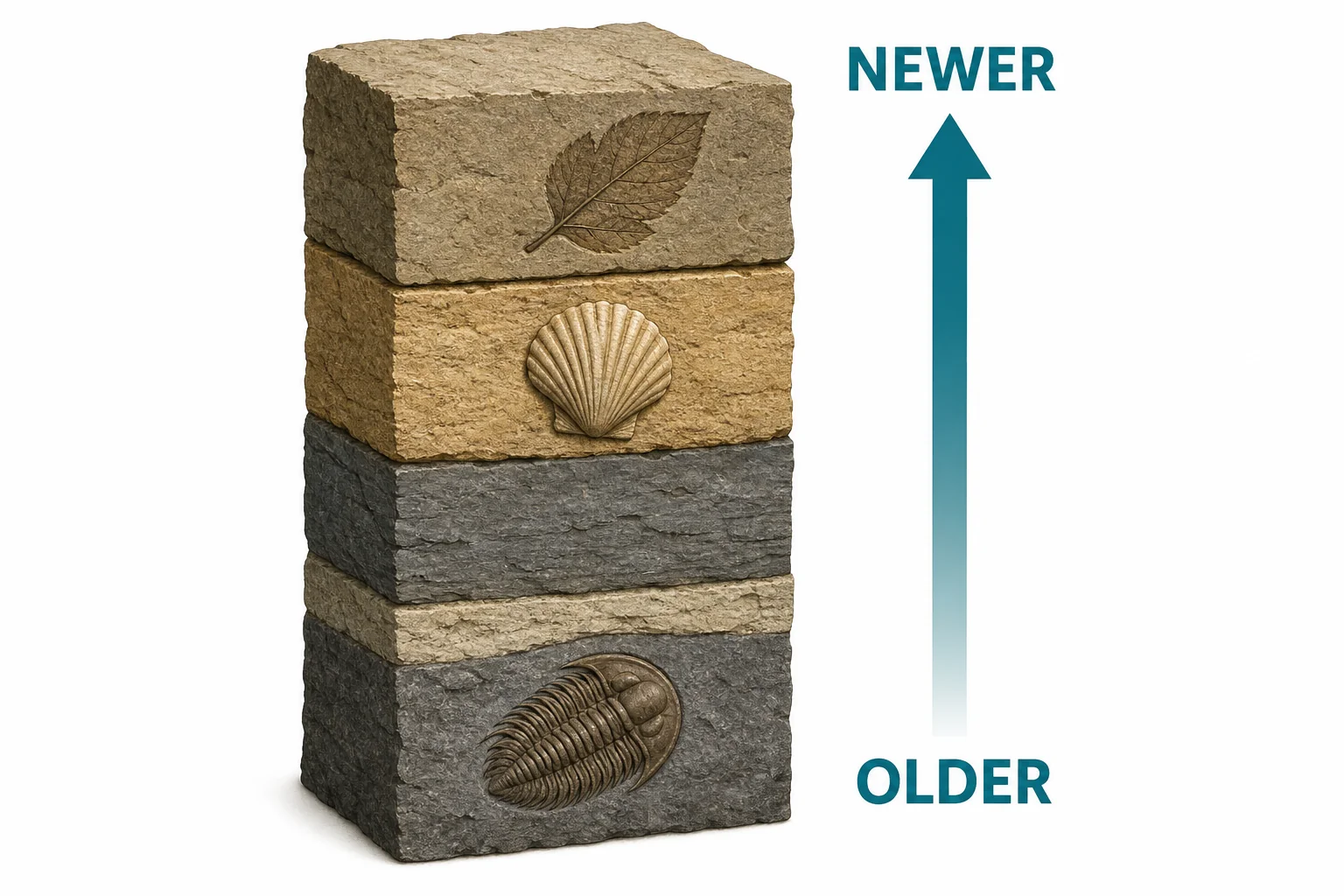
Fossils help connect living things to Earth's long history.
Vocabulary
- Fossil
- Preserved evidence of a plant, animal, or other living thing from the past.
- Sediment
- Loose pieces of rock, mud, sand, shells, or ash that can settle in layers.
- Sedimentary rock
- Rock made when layers of sediment are pressed and cemented together.
- Mineralization
- The process in which minerals fill tiny spaces in remains and help them harden.
- Replacement
- The process in which original material dissolves and minerals take its place.
- Deep time
- The very long span of Earth history, measured in millions and billions of years.
In the Classroom
Make a fossil mold
20 minutes | Grades 3-5
Students press shells, leaves, or toy animal feet into soft clay to make molds. They compare which objects leave the clearest details and discuss why hard parts fossilize more often than soft parts.
Layer a mini rock record
25 minutes | Grades 4-6
Students build colored sand or paper layers in a clear cup or on a tray. They place small paper fossils in different layers, then explain which fossils are older and which are younger.
Sort fossil formation stories
30 minutes | Grades 5-8
Students read short event cards such as burial, decay, mineral filling, and erosion. They put the cards in an order that could form a fossil, then revise the order when a new event is added.
Key Takeaways
- • Most living things do not become fossils.
- • Quick burial by sediment helps protect remains from being destroyed.
- • Sedimentary rock is the most common place to find fossils.
- • Minerals in groundwater can fill spaces or replace original material.
- • Fossils and rock layers help scientists study Earth's deep past.