How Do Rivers Carve Canyons?
How flowing water cuts rock over time
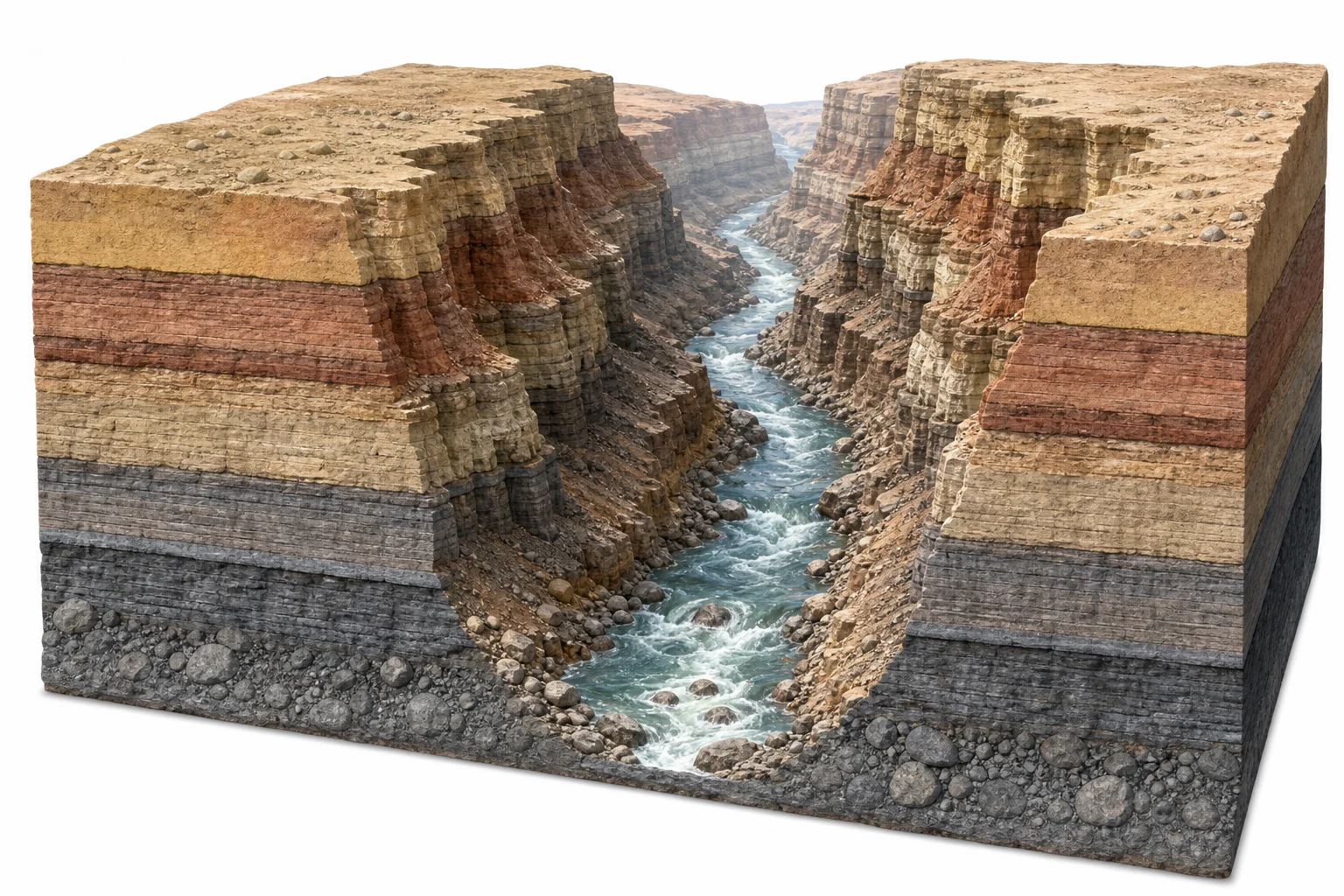
Rivers carve canyons by wearing away rock and carrying the pieces downstream. Fast water and sand or gravel scrape the riverbed, so the channel can cut deeper over time. Gravity, floods, rock type, and time help decide whether a canyon becomes deep, wide, or both.
A canyon is not just a crack in the ground. It is a record of water, rock, gravity, and time working together. A river carries energy as it flows downhill. Some of that energy moves water forward. Some of it lifts and pushes sand, gravel, and larger rocks. Those pieces act like tools. They bump, scrape, and grind the channel bed. Over many floods and many quiet seasons, the river can cut into the land. This is how a valley can become deeper. Canyon walls also change. Weathering breaks rock apart, and gravity pulls loose pieces downhill. That widens the canyon as the river keeps removing material from the bottom. The Grand Canyon is a famous example, but the same processes happen in smaller streams, schoolyard gullies, and river valleys around the world.
Water carries cutting tools
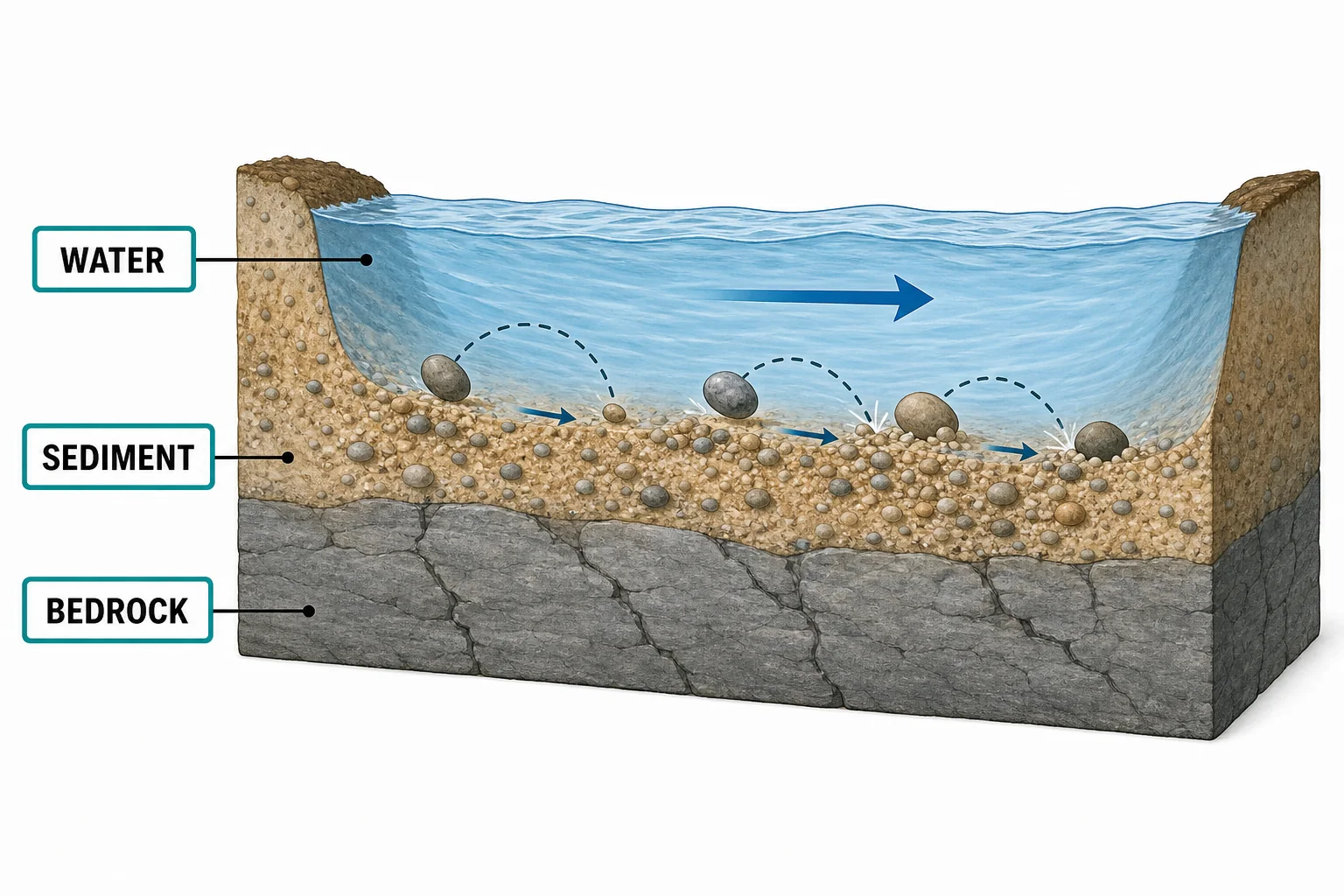
A river cuts fastest when it carries enough sediment to scrape rock.
Downcutting makes canyons deep
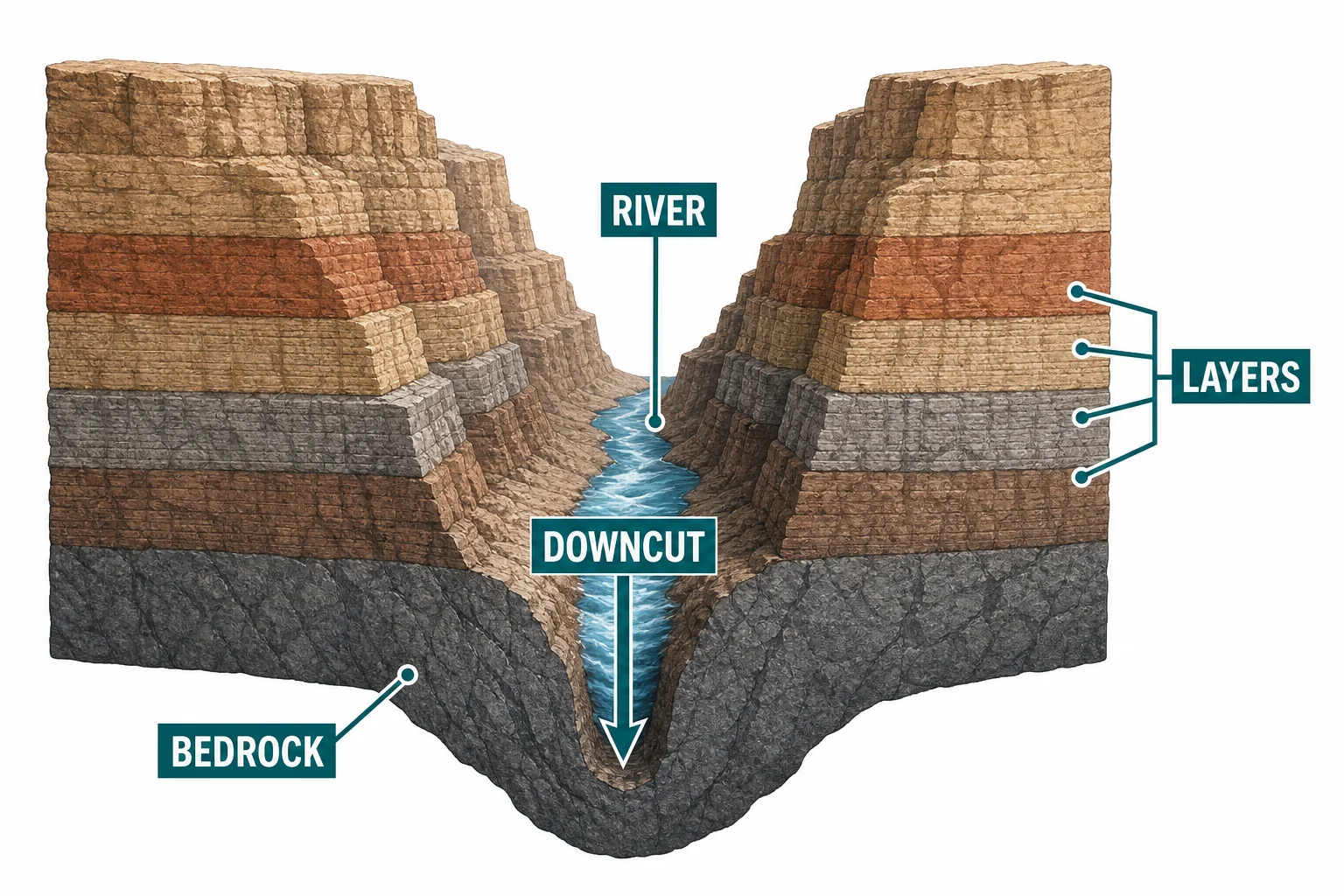
Downcutting is the main reason many canyons become deep.
Widening shapes the walls
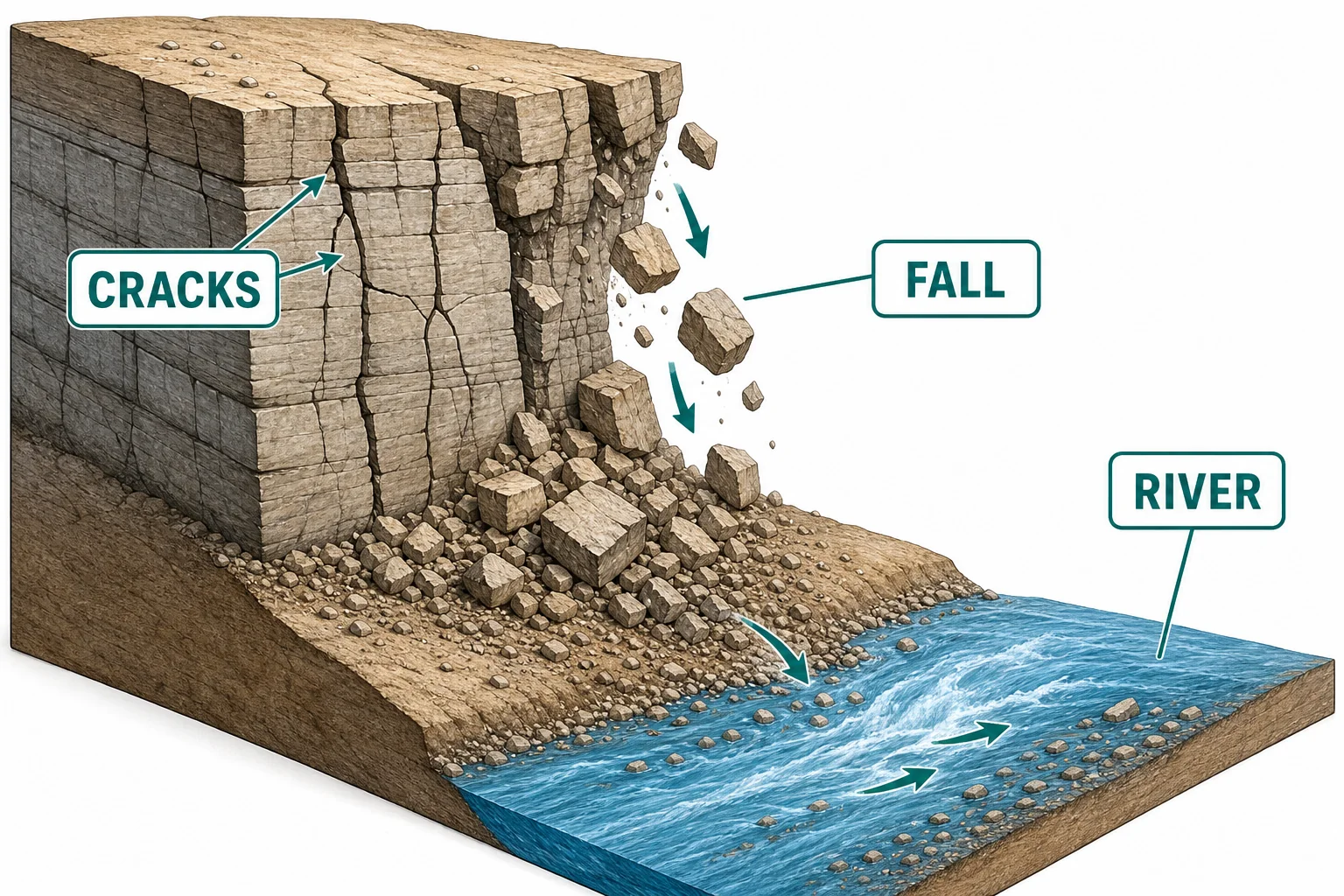
Rivers deepen canyons, while weathering and gravity help widen them.
Canyons form at changing rates
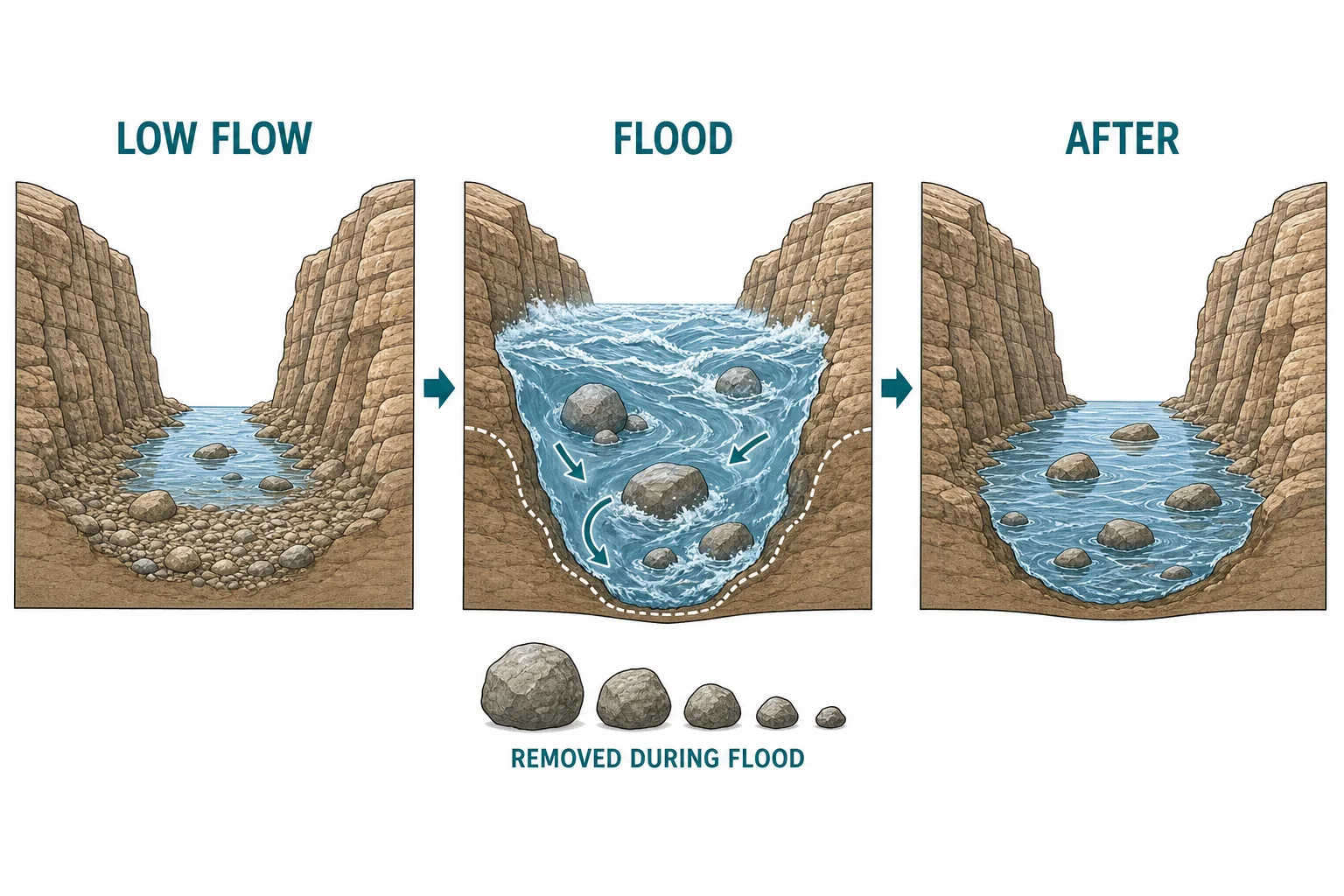
Canyon growth is uneven because floods can move far more material than normal flow.
Grand Canyon as a case study
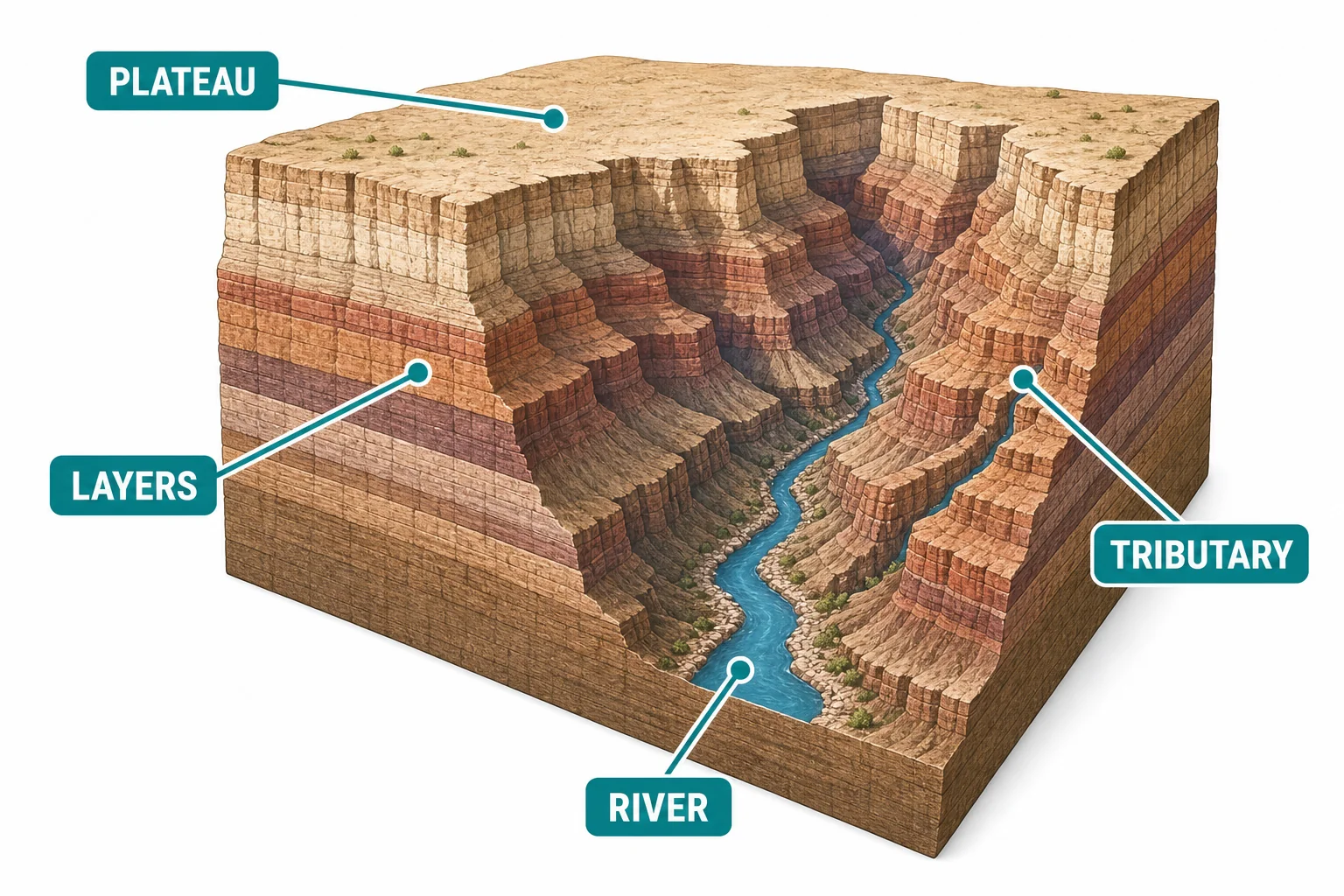
The Grand Canyon is a record of river cutting, uplift, weathering, and deep time.
Vocabulary
- Erosion
- The movement of weathered rock, soil, or sediment from one place to another.
- Sediment
- Loose pieces of rock or soil, such as sand, gravel, silt, or clay, that can be carried by water, wind, ice, or gravity.
- Abrasion
- The scraping and grinding of rock by moving sediment.
- Downcutting
- Erosion that cuts deeper into a stream channel or valley floor.
- Weathering
- The breaking down of rock in place by physical, chemical, or biological processes.
- Tributary
- A smaller stream or river that flows into a larger river.
In the Classroom
Stream table canyon model
35 minutes | Grades 6-8
Students pour water through a tray of sand and gravel to observe channels, sediment movement, and bank collapse. They compare low flow and high flow to see why floods can change a channel quickly.
Downcutting versus widening sketch
20 minutes | Grades 6-8
Students draw before and after cross sections of a river valley. They use arrows and labels to show where downcutting, weathering, and gravity are acting.
Rock strength test with models
30 minutes | Grades 6-8
Students compare how water affects compacted sand, clay-rich soil, and layered materials. They use observations to explain why some canyon walls form cliffs while others form slopes.
Key Takeaways
- • Rivers carve canyons by eroding rock and carrying sediment away.
- • Sediment in moving water scrapes the riverbed and helps cut channels deeper.
- • Downcutting deepens canyons, while weathering and gravity widen the walls.
- • Canyon formation is uneven because floods can do much more erosion than normal flow.
- • The Grand Canyon formed through linked processes that include river erosion, uplift, rock layers, weathering, and time.