Practice explaining how tectonic plates move and how their interactions create earthquakes, volcanoes, mountains, and ocean basins.
Read each problem carefully. Answer in complete sentences and show reasoning when needed.
Earth's moving plates and their effects
Earth Science - Grade 9-12
- 1
Define plate tectonics in your own words.
- 2
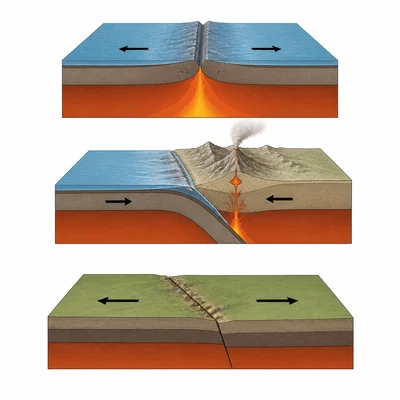
Name the three main types of plate boundaries and describe the motion at each one.
- 3
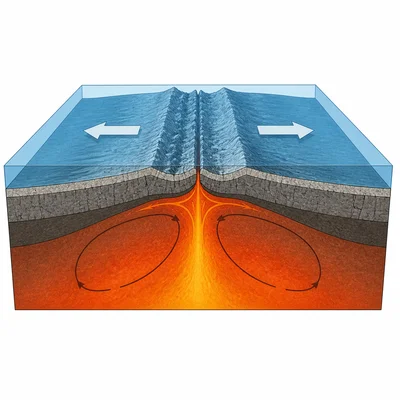
Explain how seafloor spreading provides evidence for plate tectonics.
- 4
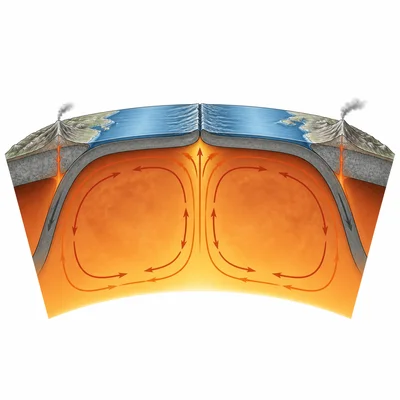
What is convection in Earth's mantle, and how does it help move tectonic plates?
- 5
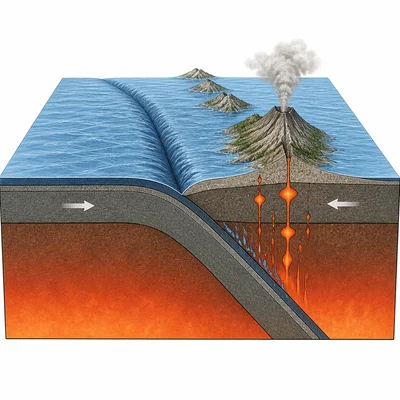
Describe what typically happens when two oceanic plates converge.
- 6
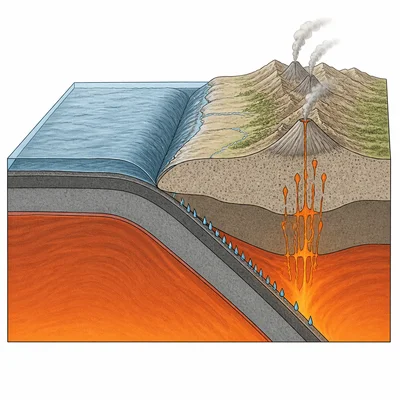
Describe what typically happens when an oceanic plate converges with a continental plate.
- 7
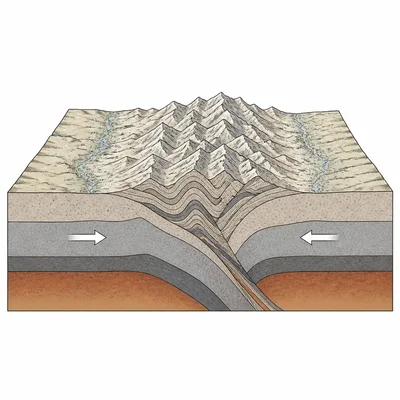
Describe what typically happens when two continental plates converge.
- 8
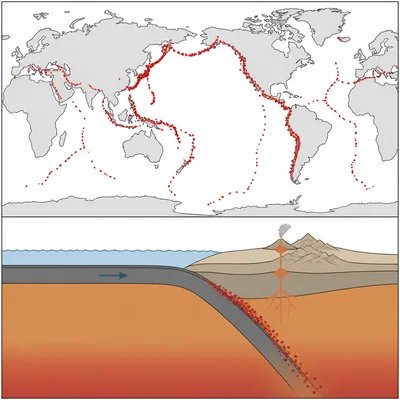
Why are earthquakes common near plate boundaries?
- 9
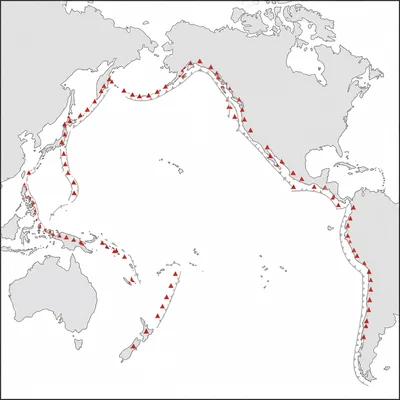
Explain why many volcanoes are found around the edges of the Pacific Ocean.
- 10
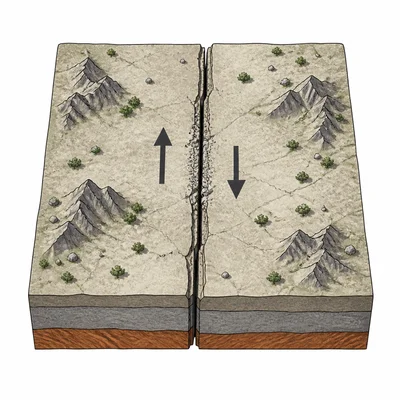
What is a transform boundary, and what landform or geologic activity is most commonly associated with it?
- 11
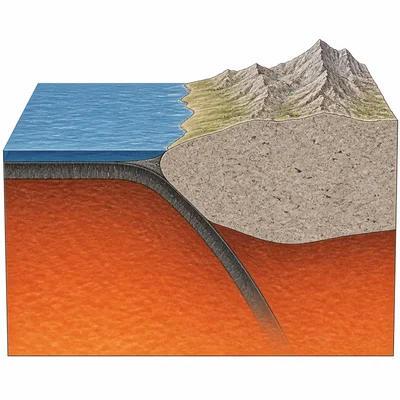
Compare oceanic crust and continental crust in terms of thickness, density, and typical age.
- 12
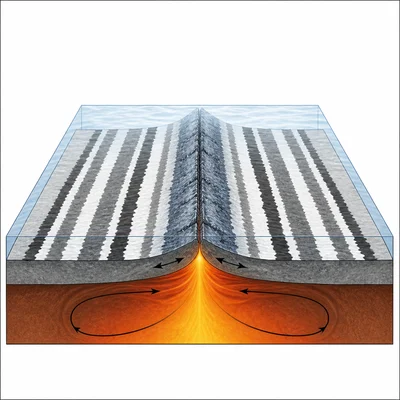
How do magnetic stripes on the seafloor support the idea that plates move?
- 13
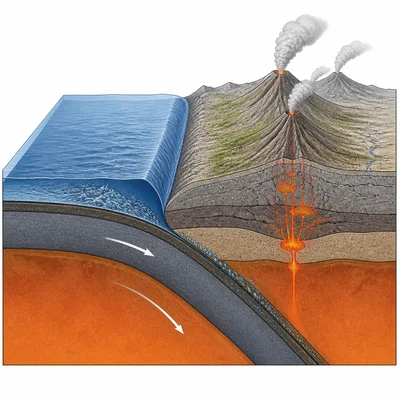
A scientist finds a deep ocean trench next to a volcanic mountain chain along a continent. What type of plate boundary is most likely present, and why?
- 14
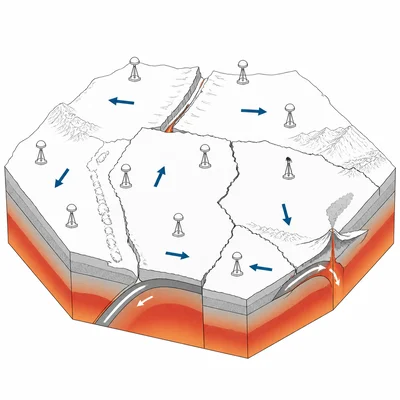
How can GPS measurements provide evidence that tectonic plates are moving today?
- 15
Explain how plate tectonics helps scientists understand the past and predict future geologic activity.