Why Do Volcanoes Erupt?
How heat, rock, gas, and plate motion work together
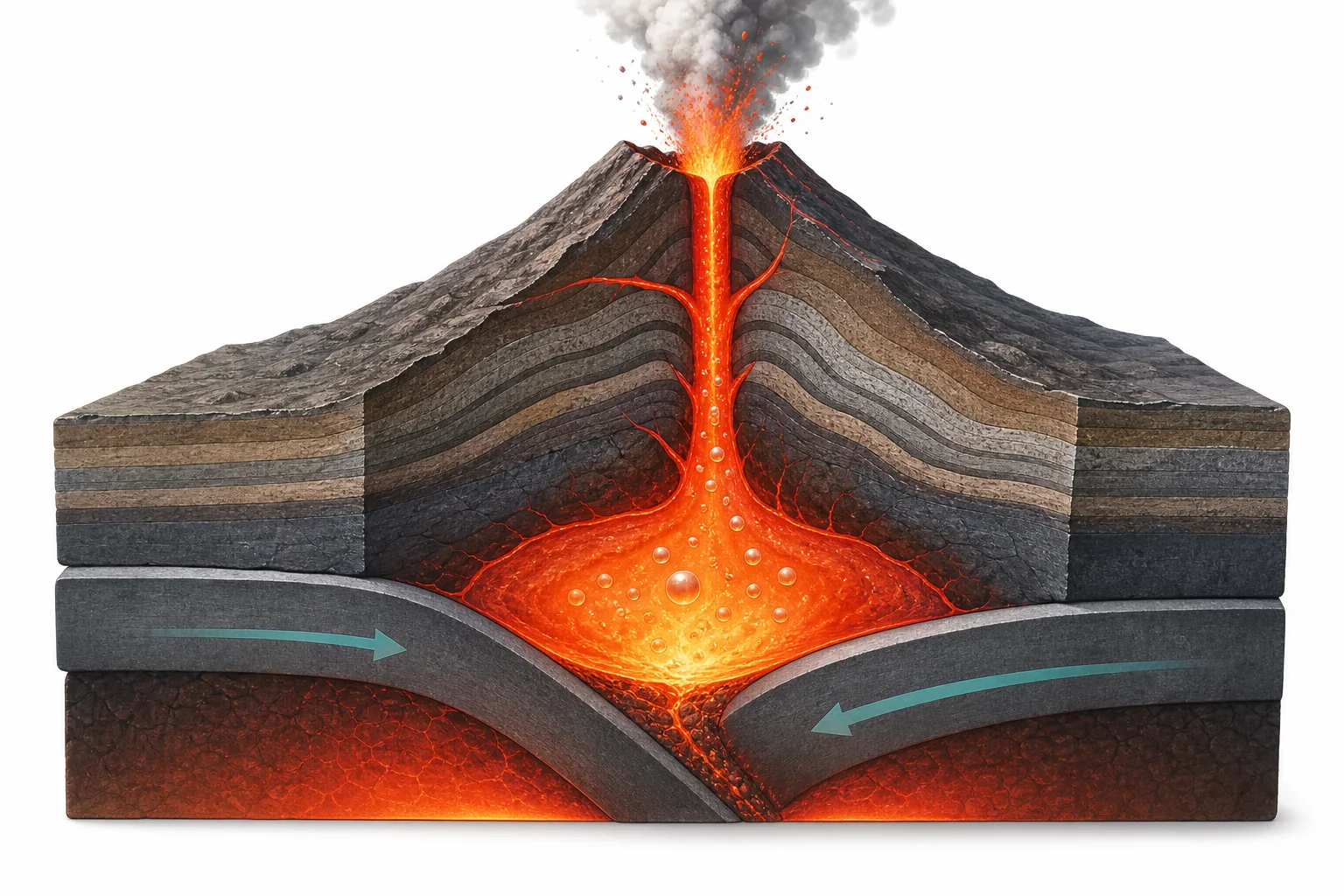
Volcanoes erupt when melted rock under the ground rises toward the surface. Trapped gas pushes on the melted rock, and pressure builds until rock cracks or opens. The eruption can ooze out slowly or blast out quickly depending on how sticky the melted rock is.
A volcano is a place where material from inside Earth reaches the surface. That material can include melted rock, ash, solid rock pieces, and gases. Most volcanoes are not placed at random. Many form near plate boundaries, where giant slabs of crust move apart, collide, or slide past each other. Others form above hot spots, where heat rises through the mantle beneath a plate. The key steps are similar. Rock below the surface melts or partly melts. The melted rock moves upward because it is less dense than the surrounding solid rock. Gas dissolved in it expands as pressure drops. If the gas cannot escape easily, pressure builds. When the pressure becomes strong enough, rock breaks and an eruption begins. The style of eruption depends on gas, heat, and how easily the melted rock flows.
Magma starts below ground
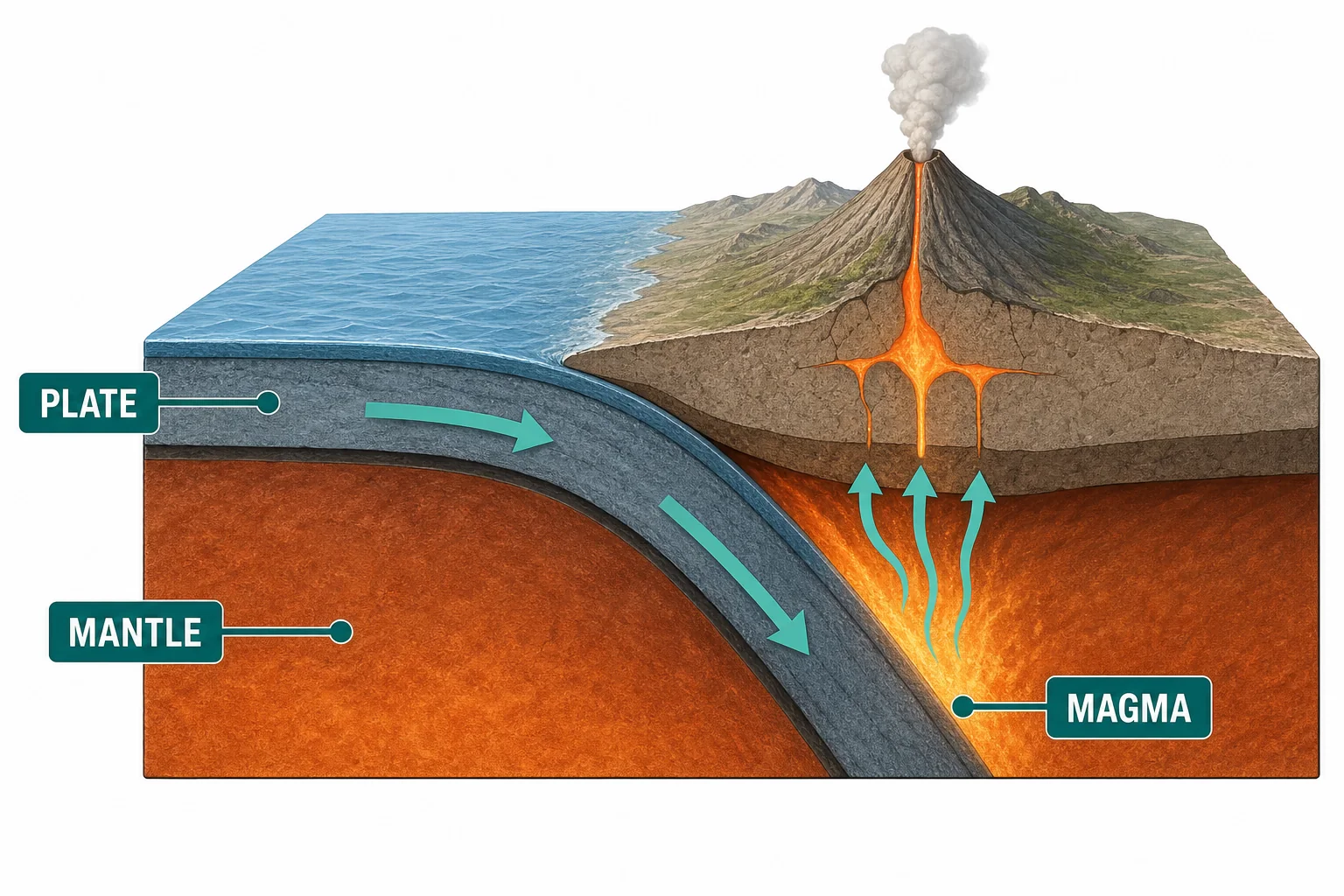
Many volcanoes form where plate motion helps rock melt.
Gas makes pressure build
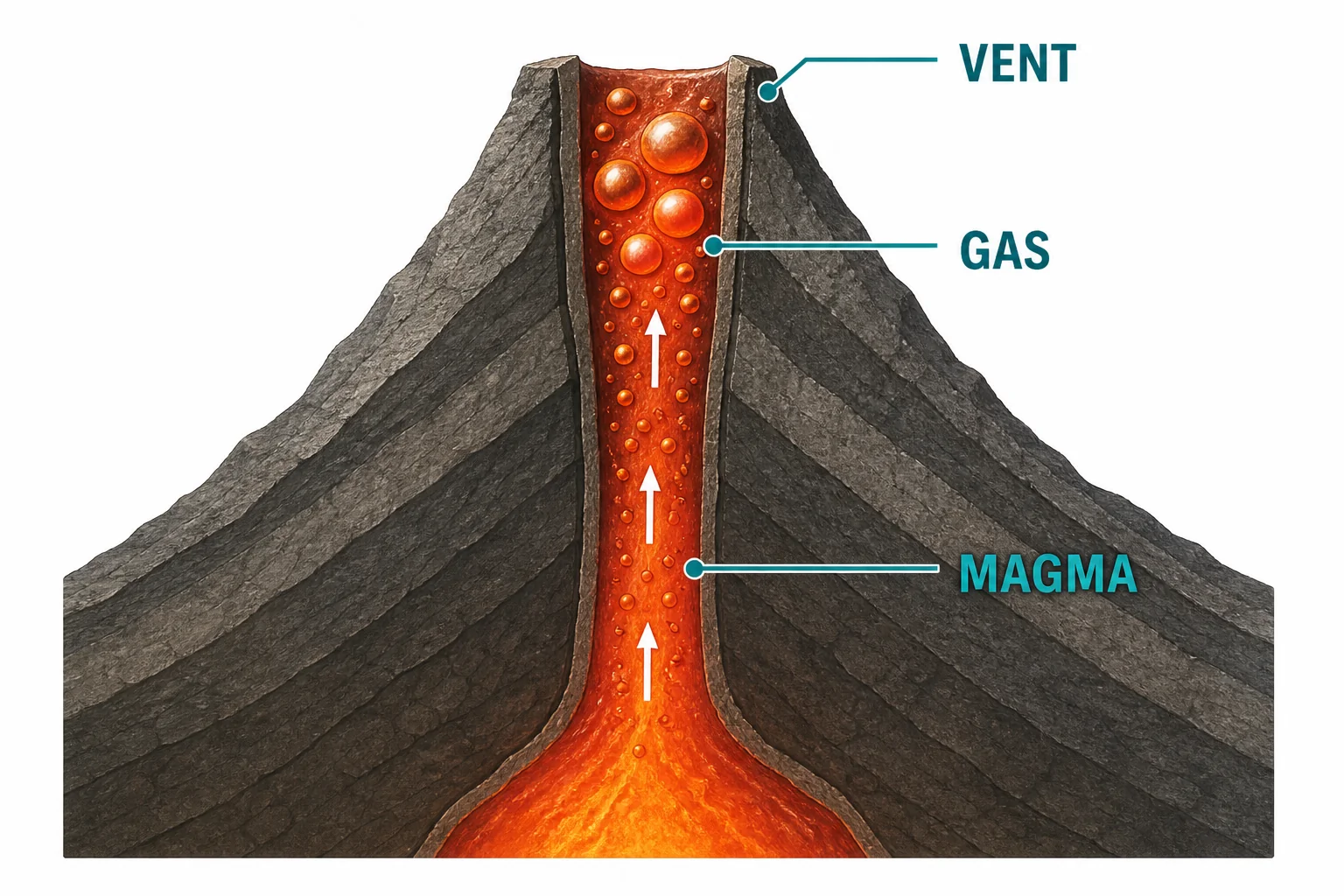
Expanding gas can turn rising magma into a powerful eruption.
Sticky magma changes the eruption
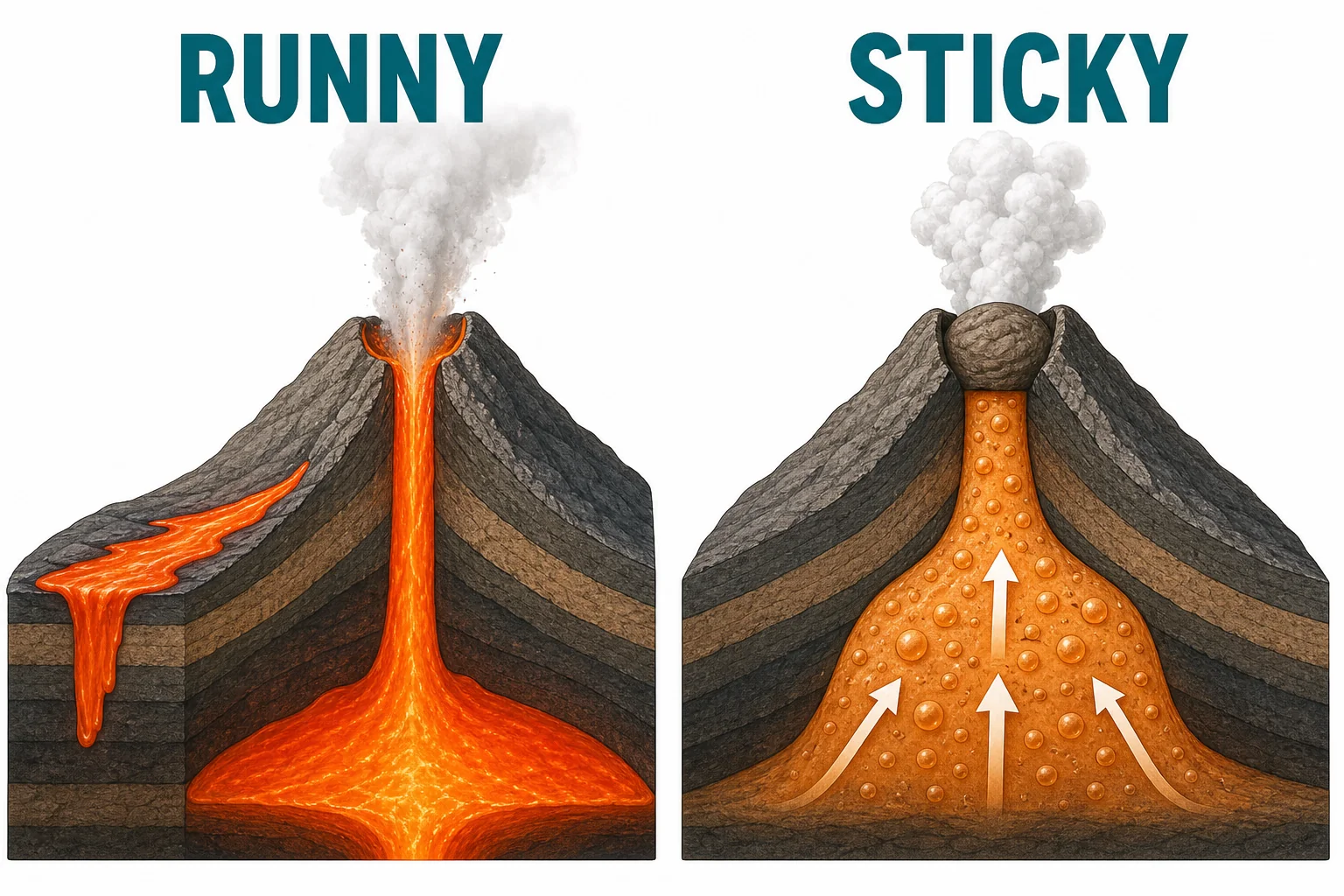
Stickier magma usually traps gas better, which can make eruptions more explosive.
Eruptions have different styles
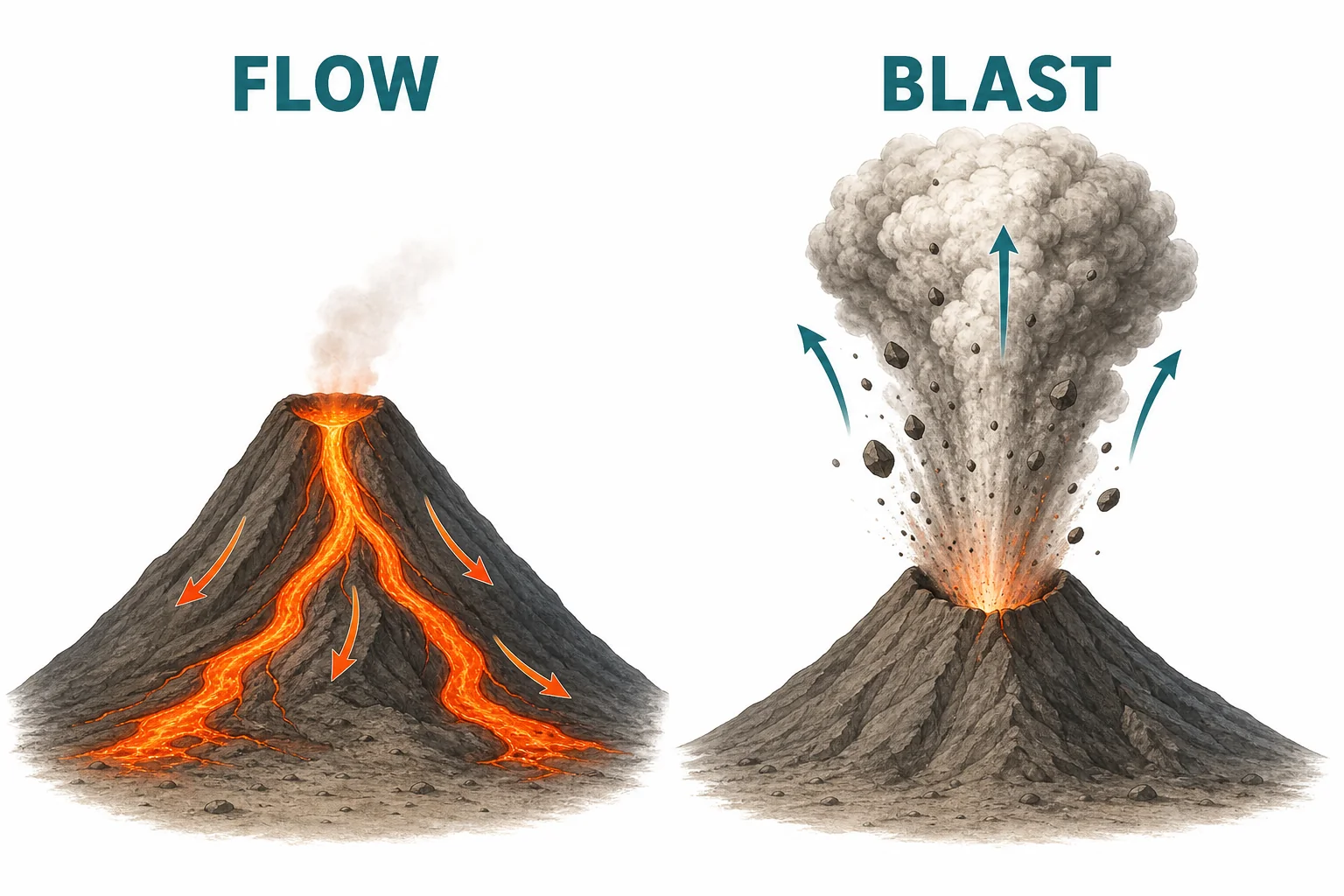
Eruption style depends on magma, gas, and the path to the surface.
Scientists watch for changes
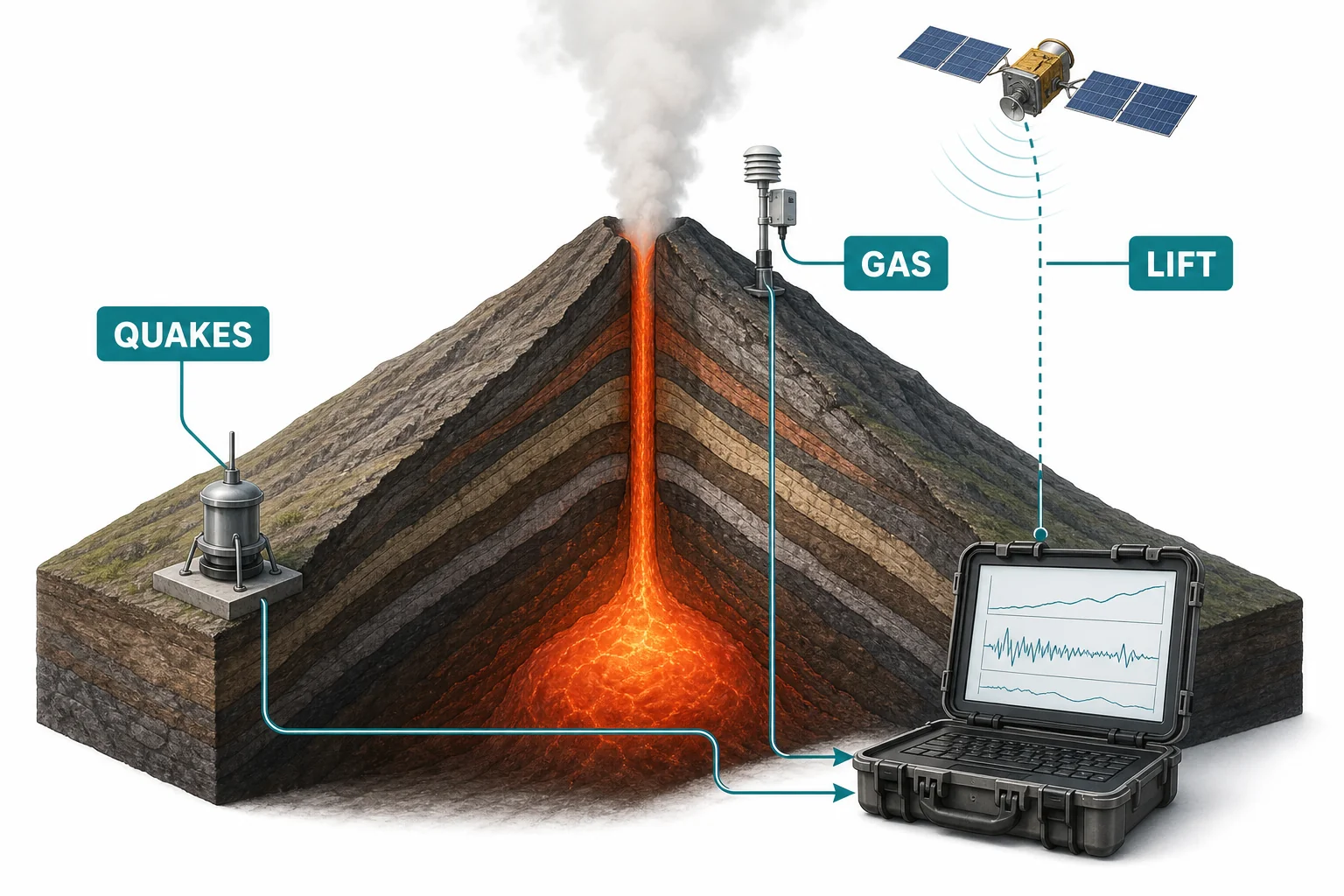
Several warning signs together can show that a volcano is becoming active.
Vocabulary
- Magma
- Melted or partly melted rock below Earth’s surface.
- Lava
- Magma that has reached Earth’s surface.
- Viscosity
- A measure of how easily a fluid flows.
- Plate boundary
- A place where two tectonic plates meet and move relative to each other.
- Volcanic gas
- Gas dissolved in magma that can expand and help drive eruptions.
- Ash
- Tiny pieces of volcanic rock and glass blasted into the air during an eruption.
In the Classroom
Model gas pressure with a sealed bottle
20 minutes | Grades 6-8
Students compare a sealed carbonated drink to one that has been opened. They observe bubble formation and connect it to gas expanding as pressure drops in rising magma.
Test viscosity with classroom liquids
30 minutes | Grades 6-8
Students time how fast water, syrup, and honey move down a tilted tray. They use the results to explain why runny and sticky magmas can produce different eruption styles.
Map volcanoes and plate boundaries
35 minutes | Grades 6-8
Students plot active volcanoes on a world map and compare the pattern to plate boundaries. They identify where volcanoes cluster and where hot spot volcanoes do not fit the boundary pattern.
Key Takeaways
- • Volcanoes erupt when magma, gas, and pressure find a path to the surface.
- • Many volcanoes form near plate boundaries where rock can melt more easily.
- • Gas expands as magma rises because pressure decreases closer to the surface.
- • Sticky magma traps gas better, which can lead to more explosive eruptions.
- • Scientists monitor earthquakes, ground swelling, gas, and heat to assess volcanic activity.