Why Are Bees Disappearing?
How pollinator decline changes ecosystems and food
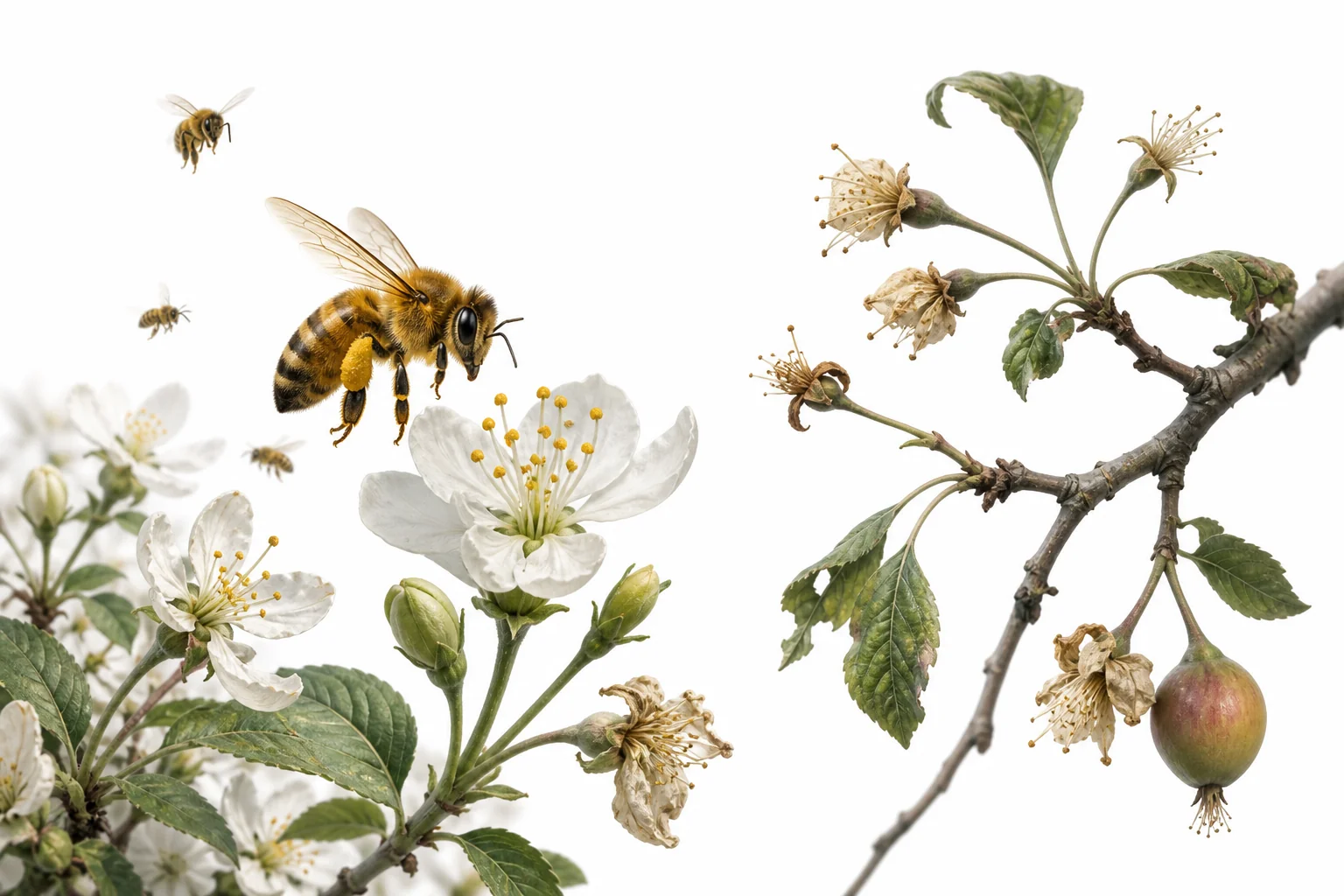
Bees are declining because many pressures are happening at the same time. Pesticides, lost wildflower habitat, parasites, disease, climate stress, and poor nutrition can weaken bees and their colonies. When pollinators decline, many plants make fewer fruits and seeds, which affects ecosystems and human food.
Bees are small, but their work reaches far beyond the hive. As they move from flower to flower, they carry pollen that helps many plants make fruits and seeds. This process supports wild plants, farm crops, and many animals that eat those plants. Scientists have measured declines in some wild bee species and serious losses in managed honey bee colonies. Colony collapse disorder is one well known example. In that case, many worker bees leave a hive and do not return, even when a queen and food remain. There is not one single cause. Bees face a stack of stresses that can add up. A pesticide may not kill a bee right away, but it can make navigation harder. A landscape with fewer flowers gives bees less food. Parasites and disease spread more easily when colonies are weak. The question is about systems, not just insects.
Bees do more than make honey
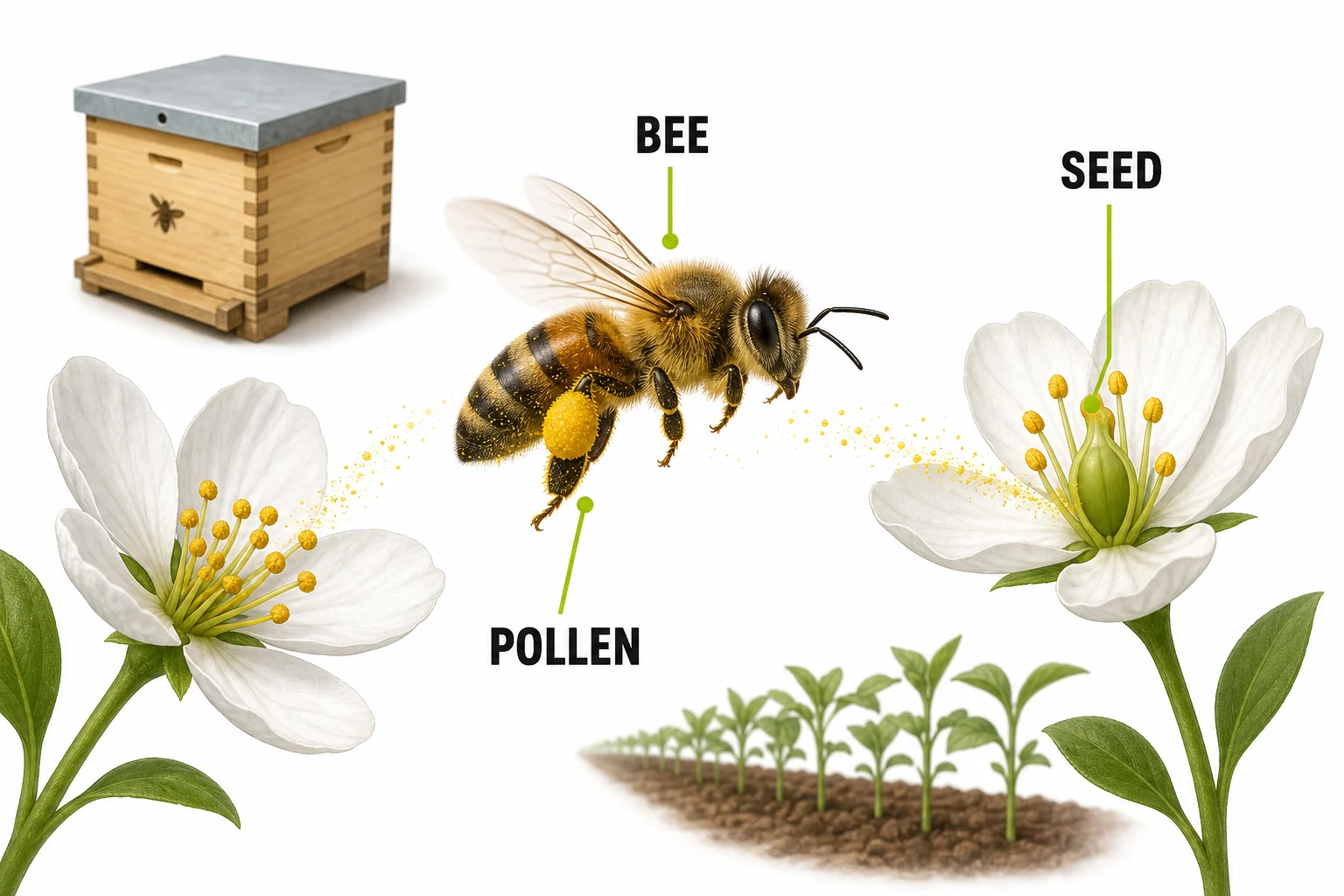
Pollination is an ecosystem service that depends on living relationships.
Colony collapse is a warning sign
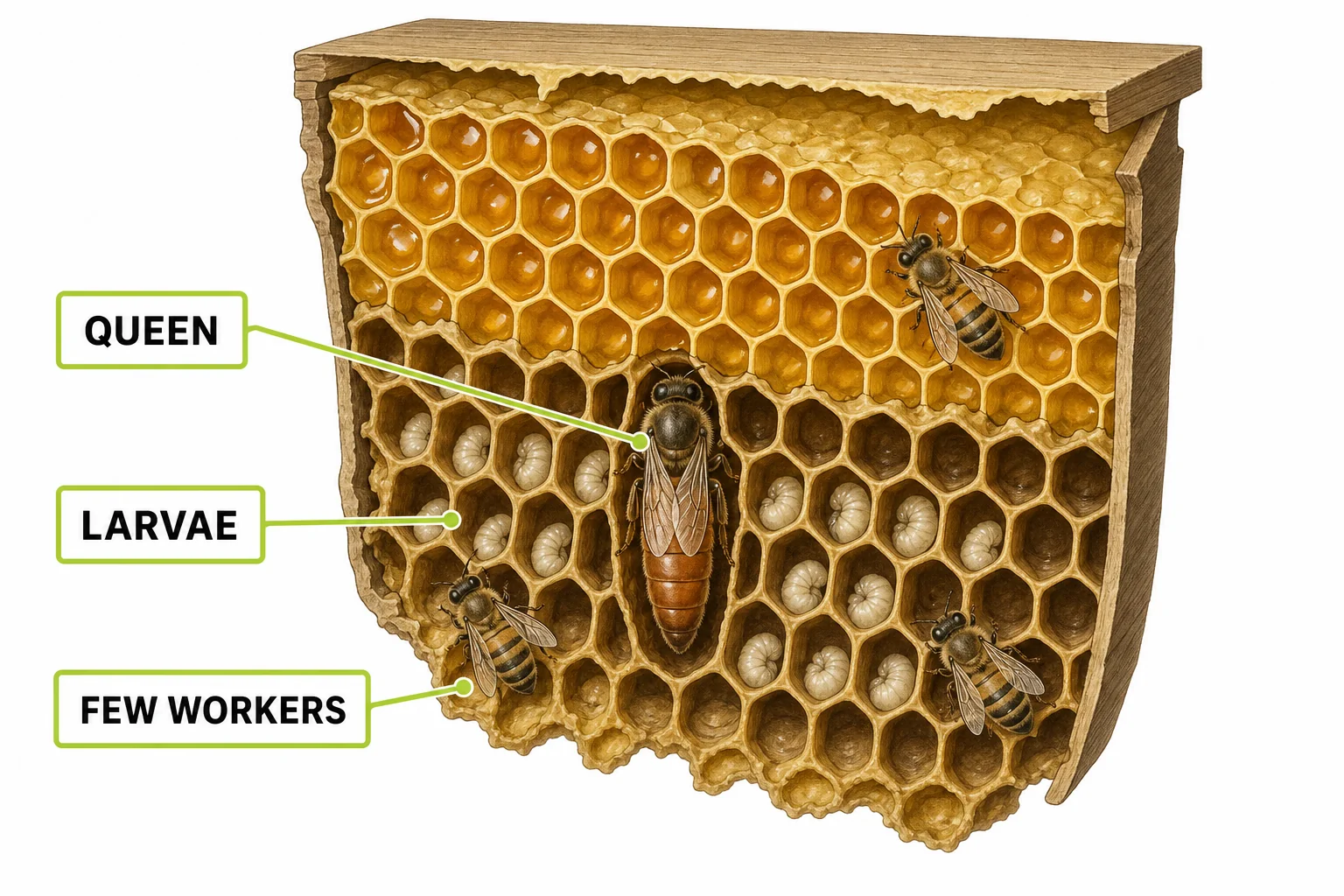
Colony collapse is usually about combined stress, not one simple cause.
Pesticides can affect behavior
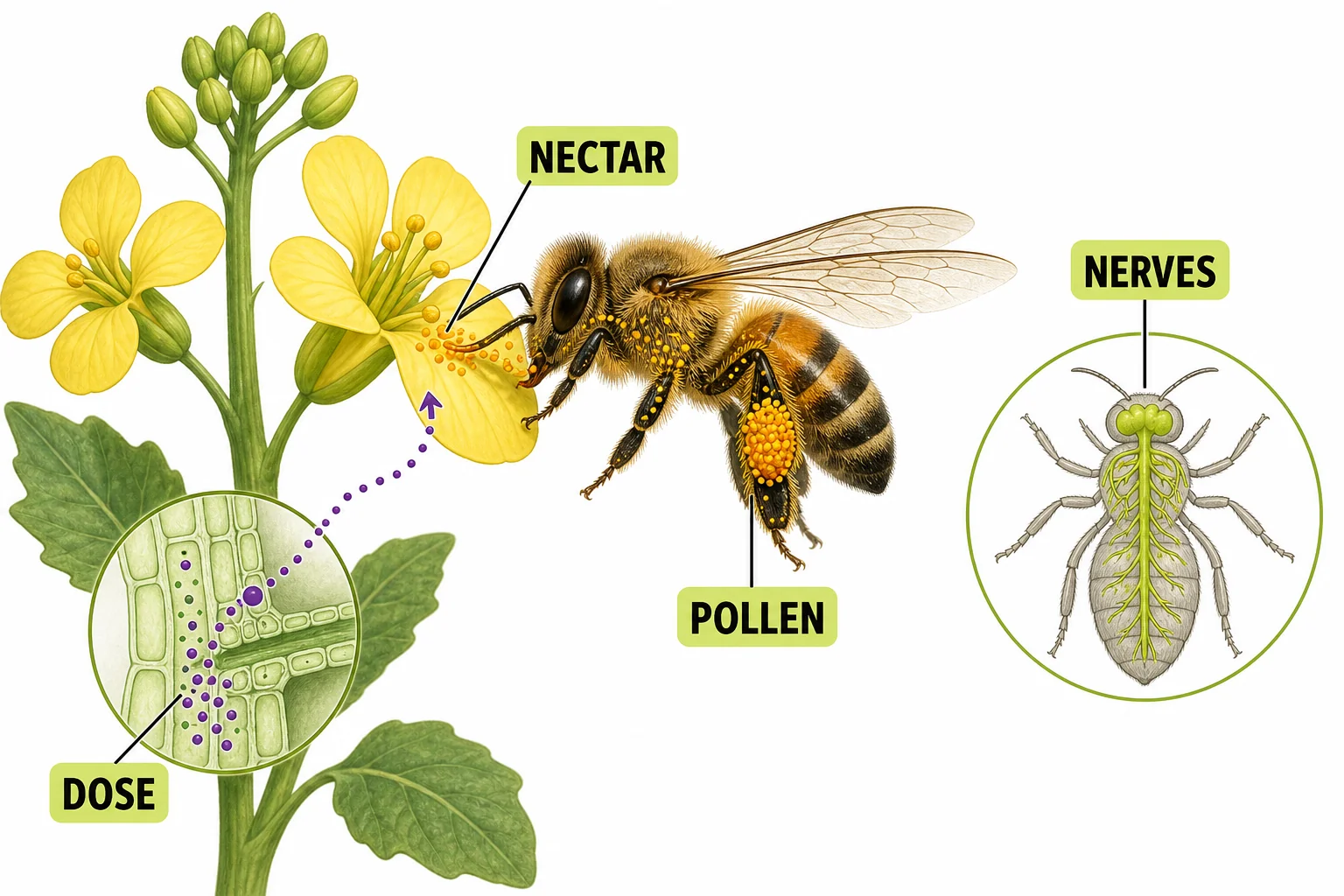
A small exposure can matter if it changes survival behavior.
Habitat loss removes food and shelter
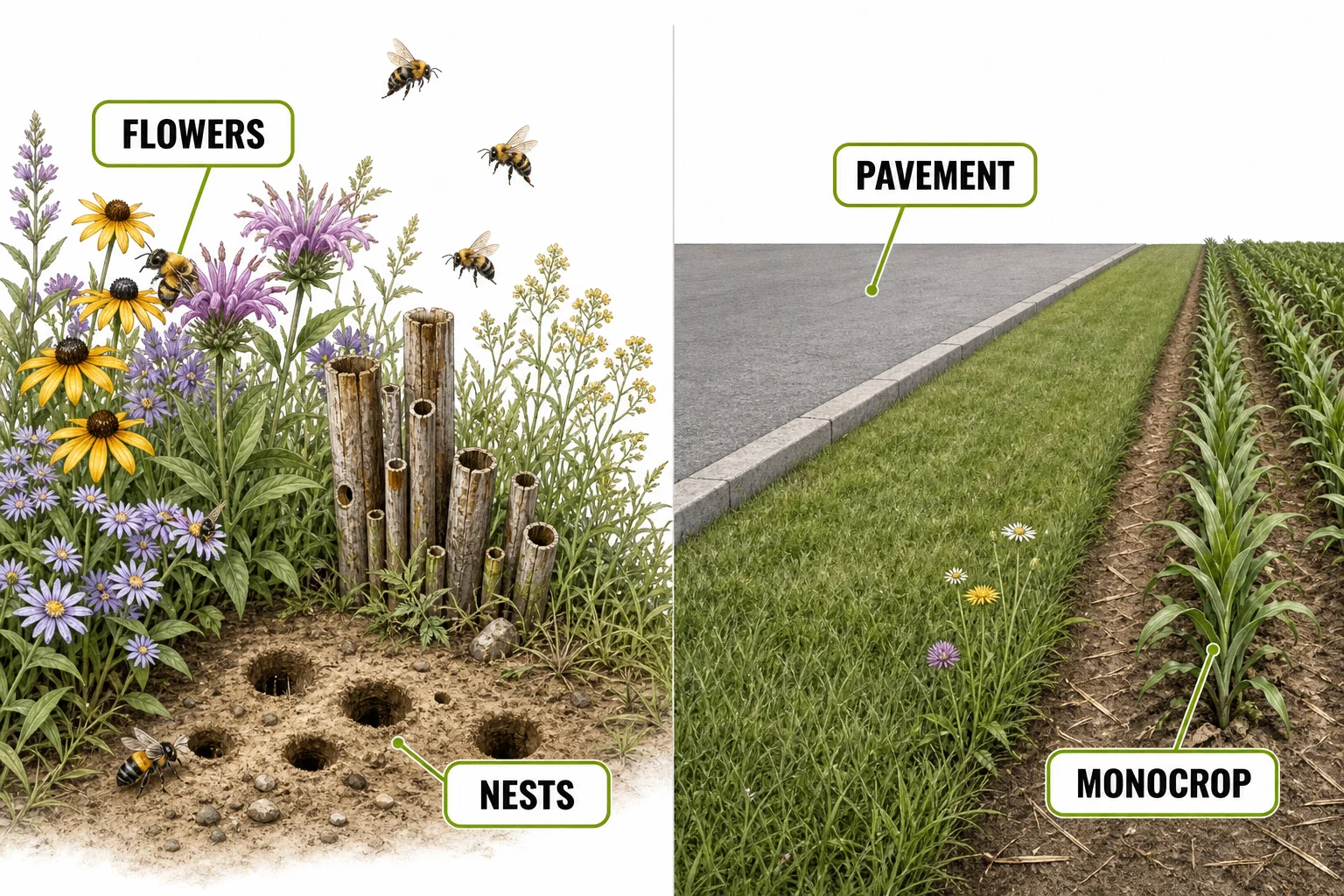
Habitat is not just scenery. It is food, shelter, and timing.
Food systems depend on pollinators
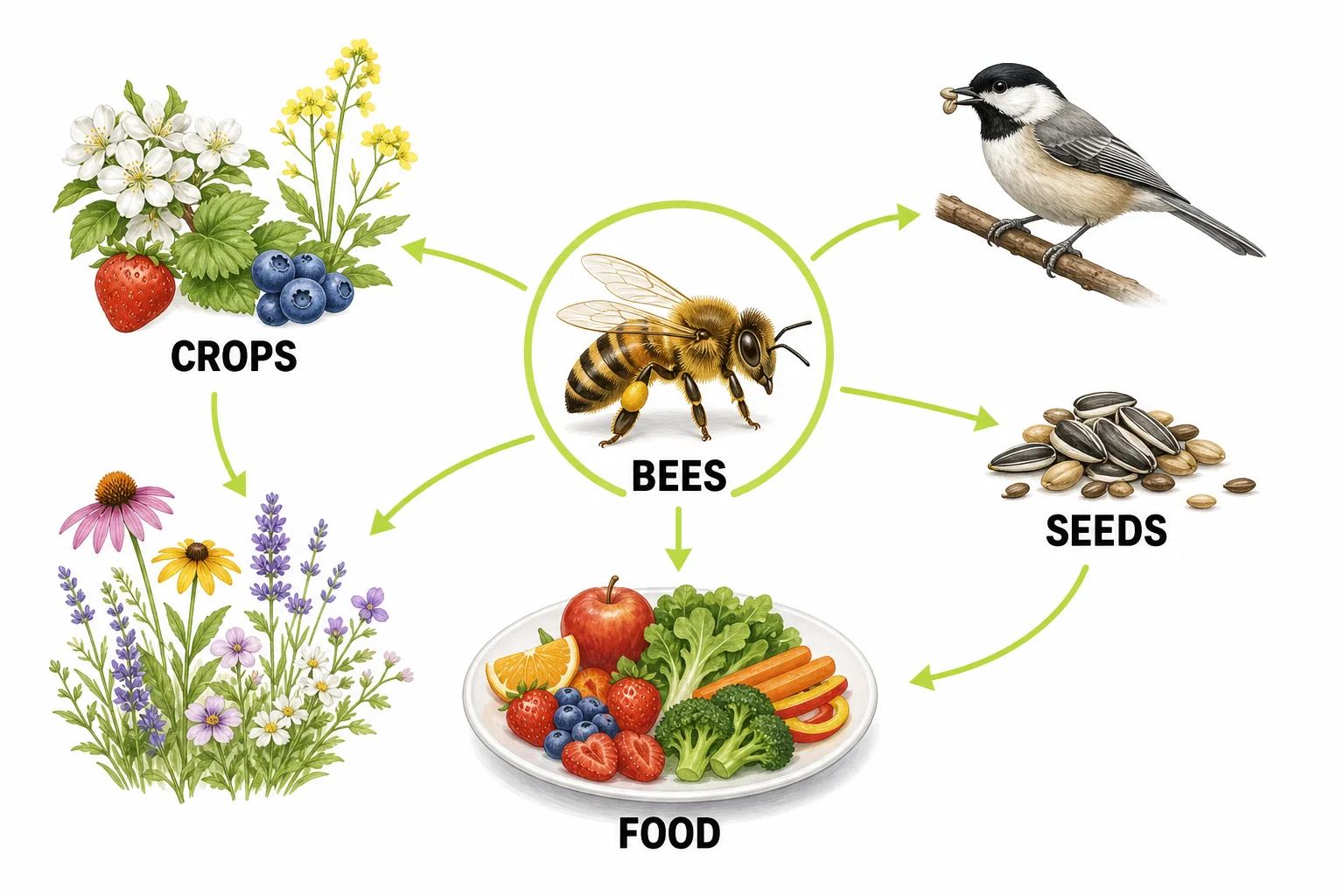
Pollinator health is part of ecosystem health and human nutrition.
Vocabulary
- Pollination
- The movement of pollen from one flower part to another, which helps many plants make seeds and fruit.
- Colony collapse disorder
- A pattern in which many adult worker honey bees disappear from a hive, leaving the queen, young bees, and stored food behind.
- Neonicotinoids
- A group of insecticides that affect insect nervous systems and can expose bees through treated plants, pollen, or nectar.
- Habitat loss
- The removal or damage of places where organisms find food, shelter, nesting sites, and safe conditions.
- Ecosystem service
- A benefit people receive from nature, such as pollination, clean water, fertile soil, or flood protection.
- Food web
- A model that shows how energy and matter move among organisms as they eat and are eaten.
In the Classroom
Build a pollinator food web
25 minutes | Grades 6-8
Students make cards for bees, flowers, crops, birds, mammals, and people. They connect the cards with arrows, then remove one pollinator card and discuss which links change.
Schoolyard habitat survey
30 minutes | Grades 6-8
Students observe the school grounds and record flowers, bare soil, leaf litter, mowing patterns, and possible nesting sites. They use the evidence to suggest one habitat improvement for pollinators.
Stress stack model
20 minutes | Grades 6-8
Students use blocks or paper strips to model colony stress from mites, poor nutrition, pesticide exposure, and habitat loss. They compare how one stress differs from several stresses acting together.
Key Takeaways
- • Bee decline has many causes, including habitat loss, parasites, disease, pesticide exposure, poor nutrition, and climate stress.
- • Colony collapse disorder is a pattern seen in some honey bee hives, not a single cause.
- • Neonicotinoid pesticides can affect bee nervous systems and may change feeding, learning, and navigation.
- • Wild bees and honey bees both support pollination, but different bee species help different plants.
- • Pollinator decline can reduce seed and fruit production, which affects ecosystems and parts of the human food supply.