Molecular Orbital Visualizer
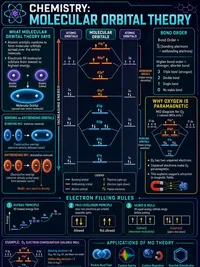
See how atomic orbitals combine to form molecular orbitals via Linear Combination of Atomic Orbitals (LCAO). Visualize bonding versus antibonding combinations of 1s, 2s, and 2p orbitals as 3D isosurfaces showing the wave function's phase.
σ₁ₛ (bonding)
Drag to orbit. Scroll to zoom. Bonding orbitals concentrate electron density between the nuclei (lower energy). Antibonding orbitals have a nodal plane between the nuclei (higher energy).
Controls
Display
Presets
Reference Guide
LCAO Method
Molecular orbitals form by linearly combining atomic orbitals on the bonded atoms.
The plus combination is the bonding orbital. The minus combination is antibonding. For homonuclear diatomics like H₂, both coefficients are equal.
Bonding Orbitals
Constructive overlap between atomic orbitals accumulates electron density between the nuclei, lowering energy.
The denominator includes the overlap integral S to ensure normalization. Both lobes have the same sign.
Antibonding Orbitals
Destructive interference creates a node between the nuclei. Electron density is pushed outside the bond region.
Filling antibonding orbitals destabilizes the molecule. The asterisk denotes antibonding character.
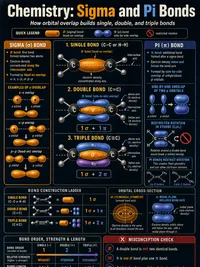
Sigma vs Pi
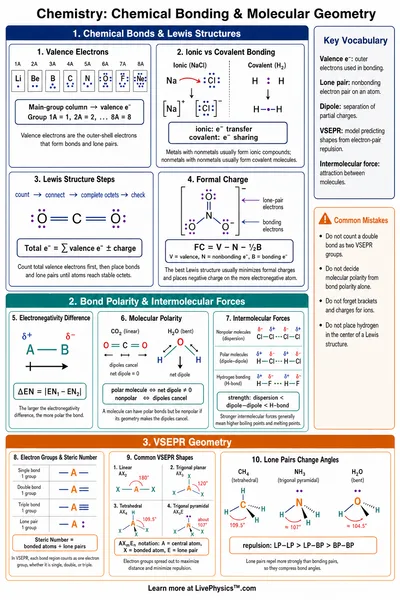
σ bonds have cylindrical symmetry about the bond axis - head-to-head overlap. They form from s-s, s-p, or pz-pz combinations.
π bonds have a node along the bond axis - side-by-side overlap. They form from px-px or py-py combinations.
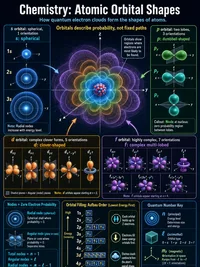
Hydrogenic Orbitals
The atomic orbitals used here are Slater-type functions parameterized by an effective nuclear charge ζ
Increase ζ to make the orbital more contracted near the nucleus, modeling heavier atoms.
Reading the Plot
The 3D isosurfaces show contours where the wave function equals plus or minus the chosen isovalue.
Red regions indicate ψ > 0 (positive phase). Blue regions indicate ψ < 0 (negative phase). The phases are mathematical signs of the wave function, not charges.
The electron density goes as |ψ|², so both red and blue regions contribute equally to where the electron is likely to be found.