Radiation Shielding & Half-Value Layer Lab
Choose a radiation type and a shield, then change the thickness and watch how much radiation passes through to the detector. Gamma rays attenuate exponentially, so each half-value layer cuts the count in half. Alpha and beta particles have a definite range, so a sheet of paper stops alpha and a few millimeters of aluminum stop beta.
Guided ExperimentMeasure the half-value layer of lead for gamma
Gamma rays attenuate exponentially through lead. How thick a slab halves the count rate, and what happens after two and three of those steps?
Write your hypothesis in the Lab Report panel, then click Next.
Controls
Lead, density 11.3 g/cm³, gamma attenuation coefficient 1.2 cm⁻¹
Source activity reaching the shield is fixed at 10,000 counts/s. Selected radiation Gamma.
Source, shield, and detector
Gamma rays attenuate exponentially. Some always pass through, so the count never reaches zero. About 30.1 percent reach the detector.
Results
Transmitted fraction
30.12%
Transmitted count rate
3,012/s
Source activity
10,000/s
Half-value layer
0.578cm
Tenth-value layer
1.919cm
Number of HVLs
1.73
Transmitted count rate vs shield thickness
The dashed blue lines mark 1, 2, and 3 half-value layers, where the count rate is one half, one quarter, and one eighth of the source. The dark dot is your current thickness.
Takeaways
- •Each half-value layer of lead cuts the gamma count in half, so 3 half-value layers leave one eighth.
- •Gamma attenuation is exponential, so the count rate never reaches exactly zero.
- •A dense material like lead has a small half-value layer, so a thin slab blocks most of the gamma.
Gamma model, I = I0 e^(-μx) with μ = 1.2 cm⁻¹ for Lead. The half-value layer is HVL = ln2 / μ = 0.578 cm.
Data Table
(0 rows)| # | Radiation | Material | Thickness(cm) | Transmitted(%) | HVL or range(cm) | Count rate(/s) |
|---|
Reference Guide
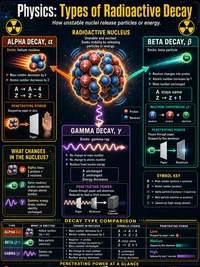
Alpha, Beta, and Gamma Radiation
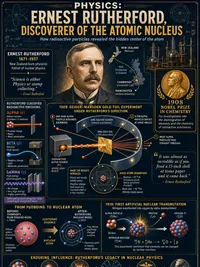
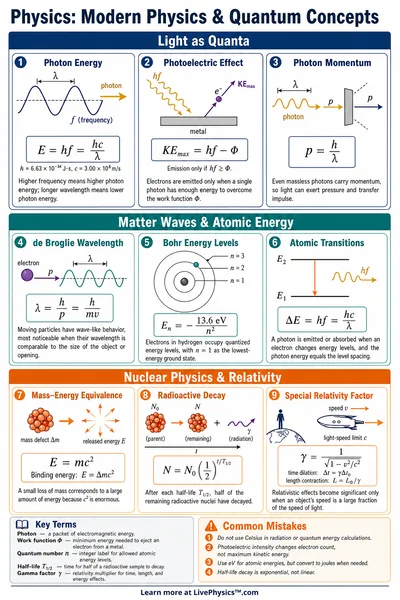
The three common types of nuclear radiation differ in mass, charge, and penetrating power. That difference decides what shield you need.
- Alpha is a heavy, doubly charged helium nucleus with a very short range.
- Beta is a fast electron with a longer range than alpha.
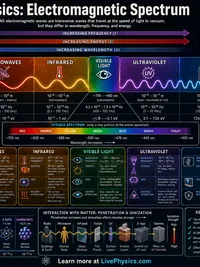
- Gamma is a high energy photon that penetrates far into matter.
Alpha barely penetrates, so a sheet of paper or the outer layer of skin stops it. Gamma is the most penetrating and needs dense shielding.
Exponential Attenuation of Gamma Rays
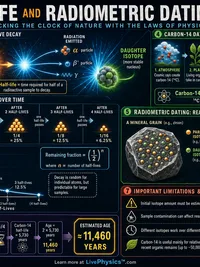
Gamma rays are not stopped at a fixed depth. Instead each thin layer removes the same fraction of what reaches it, which gives an exponential law.
I = I0 e^(-μx)
- I0 is the intensity entering the shield.
- x is the shield thickness in centimeters.
- μ is the linear attenuation coefficient in cm⁻¹.
A larger attenuation coefficient means the intensity falls off faster, so a denser material is a better gamma shield.
The Half-Value Layer and Tenth-Value Layer
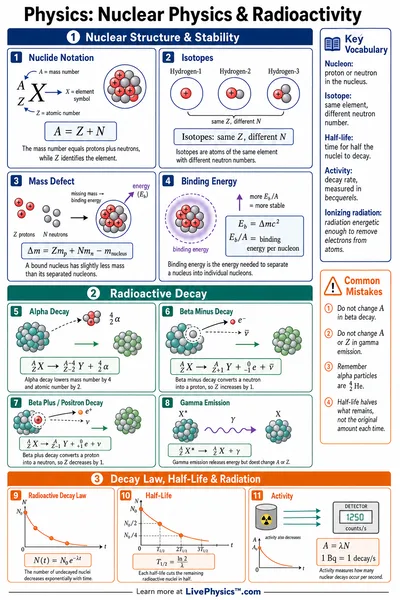
The half-value layer is the thickness of a material that cuts the gamma intensity in half. Stacking layers multiplies the effect.
HVL = ln2 / μ
- One half-value layer leaves one half of the gamma.
- Three half-value layers leave one eighth.
- The tenth-value layer, ln10 / μ, cuts the intensity to one tenth.
Because the law is exponential, the count rate never reaches exactly zero, it only keeps halving.
Choosing a Shielding Material
The right shield depends on the radiation. Charged particles have a finite range, while gamma needs dense, high atomic number material.
- Paper or a few centimeters of air stops alpha.
- A few millimeters of aluminum stops beta.
- Lead and thick concrete are used for gamma.
Lead has a small half-value layer for gamma, so a thin slab does a lot of work. Water and concrete also shield gamma but need much more thickness.