Animal Migration Route Builder
Pick a migrating animal and a route from the breeding ground to the wintering ground, then set the weather, the headwind, and the number of food stops. Watch the energy budget add up and the survival probability change, and learn why a shorter route can cost more energy and end in failure.
Guided ExperimentIs the shortest route always the safest?
The mountain route is the shortest in distance. Predict whether it gives the songbird the best survival probability, or whether a longer route can be safer.
Write your hypothesis in the Lab Report panel, then click Next.
Migration Map
The animal travels from the breeding ground to the wintering ground. Green dots are food stops, gray peaks are terrain barriers, and clouds show the weather. The animal turns red when its odds fall.
Controls
Longer, but it follows food-rich coastline and wetlands, so it is safer and has many stopovers.
0 is calm and clear, 100 is a full storm. A storm both costs more energy and adds death risk.
A steady headwind adds a flat extra energy cost for every km of the journey.
This route allows up to 5 food stops. Each one refuels the animal but adds time and risk.
Results
Survival needs both fuel in the tank and luck against the weather and the barriers. A half tank of reserve is needed for the best odds.
| Route | km | Cost | Balance | Survival |
|---|---|---|---|---|
| Coastal routebest oddsselected | 4000 | 136 | 44 | 86% |
| Mountain route (direct) | 3000 | 152 | -32 | 0% |
| Open ocean route | 3500 | 142 | -62 | 0% |
The shortest route is often not the safest. Harsh terrain raises the cost per km and the death risk, and a route with no food stops gives the animal no way to refuel.
Data Table
(0 rows)| # | Species | Route | Distance (km) | Weather | Food stops | Energy balance | Survival (%) |
|---|
Reference Guide
Migration Is an Energy Budget
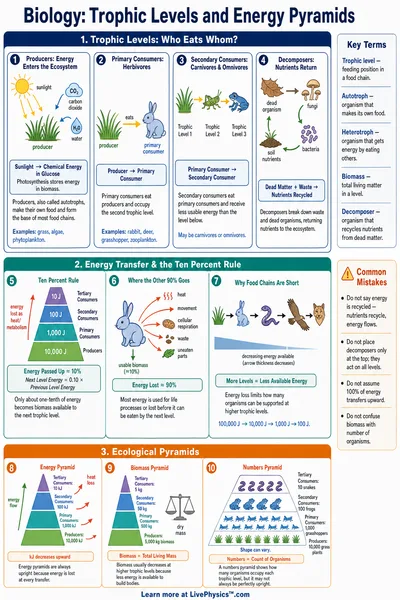
A migrating animal starts the journey with stored fuel, such as fat in a bird or blubber in a whale. Every km of travel spends energy, and food stopovers add it back. The energy balance is the start fuel plus the refuel minus the travel cost.
If the balance falls to zero before the animal arrives, it runs out of fuel and the migration fails. Strong reserves and good food stops are what carry an animal across a long route, not just speed or distance.
Why a Shorter Route Can Cost More
The shortest path on a map is not always the cheapest in energy. A direct route over a mountain range carries a terrain penalty, so each km costs more than the same km over flat, food-rich coastline.
A direct route also tends to offer fewer rest stops. A longer coastal route can win because it lets the animal refuel often and crosses gentler ground, so it arrives with fuel to spare while the short route ends in a stall.
Stopovers, Weather, and Barriers
Stopover habitat, the wetlands and forests where animals rest and feed, is the fuel station of a migration. Protecting these sites matters because losing them can break a route that has worked for thousands of years.
Weather and barriers raise the danger in two ways. A storm multiplies the energy cost and adds a direct death risk, while open water or high mountains add risk with no place to rest. This is why animals wait for a good weather window before they depart.
How to Read the Lab
The survival probability combines two ideas. The animal needs enough fuel, with a half tank of reserve for the best odds, and it needs luck against the weather and the terrain barriers. A negative energy balance means it starves, so survival is zero.
The route comparison table runs all three routes at once for the current animal, weather, and food, and flags the route with the best odds. Use it to test whether the shortest route really is the safest, and to find the plan that gets the animal there.