Earth Science
Confusing High and Low Pressure Weather Systems
Students say high pressure means stormy weather and low pressure means clear weather.
Quick check
Why students make it
The word high sounds stronger, so students often connect it with intense weather. They also focus on pressure size instead of how air moves vertically in each system.
The rule done right
Low pressure systems have rising air, which cools, condenses, and often makes clouds and precipitation. High pressure systems have sinking air, which warms, dries out, and usually brings clearer weather.
Related resources
-
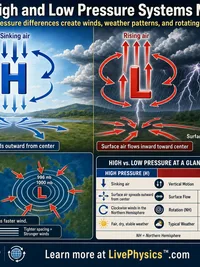 How High and Low Pressure Systems Move Air Infographic
-
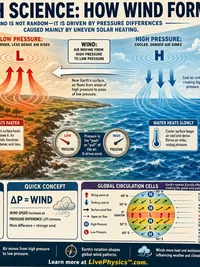 How Wind Forms Infographic
-
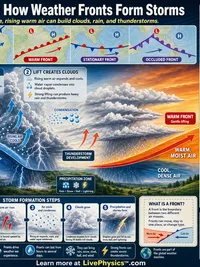 How Weather Fronts Form Storms Infographic
-
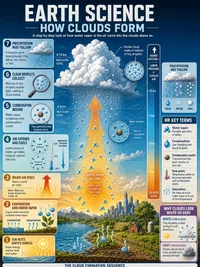 How Clouds Form Infographic
-
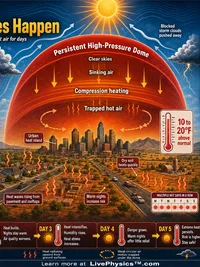 How Heat Waves Happen Infographic
- Atmosphere & Weather Patterns Cheat Sheet
- Air Masses & Frontal Systems Cheat Sheet
- Reading Weather Maps & Station Models Cheat Sheet
- Atmospheric Circulation Cells Reference Cheat Sheet
- Weather Instruments Reference Cheat Sheet
- Earth Science, The Coriolis Effect and Global Wind Patterns Worksheet
- Science, Weather Patterns and Climate Worksheet
- Atmospheric Layers and Weather Phenomena Worksheet
- Earth Science, Types of Clouds Worksheet
- Weather & Seasons Worksheet
- Weather & Pressure Visualizer Tool
- Atmosphere Explorer Tool
- Climate Graph Analyzer Tool
- Hurricane Path & Storm Surge Simulator Lab
- Weather Radar Analyzer Lab
- Weather Hazards & Safe Design Lab Lab