Gear Ratio Explorer
Adjust tooth counts on two meshing gears and instantly see how gear ratio determines output RPM, torque, and mechanical advantage. Watch the gears spin to build intuition for speed-torque trade-offs. Grades 5-9.
Gear Parameters
Presets
Input Conditions
Results
Gear Ratio
2:1
2.000xMechanical Advantage
2.000
force multiplyOutput RPM
50.0RPM
slowerOutput Torque
20.00N·m
moreSpeed Factor
0.500x
Torque Factor
2.000x
Trade-off summary
Output spins 2.00x slower but delivers 2.00x the input torque (torque gain, speed loss).
Torque Comparison
Speed Comparison
Reference Guide
Gear Ratio
Definition
Gear ratio = driven teeth / driver teeth. It describes how many times the driven gear turns for every one revolution of the driver gear.
Formula
Gear Ratio = N_driven / N_driver
Output RPM = Input RPM / Gear Ratio
Reading the ratio
A 2:1 ratio means the driven gear completes one full turn for every two turns of the driver. A 1:2 ratio means the driven gear spins twice for each driver revolution.
Direction of rotation
Two external gears meshing directly always rotate in opposite directions. The driver turns clockwise while the driven gear turns counterclockwise.
Speed vs Torque Trade-off
The fundamental rule
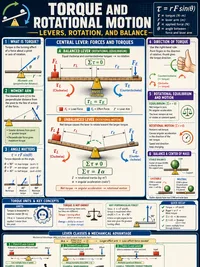
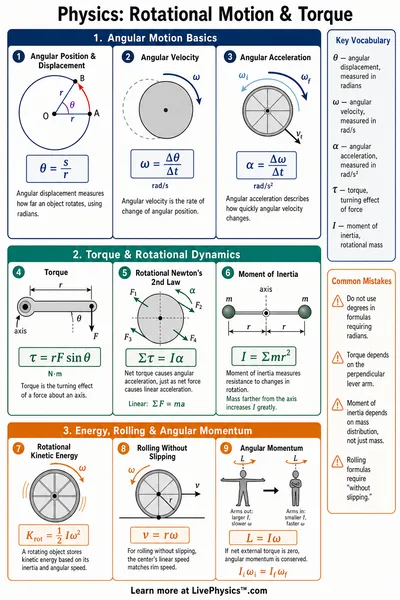
Gears cannot create energy. When you gain speed you lose torque, and when you gain torque you lose speed, always in exact proportion (assuming no friction).
Torque increase (reduction gearbox)
Small driver, large driven gear. The driven gear turns slower but with proportionally more torque. Used in electric motors driving heavy loads, lug wrenches, and drill presses.
Speed increase (overdrive)
Large driver, small driven gear. The driven gear spins faster but produces less torque. Used in bicycle chain rings, lathe headstocks, and clock escapements.
Power conservation
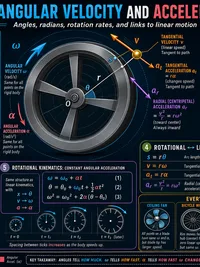
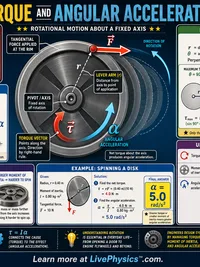
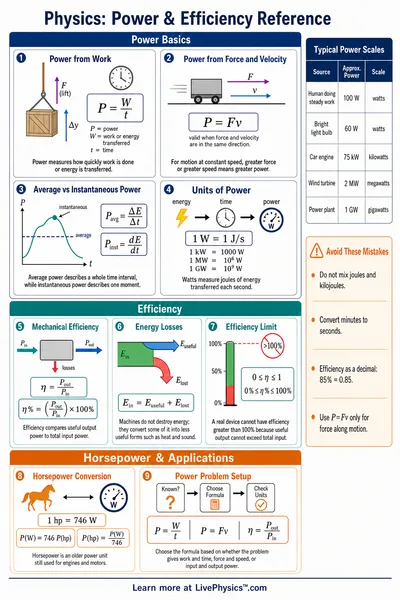
Power = Torque x Angular velocity (RPM). Input power equals output power when friction is ignored.
Mechanical Advantage
What it measures
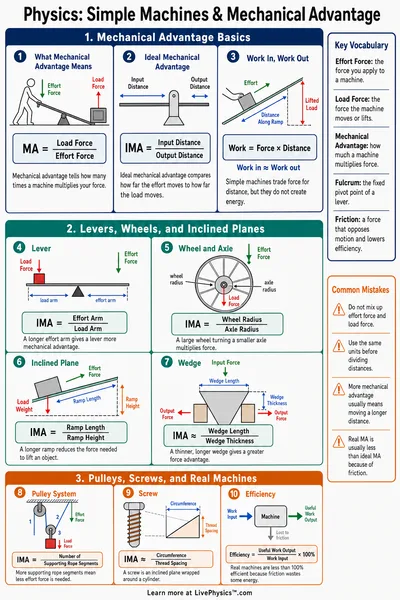
Mechanical advantage (MA) is the ratio of output force to input force. For a simple gear pair MA equals the gear ratio, MA = driven teeth / driver teeth.
MA greater than 1
The output delivers more torque than the input. The machine multiplies force at the cost of speed. Useful when you need to move heavy loads with a smaller motor.
MA less than 1
Output torque is less than input torque, but output speed exceeds input speed. Useful in applications requiring high rotational speed such as cooling fans or generators.
Ideal vs real
This tool shows ideal mechanical advantage. Real gears lose energy to friction, so actual output torque is always slightly less than the theoretical maximum.
Real-World Uses
Bicycle gears
Derailleur systems move the chain between different-sized sprockets to change the gear ratio. A large front ring with a small rear cog gives high speed (flat road); a small front ring with a large rear cog gives low speed but high torque (steep hill).
Car transmissions
Lower gears use large driven sprockets (high gear ratio) to maximize torque for acceleration. Higher gears use near-1:1 ratios for efficient highway cruising.
Analog clocks
Gear trains convert the fast oscillation of the escapement wheel into the slow, precise rotation of the hour hand. A series of gear pairs multiply speed reductions through the gear train.
Industrial gearboxes
Electric motors spin at 1200-3600 RPM. Gearboxes reduce this to the 10-100 RPM needed by conveyors, mixers, and pumps while multiplying torque by the same factor.