Practice interpreting electric fields and electric potential, including charge interactions, field direction, and basic calculations.
Read each problem carefully. Show your work and include units when needed.
Describing forces, field strength, and electric potential
Physics - Grade 9-12
- 1
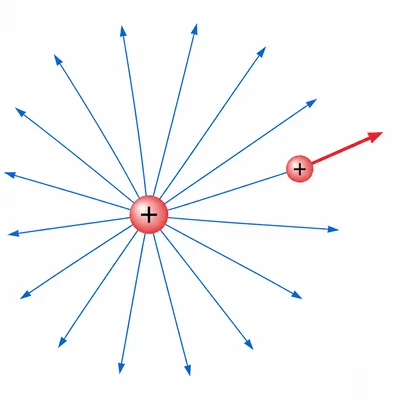
A positive test charge is placed near a single positive source charge. Describe the direction of the electric force on the test charge and the direction of the electric field at that location.
- 2
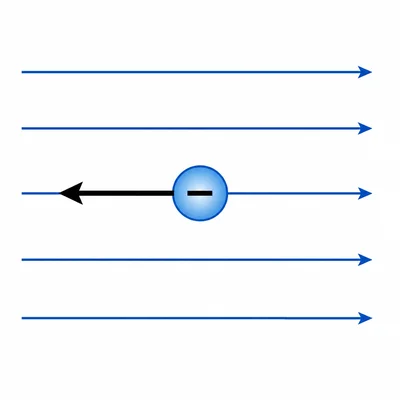
A negative test charge is placed in an electric field that points to the right. Describe the direction of the electric force on the charge.
- 3
An electric field has magnitude 120 N/C. What is the electric force on a charge of 0.50 C placed in the field?
- 4
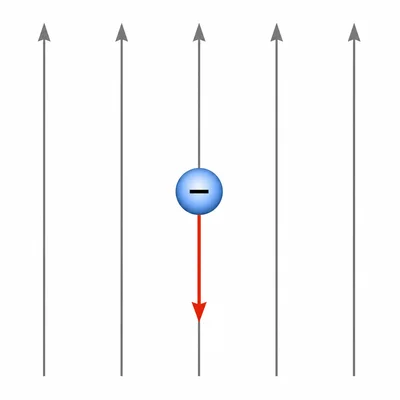
A charge of -2.0 C is placed in an electric field of 15 N/C directed upward. Find the magnitude of the force and state its direction.
- 5
The electric field strength at a point is 250 N/C. What source charge would produce a force of 500 N on a test charge placed there?
- 6
Explain the difference between electric force and electric field in one or two complete sentences.
- 7
An electric potential difference of 24 V exists between two points. How much work is done to move a charge of 3.0 C between those points?
- 8
A charge of 2.0 C gains 18 J of electric potential energy when moved to a new location. What is the electric potential difference between the two locations?
- 9
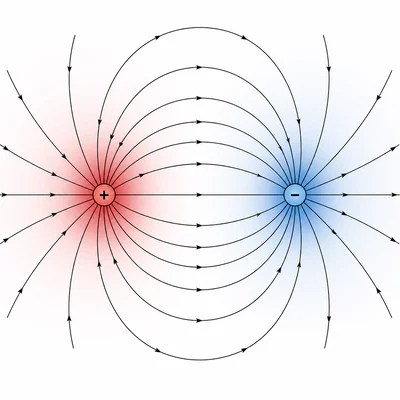
State whether electric potential is higher near a positive charge or near a negative charge, assuming each charge is isolated. Give a brief explanation.
- 10
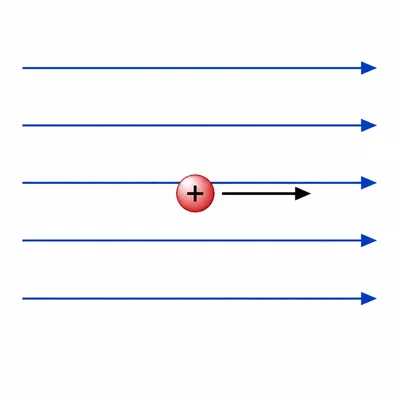
A positive charge moves in the same direction as the electric field. Does its electric potential energy increase or decrease? Explain briefly.
- 11
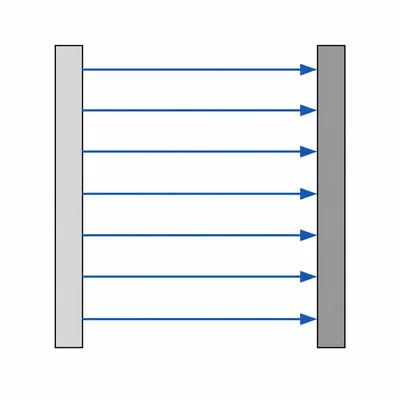
Two parallel plates create a uniform electric field from left to right. Describe how the electric potential changes as you move from left to right.
- 12
A charge of 4.0 C is moved through a potential difference of 6.0 V. Calculate the change in electric potential energy.