Why Do Some Things Burn and Others Don't?
How fuel, oxygen, and heat make fire possible
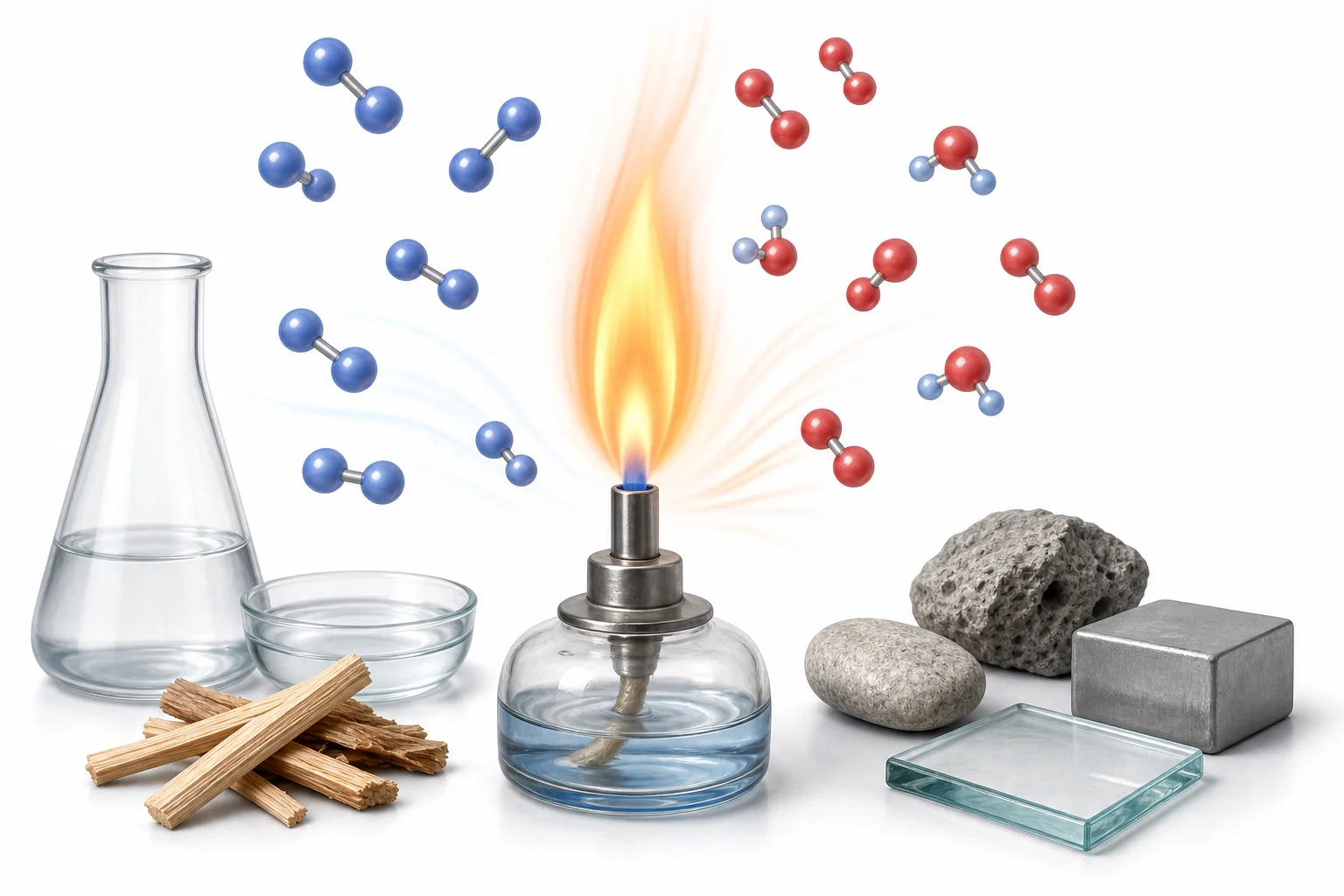
Something burns when it can react with oxygen and release enough energy to keep the reaction going. It also needs enough heat to start, which is why paper catches fire more easily than a metal pan. Some metals can burn too, but many need much higher heat or smaller pieces before they ignite.
Fire looks simple, but burning is a chemical reaction with clear rules. A wooden match, a candle wick, and a strip of paper can burn because their particles react with oxygen in the air. A glass cup or a steel spoon usually does not burn in a campfire because the reaction is too hard to start or does not release enough useful heat under those conditions. Chemists often explain fire with the fire triangle. A flame needs fuel, oxygen, and heat. Remove one part, and the fire stops. This idea helps explain why water can put out a flame, why a lid can smother a small pan fire, and why some materials need a very hot spark before they ignite. Burning also shows that matter changes. The starting substances become new substances such as carbon dioxide, water vapor, ash, and metal oxides.
The fire triangle
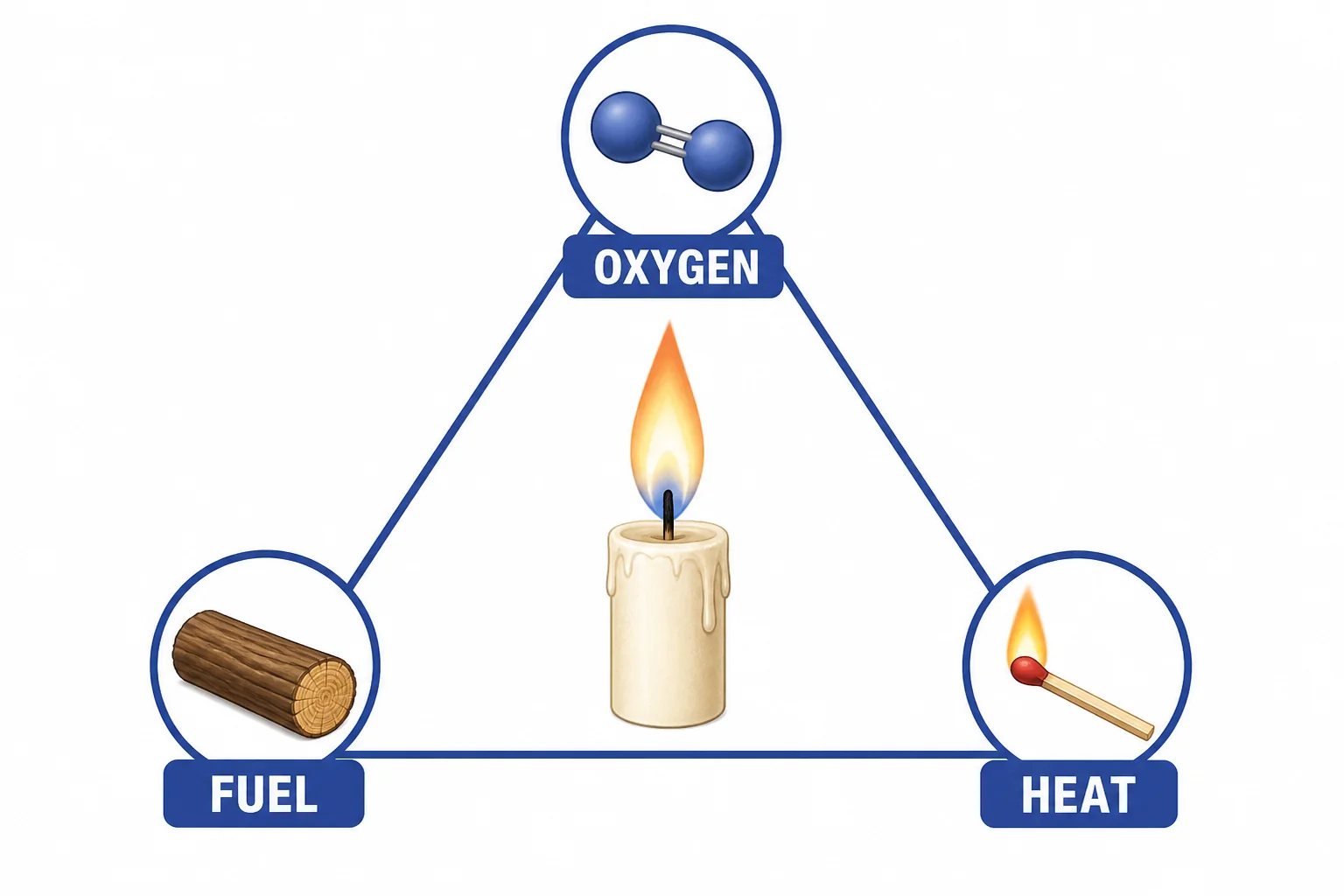
Take away any side of the fire triangle, and the flame stops.
Fuel is not just anything
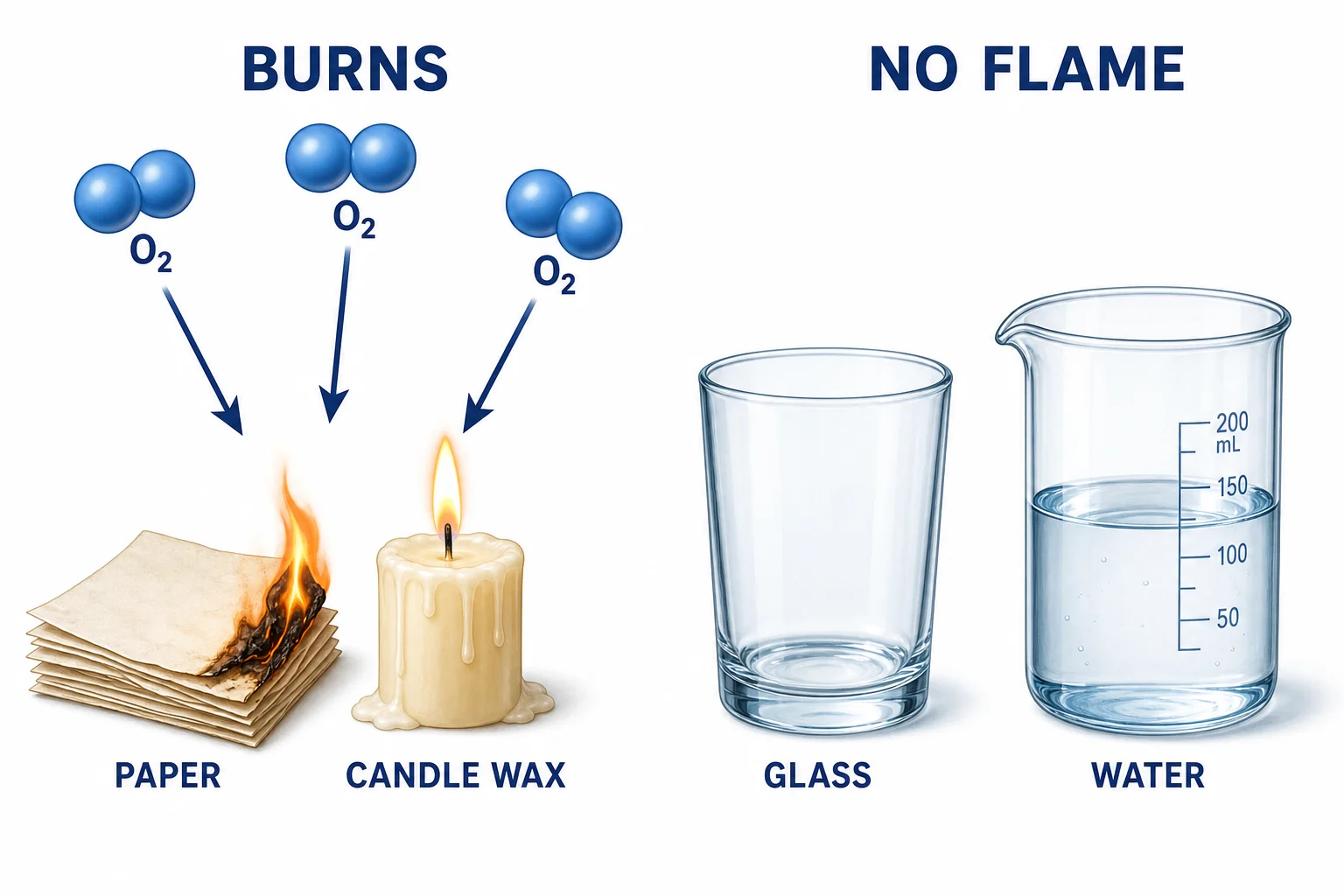
A material burns only if the reaction gives back enough energy.
Heat starts the reaction
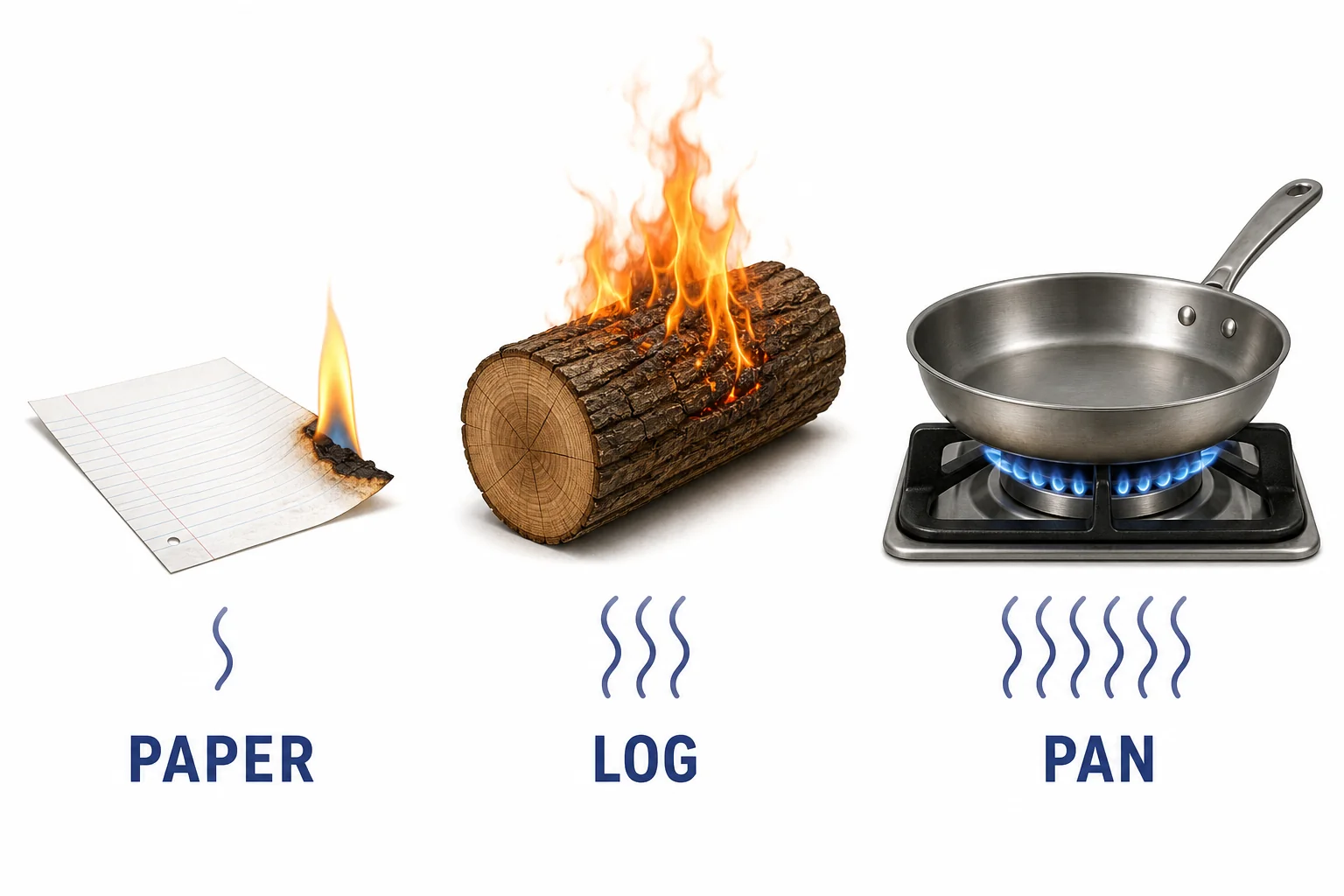
Ignition depends on both the material and how heat moves through it.
Why small pieces burn faster
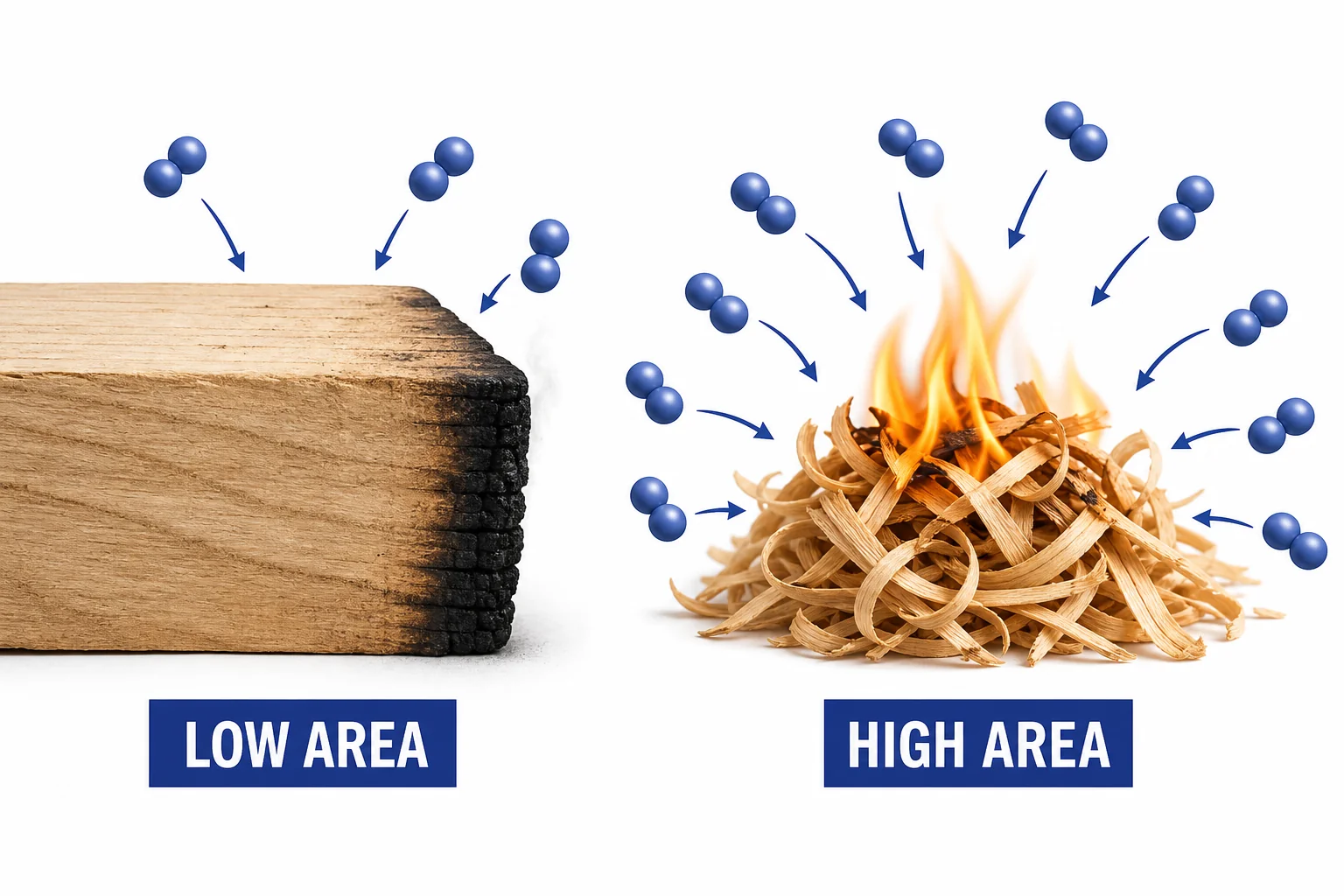
Thin pieces and powders let oxygen reach more fuel at once.
Metals can burn too
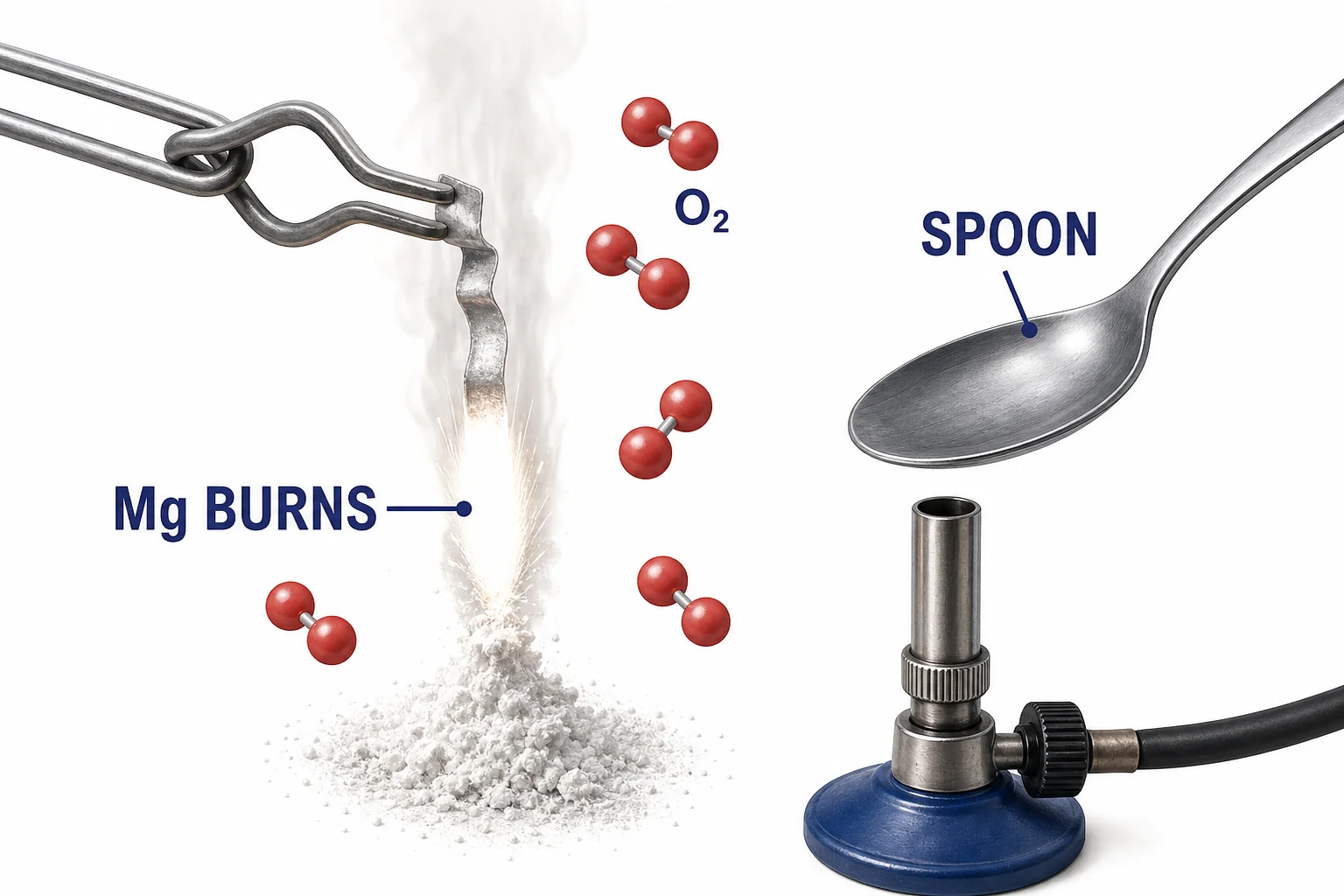
Metal can be fuel when heat, oxygen, and surface area make the reaction fast enough.
Vocabulary
- Combustion
- A fast chemical reaction with oxygen that releases heat and often light.
- Fuel
- A material that can release energy when it reacts, often with oxygen.
- Ignition temperature
- The temperature a material must reach before it starts burning.
- Flash point
- The lowest temperature where a liquid gives off enough vapor to ignite when a spark or flame is present.
- Oxide
- A compound made when an element combines with oxygen, such as magnesium oxide.
In the Classroom
Fire triangle card sort
15 minutes | Grades 6-8
Students sort examples by which part of the fire triangle is removed. Use cases such as covering a candle, wetting paper, and moving a match away from a wick.
Surface area burn model
20 minutes | Grades 6-8
Students compare a solid sugar cube model with crushed sugar using safe paper drawings or blocks, not open flame. They explain why smaller pieces expose more surface to oxygen.
Magnesium reaction analysis
25 minutes | Grades 7-8
The teacher demonstrates or shows a video of magnesium ribbon burning. Students identify the reactants, the product, and the evidence that a chemical reaction occurred.
Key Takeaways
- • Burning needs fuel, oxygen, and enough heat to start and continue.
- • Combustion is a chemical reaction that forms new substances.
- • Some materials do not burn easily because they are already stable or need much higher heat.
- • Small pieces, powders, and fibers can burn faster because they expose more surface to oxygen.
- • Some metals can burn, including magnesium ribbon and thin steel wool under the right conditions.