Why Does Soda Fizz?
Gas escaping from a pressurized drink
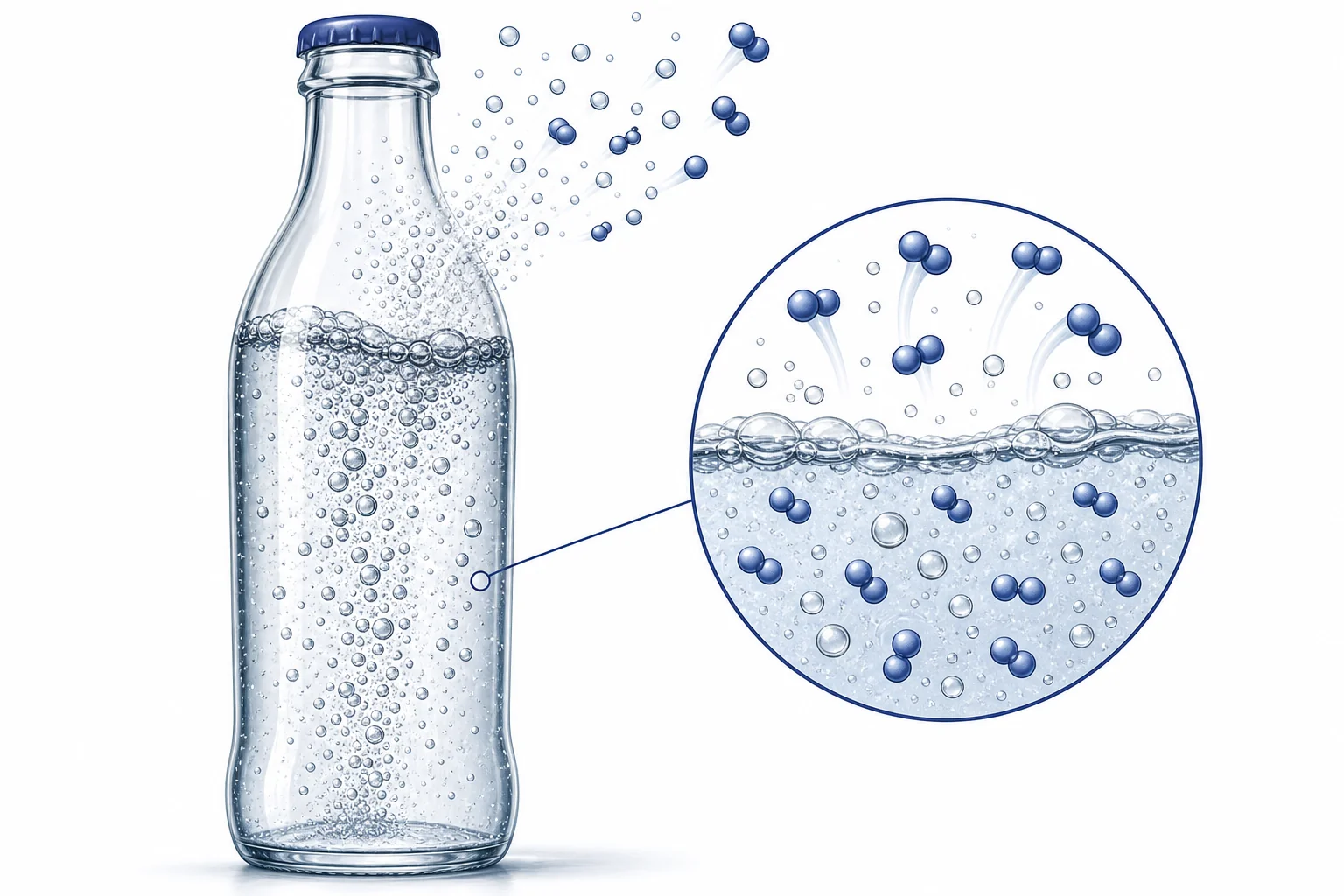
Soda fizzes because it holds carbon dioxide gas under high pressure. When you open the bottle, the pressure drops, so the gas leaves the liquid. Tiny scratches, dust, or ice give bubbles places to start.
A sealed soda bottle looks calm, but it is storing a lot of gas. During bottling, carbon dioxide is pushed into the drink under high pressure. That pressure helps the gas stay mixed with the water. When the cap opens, the pressure above the liquid suddenly drops. The drink can no longer hold as much carbon dioxide, so gas particles begin to escape. They form bubbles, rise through the liquid, and pop at the surface. This is fizz. The same drink can fizz more or less depending on temperature, shaking, and the surface it touches. A warm soda usually loses gas faster than a cold one. A rough candy or a scratched glass can make many bubbles appear at once. Soda fizz is a good middle-school chemistry example because it links particles, mixtures, pressure, and changes that are mostly physical.
Gas is packed in
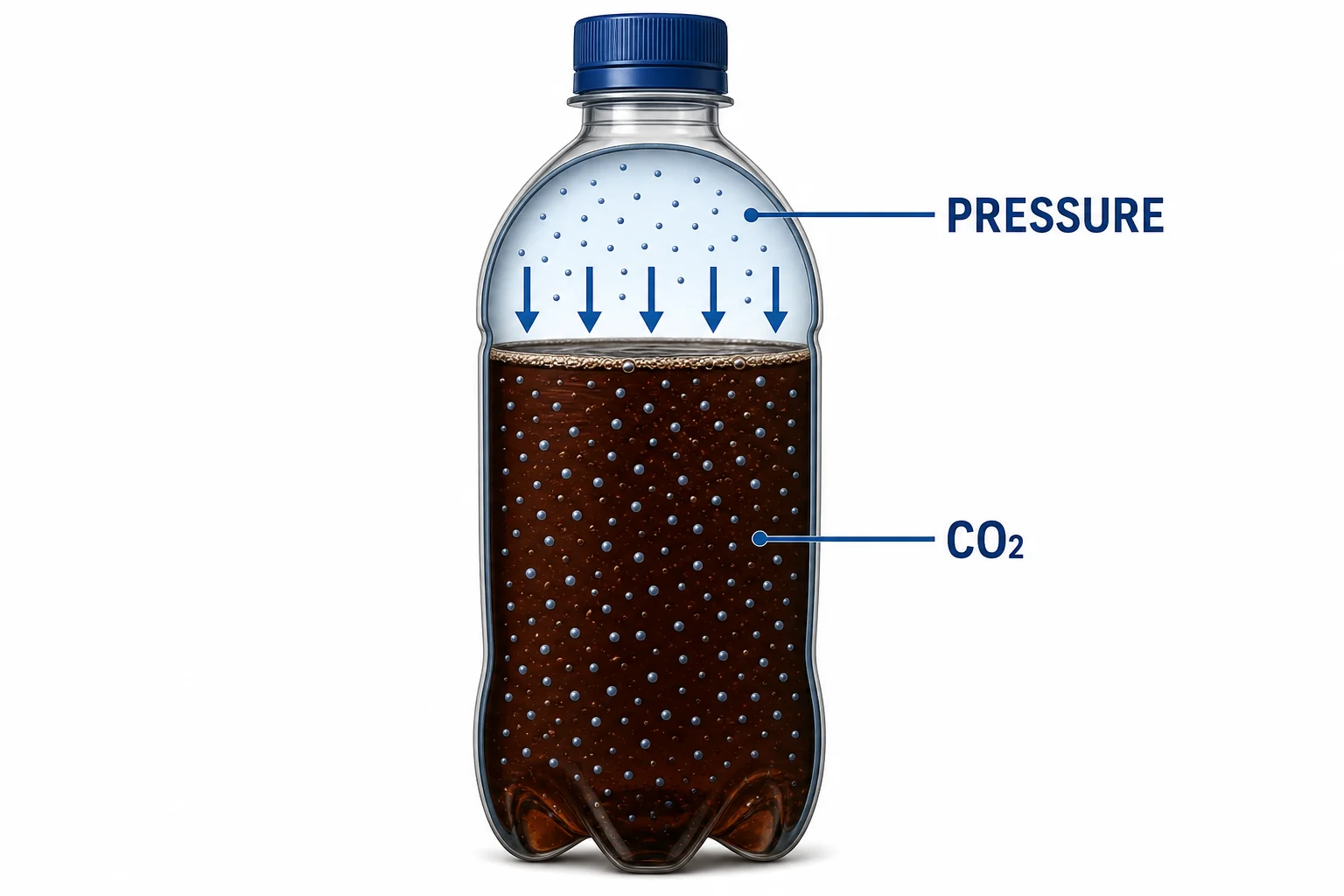
More pressure means more carbon dioxide can stay dissolved.
Opening drops pressure
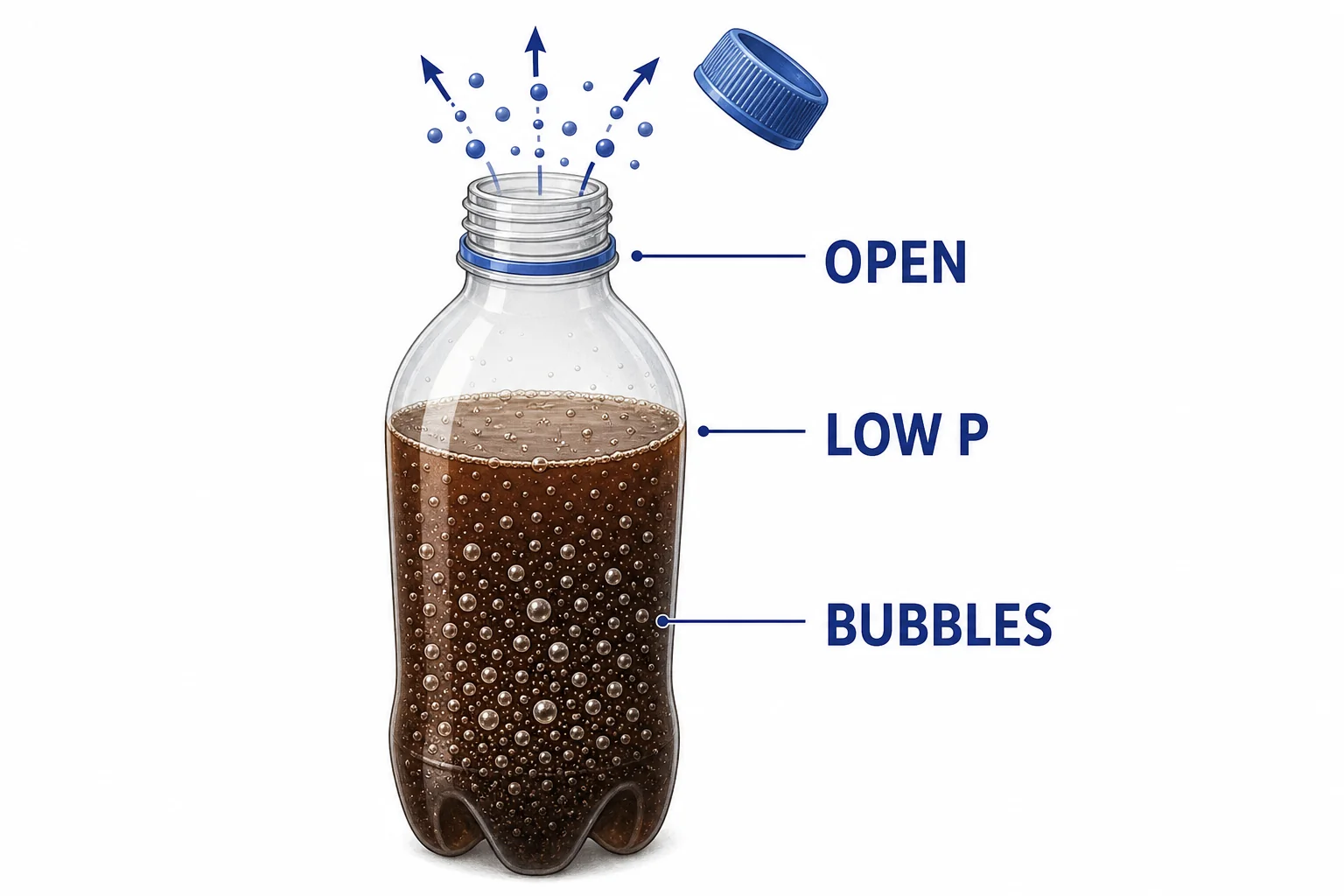
Fizz starts because the drink can no longer hold as much gas.
Bubbles need starting spots
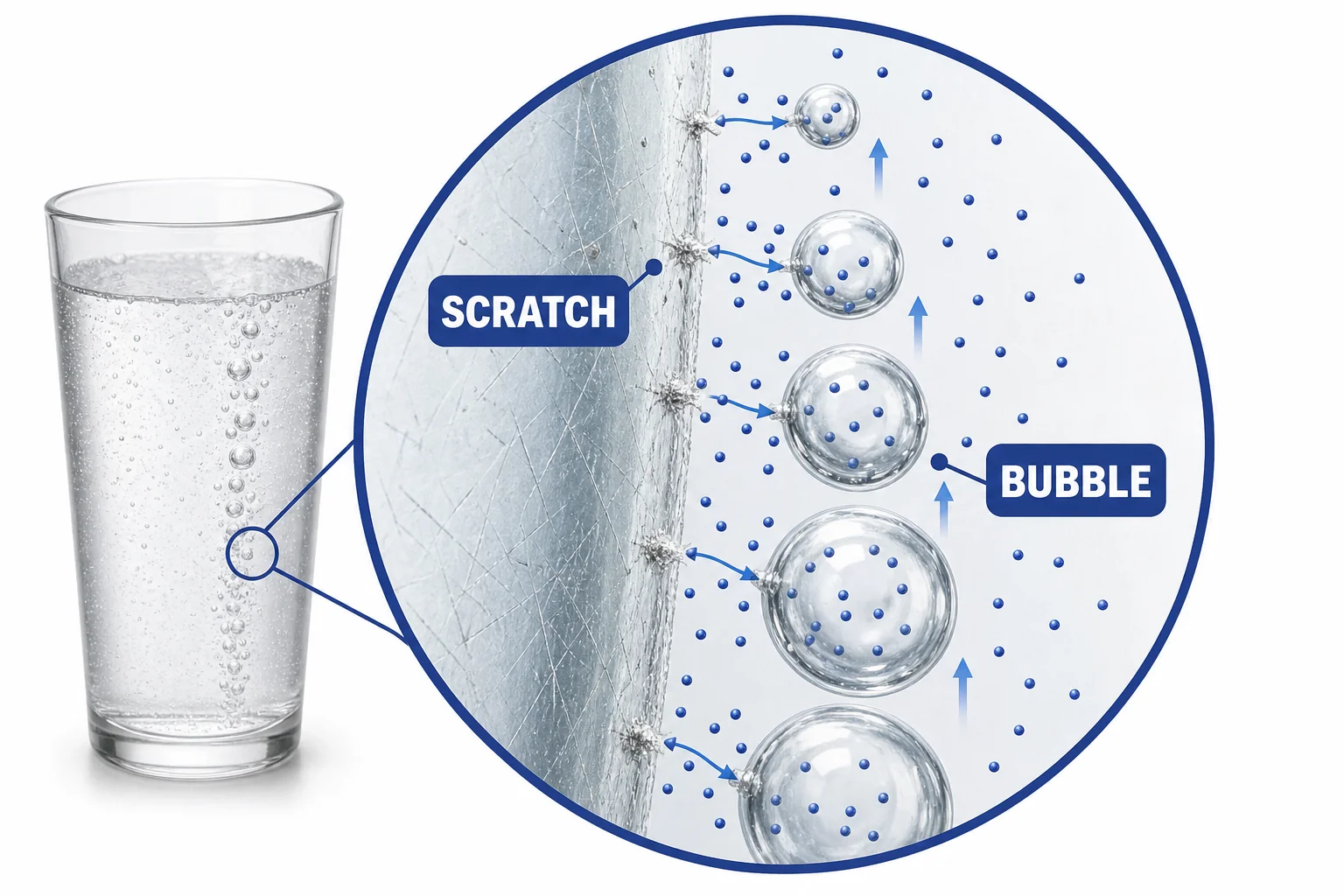
Nucleation sites are tiny bubble starter spots.
Temperature changes fizz
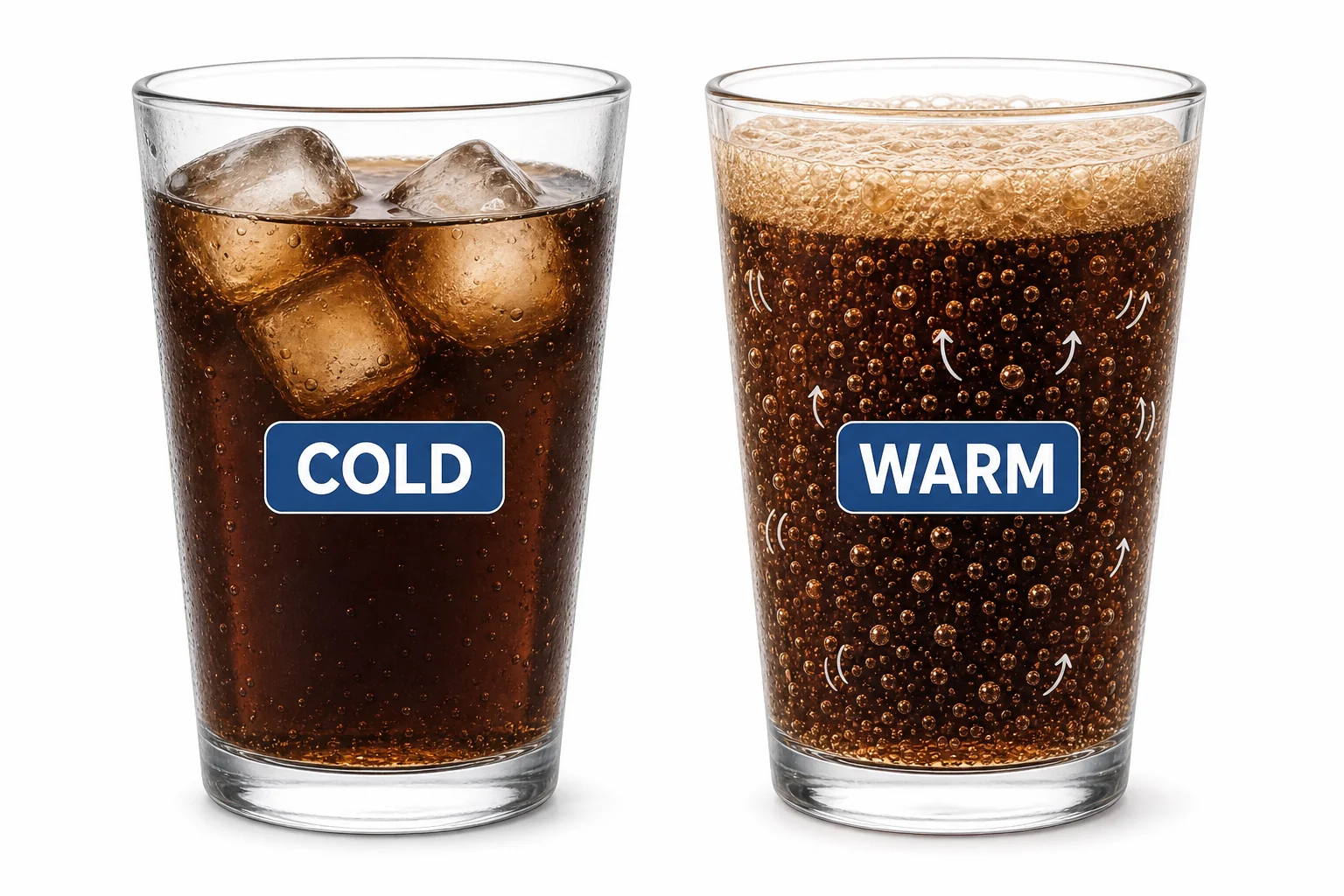
Cold liquid holds dissolved carbon dioxide better than warm liquid.
Fizz affects taste
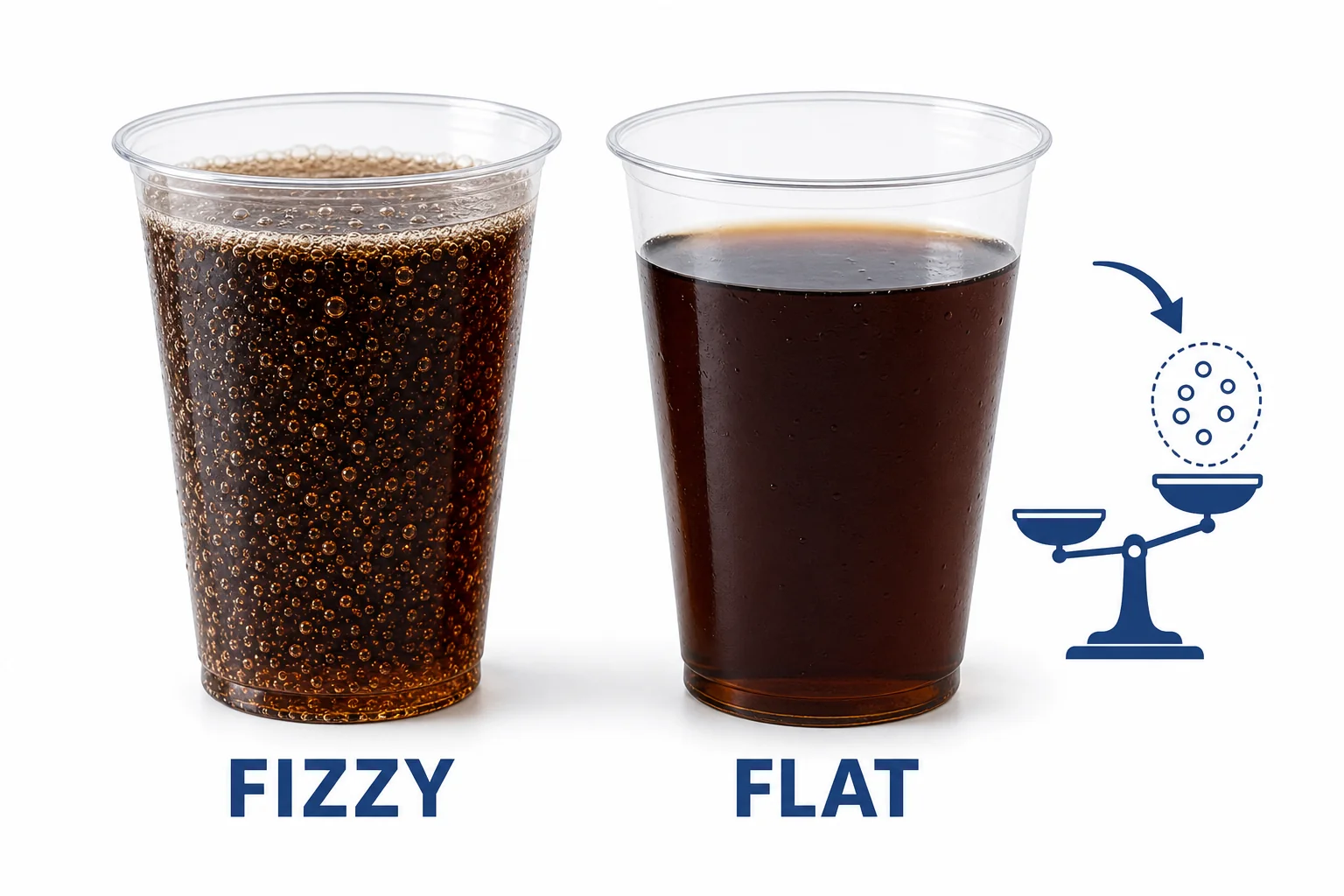
Flat soda has lost much of its dissolved carbon dioxide.
Vocabulary
- Carbon dioxide
- A gas made of carbon and oxygen atoms. It is the gas added to soda to make fizz.
- Dissolved gas
- Gas particles spread throughout a liquid mixture.
- Pressure
- A push spread over an area. In a sealed soda bottle, gas pressure helps keep carbon dioxide in the liquid.
- Solubility
- How much of a substance can dissolve in another substance under certain conditions.
- Nucleation site
- A tiny spot where gas particles can collect and start a bubble.
- Carbonic acid
- A weak acid that forms when some carbon dioxide reacts with water.
In the Classroom
Cold soda, warm soda
20 minutes | Grades 6-8
Students compare equal amounts of cold and warm carbonated water in clear cups. They observe bubble rate, foam height, and how long the fizz lasts.
Bubble starter test
25 minutes | Grades 6-8
Students place clean objects with different textures into small cups of carbonated water. They look for which surfaces create the most bubble streams and connect the results to nucleation sites.
Mass of escaping gas
30 minutes | Grades 7-8
Students measure the mass of a sealed carbonated drink, then open it and measure again after fizzing slows. The class discusses where the missing mass went and why gas is still matter.
Key Takeaways
- • Soda contains carbon dioxide gas dissolved under pressure.
- • Opening the container lowers pressure and lets carbon dioxide escape.
- • Bubbles often begin at scratches, dust, ice, or other nucleation sites.
- • Cold soda holds carbon dioxide better than warm soda.
- • Soda goes flat when much of its dissolved carbon dioxide leaves.