Understanding Homeostasis & Feedback Loops Explorer
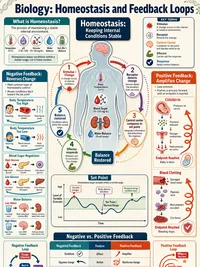
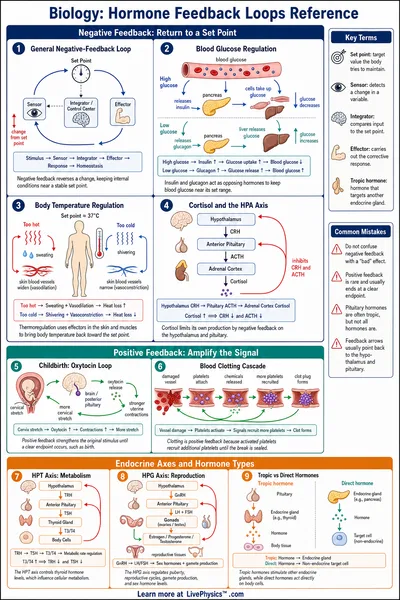
A set point is not usually one exact number. It is a useful target range that supports normal cell activity. Enzymes work best within particular conditions, so small changes in temperature, acidity, water balance, or sugar level can affect many reactions.
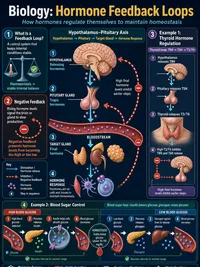
Sensors continually collect information from blood, tissues, and the outside world. In many cases, the brain compares that information with a target, though some control systems work locally within an organ. The response often begins before a change becomes dangerous.
Temperature control shows why several body systems may act at once. When you become too warm, sweat glands release fluid and skin blood vessels widen. Evaporation removes heat, while extra blood near the skin loses heat to the air.
When you are cold, vessels narrow, muscles may shiver, and metabolism can rise. These actions cost water or energy. They work best when the environment allows heat exchange, which is why high humidity or heavy clothing can make cooling harder.
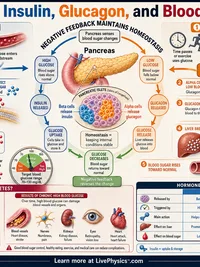
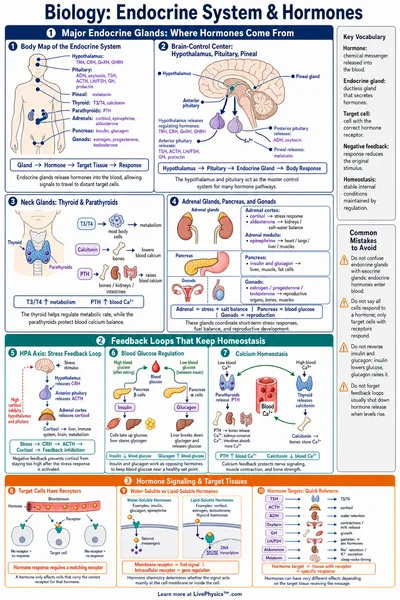
Blood glucose control depends on chemical signals called hormones. After a meal, insulin helps many body cells take in glucose from the blood. The liver can store some of that glucose for later use.
Between meals, glucagon tells the liver to release stored glucose. Insulin does not destroy glucose, and glucagon does not create it from nothing.
They help move fuel to where it is needed. Diabetes can develop when the body makes too little insulin, does not respond well to insulin, or both.
Positive feedback is useful when the body needs a process to move quickly toward a clear ending. During childbirth, contractions can trigger signals that strengthen later contractions. In blood clotting, activated platelets attract more platelets to a damaged blood vessel.
These processes cannot continue forever. Birth ends when the baby is delivered, and clotting stops when the wound is sealed. Without a stopping condition, an amplifying process could cause harm instead of solving a problem.
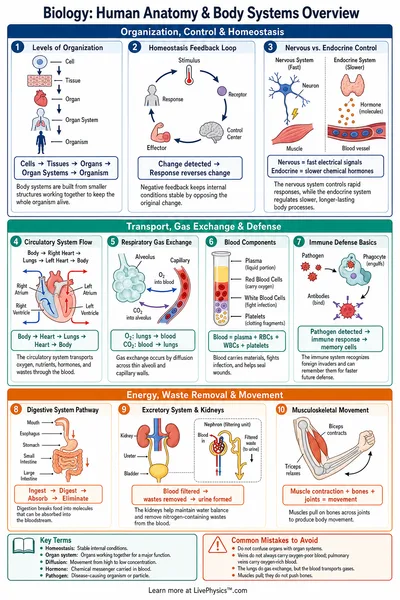
When studying a feedback system, identify the changing variable first. Then trace the sensor, the control center, the signal, and the body part that carries out the response. Pay close attention to the direction of change.
A response may reduce the original disturbance, or it may increase it for a limited purpose. Graphs often show a delay because cells and organs need time to respond. Real life examples include sweating during exercise, thirst after salty food, and dizziness when blood pressure changes too quickly.