Practice identifying, testing, and explaining wing design variables that affect a glider's distance, stability, lift, and drag.
Read each problem carefully. Use engineering vocabulary when you explain your reasoning. Show calculations in the space provided when needed.
Investigating how wing choices affect glider flight
Engineering - Grade 6-8
- 1
A student wants to test whether wing length affects how far a paper glider flies. Name the independent variable, the dependent variable, and two controlled variables for this test.
- 2
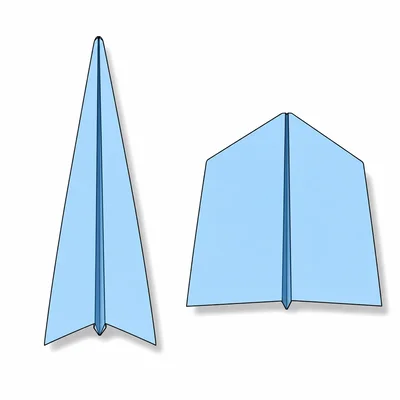
Two gliders are made from the same material. Glider A has long, narrow wings. Glider B has short, wide wings with the same total wing area. Which glider likely has a higher aspect ratio, and why?
- 3
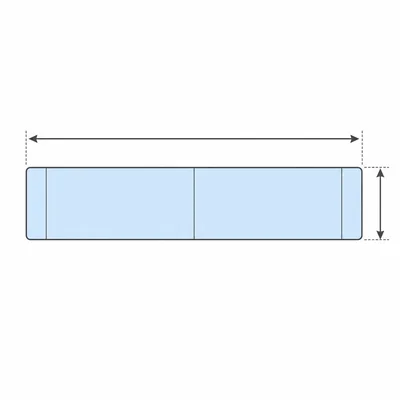
A glider wing has a wingspan of 40 cm and an average wing chord of 10 cm. Estimate the wing area using area = wingspan x average chord.
- 4
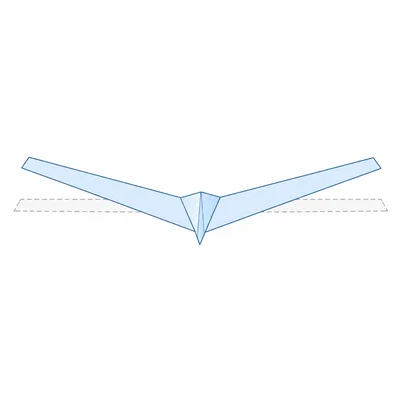
During a test, a glider with flat wings rolls side to side and does not fly straight. The student adds a small upward angle to both wings from the center. What design variable did the student change, and how might it help?
- 5
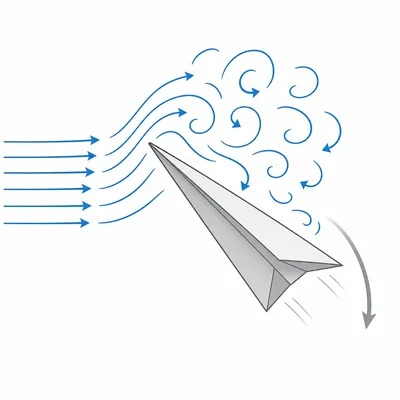
A glider is launched at a very steep nose-up angle and quickly stalls, then drops. Explain what likely happened to the airflow over the wings.
- 6
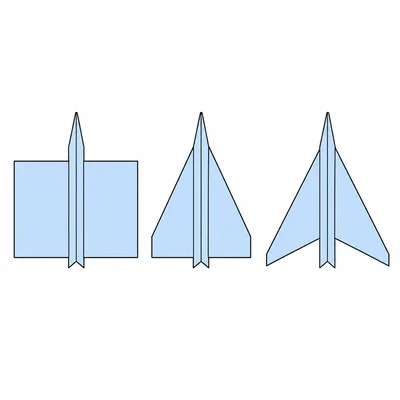
A team tests three wing shapes and records average flight distances. Rectangular wings: 8 m. Tapered wings: 11 m. Swept wings: 9 m. Which wing shape performed best in this test, and what should the team do before making a final design choice?
- 7
Why should a team run at least three trials for each glider design instead of testing each design only once?
- 8
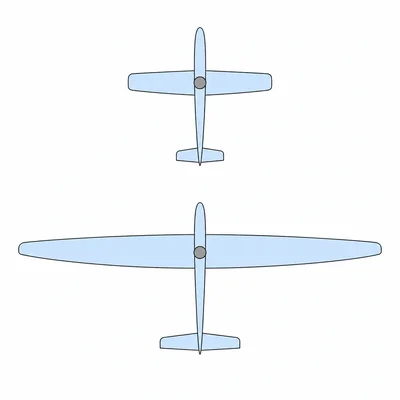
A glider has a mass of 30 g and a wing area of 150 cm². Another glider has a mass of 30 g and a wing area of 300 cm². Which glider has lower wing loading, and what might that mean for flight?
- 9
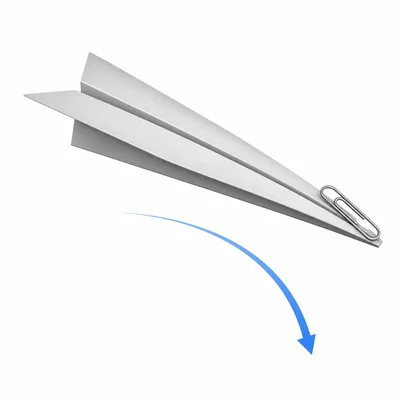
A student adds a large paper clip to the nose of a glider. The glider now dives quickly. What design variable changed, and what adjustment might improve the flight?
- 10
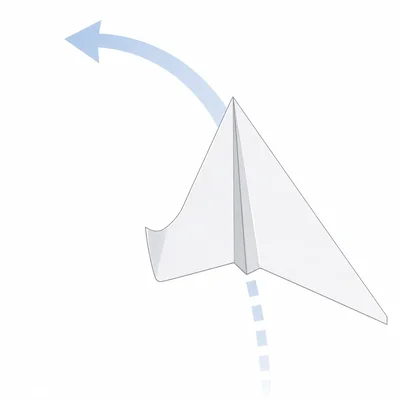
A glider turns sharply to the left during every flight. List two possible wing-related causes of this problem.
- 11
A team wants to compare two wingtip designs. They change the wingtips, but they also use different paper, different glider masses, and different launchers. Explain why this is not a fair test.
- 12
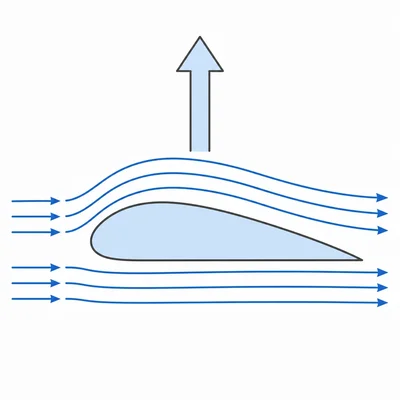
A wing with a smooth curved top and flatter bottom is often used to help create lift. Explain how wing shape can affect lift in a simple glider.
- 13
A student records these flight distances for one glider design: 9 m, 12 m, and 10.5 m. Calculate the average flight distance.
- 14
Look at this design goal: Build a glider that stays in the air as long as possible, not necessarily one that travels the farthest. Name two wing variables that could be tested for this goal and explain why they matter.
- 15
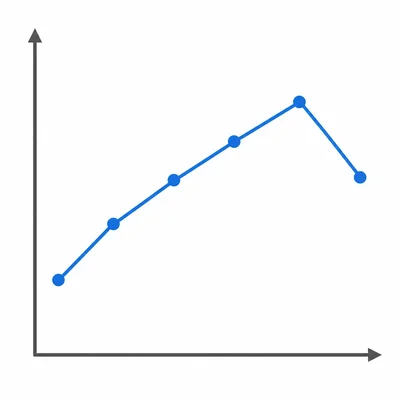
A team creates a graph with wing area on the x-axis and average flight time on the y-axis. The flight time increases from 2.1 seconds to 3.4 seconds as wing area increases, but then drops to 2.8 seconds for the largest wing. What conclusion can the team make?