Sign in to save

Bookmark this page so you can find it later.

Sign in to save

Bookmark this page so you can find it later.

Chemistry middle-school May 21, 2026

Why Does Bread Rise?

Gas bubbles lift dough
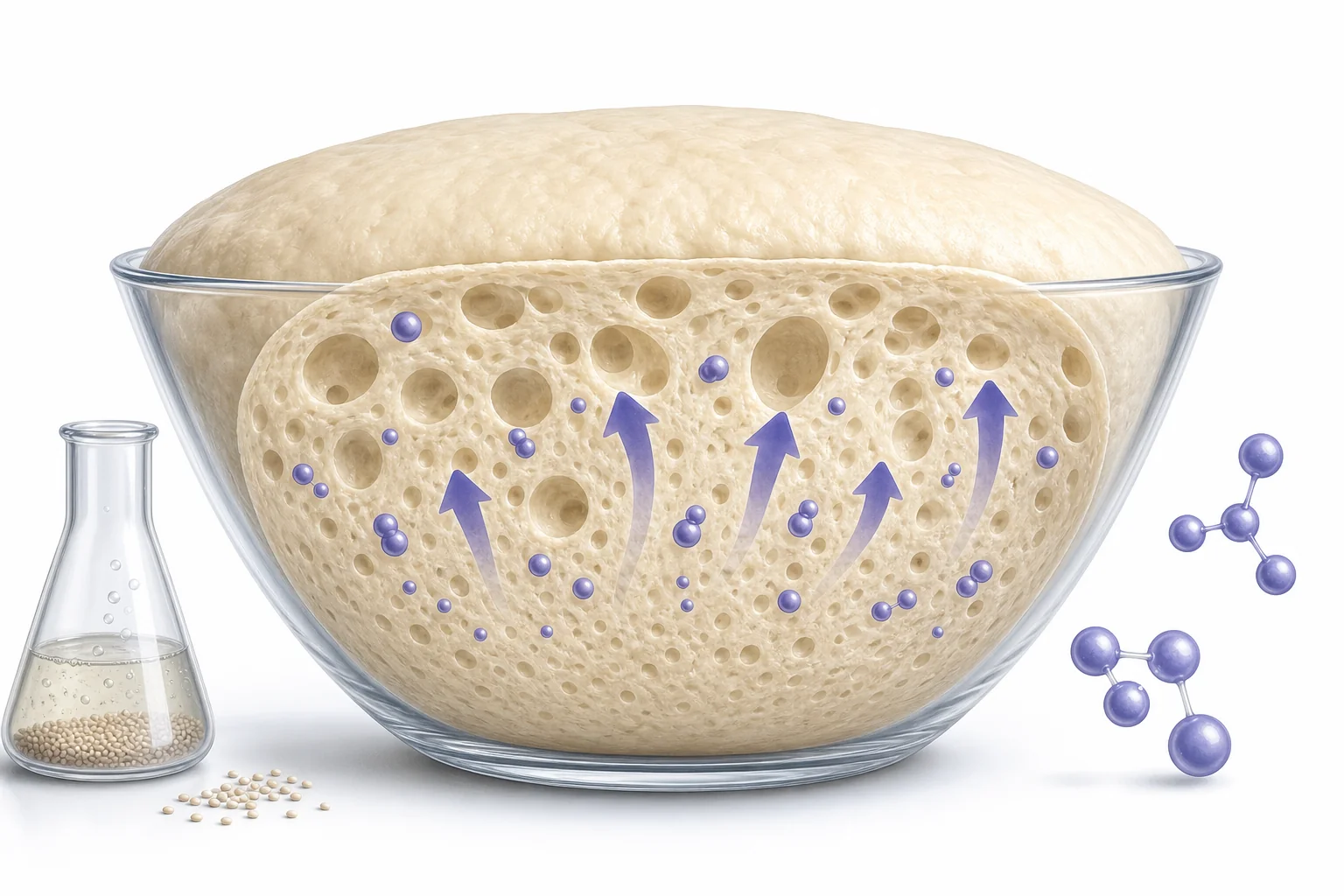
A cutaway view of bread dough showing yeast cells making gas bubbles that become holes in baked bread.

Bread rises because yeast eats sugar and releases carbon dioxide gas. The gas forms bubbles that get caught in the stretchy dough. Heat in the oven makes the bubbles expand and sets the loaf in its risen shape.

Big Idea. NGSS MS-PS1-2 and MS-LS1-7 connect bread rising to matter changes and cells using food for energy.

Bread looks simple, but a loaf is a small chemistry system. Flour, water, yeast, and time work together to change a dense dough into a light food full of tiny holes. Yeast is alive. When it has water, warmth, and sugar, it uses the sugar for energy. One result is carbon dioxide gas. That gas does not just float away. Wet flour forms a stretchy protein network called gluten. The network traps many gas bubbles, so the dough swells. In the oven, heat speeds the expansion of the gas and turns the soft dough into a firm loaf. This process connects living cells, chemical reactions, and matter changing form. A simple word equation helps show the main change. Glucose becomes ethanol and carbon dioxide, written as $\text{glucose} \rightarrow \text{ethanol} + \text{carbon dioxide}$.

Yeast uses sugar
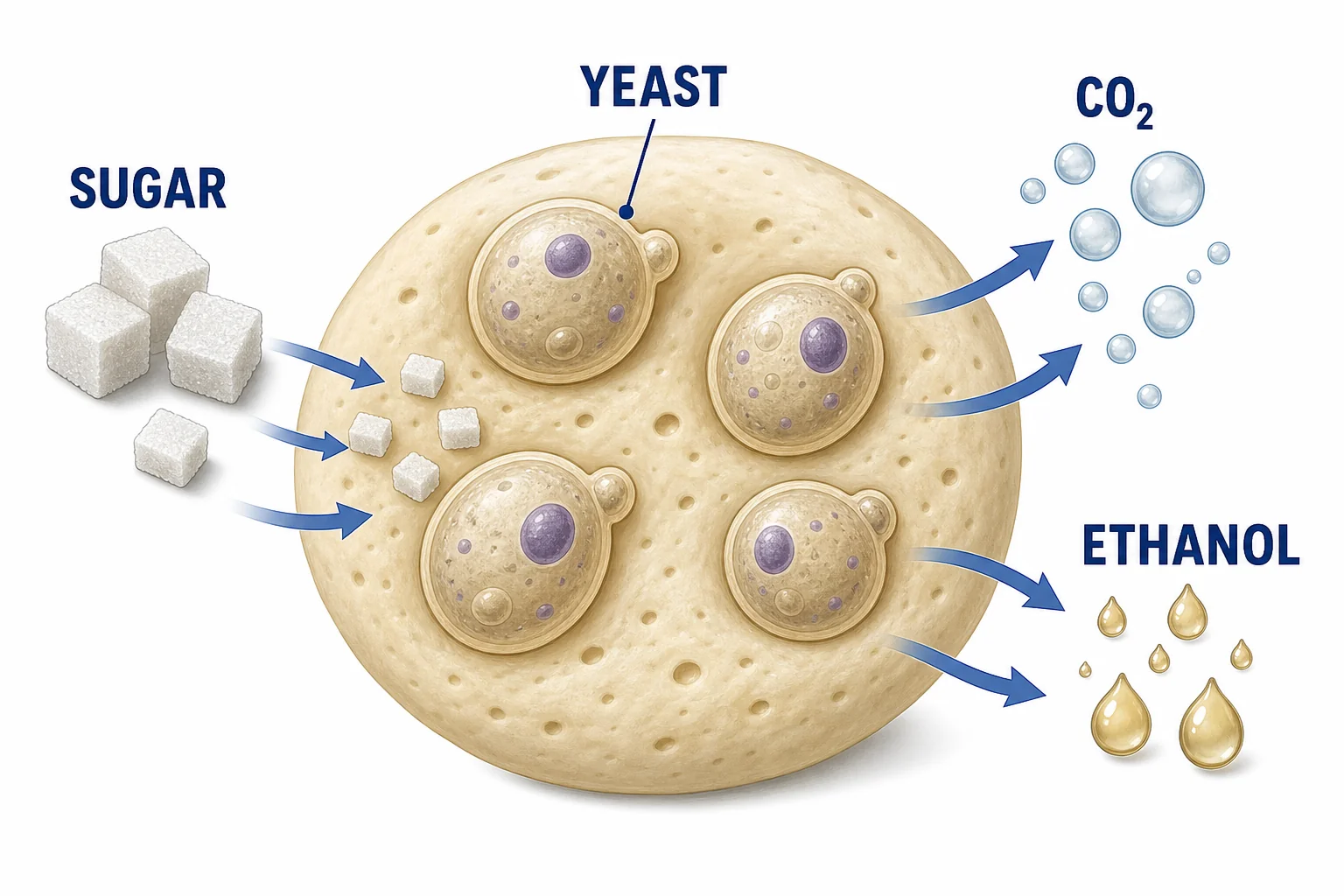
Yeast cells in dough taking in sugar and releasing carbon dioxide and ethanol.
Yeast turns sugar into gas and alcohol.
Yeast is a tiny living fungus. In bread dough, yeast cells find simple sugars from flour or added sweeteners. They use those sugars to get energy. When oxygen is limited inside wet dough, yeast carries out fermentation. During fermentation, glucose molecules are changed into ethanol and carbon dioxide. The ethanol mostly bakes off in the oven. The carbon dioxide matters most for rising because it is a gas. Each yeast cell releases small amounts of gas over time. Millions of yeast cells together make enough gas to push on the dough. This is why warm dough rises faster than cold dough. Yeast enzymes work more quickly when the temperature is warm but not hot. If dough gets too hot before baking, yeast cells can die and stop making gas.

Yeast makes the gas that starts the rise.

Gas bubbles grow
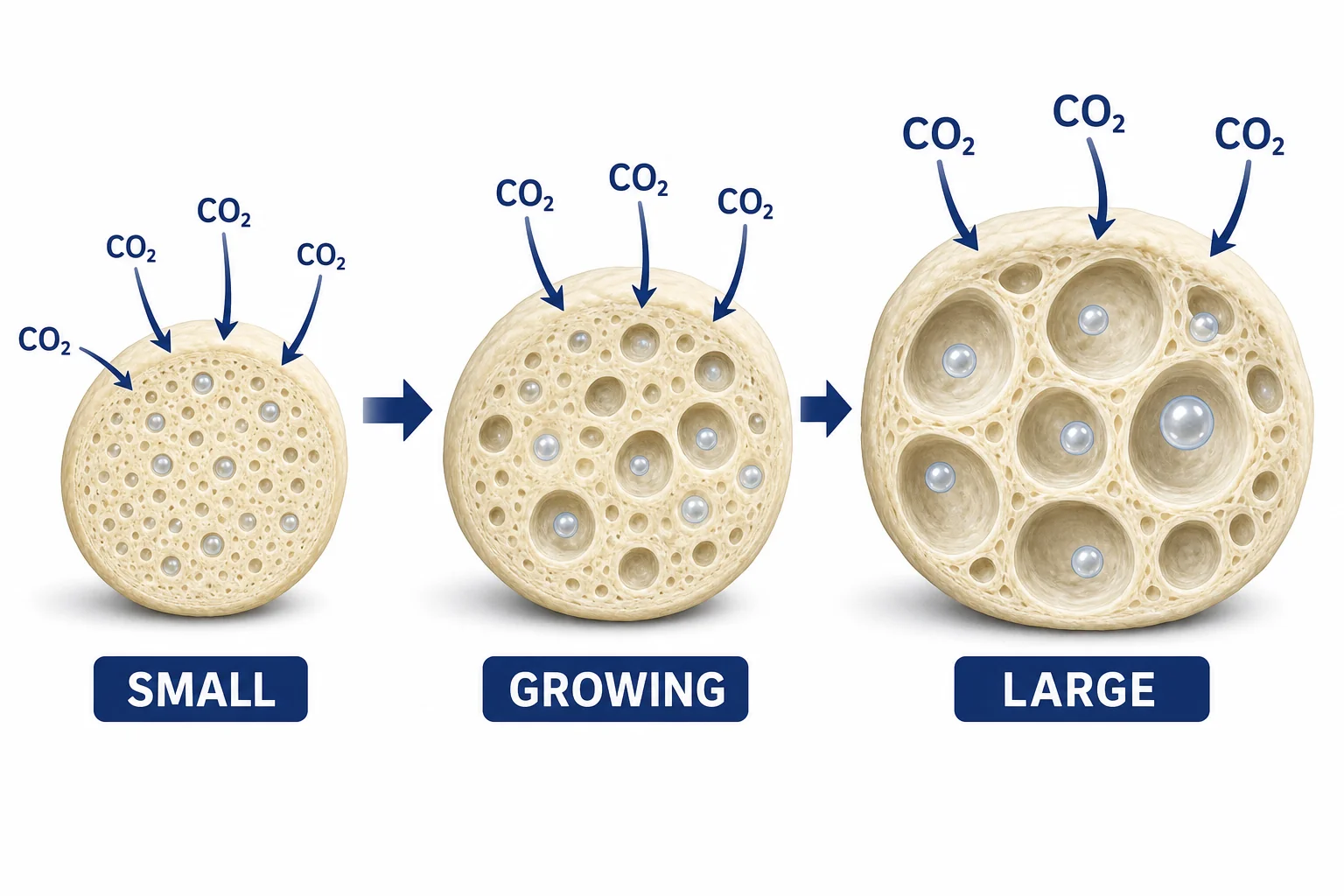
A sequence of dough bubbles getting larger as carbon dioxide enters them.
Gas bubbles spread through dough.
Carbon dioxide gas does not appear as one big pocket. It forms many small bubbles throughout the dough. Some bubbles begin when air is mixed in during kneading. Others form around tiny spaces in the wet flour. As yeast keeps fermenting, carbon dioxide moves into those bubbles and makes them larger. The bubbles push outward on the dough around them. This is pressure from a gas. A gas takes up space, even when it is trapped inside food. The number and size of bubbles affect bread texture. Many small bubbles can make a fine crumb. Larger bubbles can make an open crumb with big holes. Bakers control bubble growth with time, temperature, water, and mixing. Rising dough is not empty space. It is dough stretched around gas.

Rising is gas taking up space inside dough.

Gluten traps gas
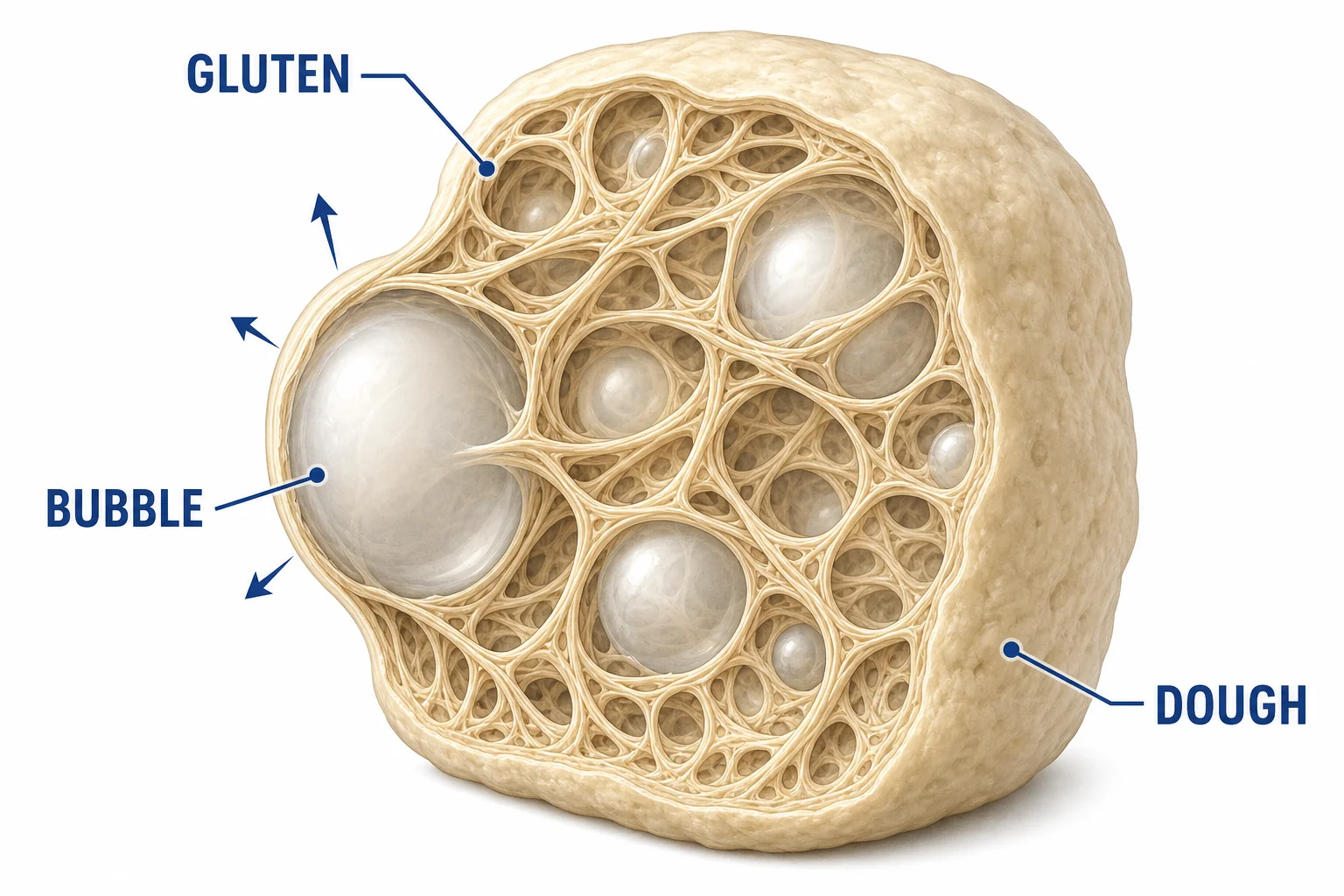
A stretchy gluten network surrounding carbon dioxide bubbles in bread dough.
Gluten acts like a stretchy net.
Flour contains proteins that change when mixed with water. Two important proteins link and stretch to form gluten. Gluten is not a gas maker. It is the net that holds the gas. Kneading helps line up and connect gluten strands. Resting also gives the dough time to become more stretchy. If the gluten network is weak, gas leaks out and the loaf stays flat. If the network is too tight, bubbles may not expand well. A good bread dough balances strength and stretch. This is why bread flour, which has more protein, often makes taller loaves than cake flour. Gluten also explains why many breads need time and handling. The chemistry of flour and water gives the carbon dioxide a place to stay.

Gluten helps gas stay trapped long enough to lift the loaf.

Heat sets the loaf
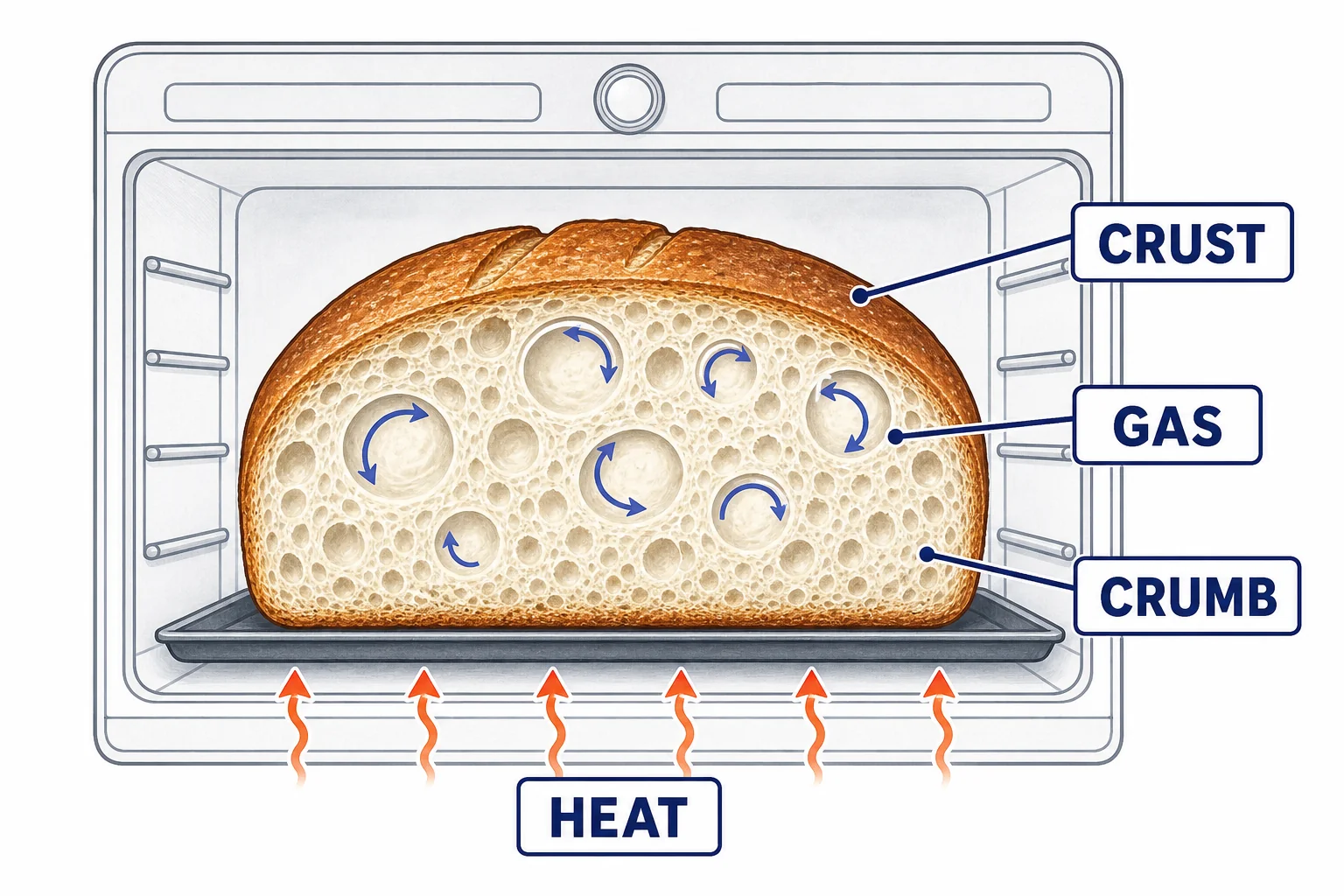
Bread dough in an oven showing expanding gas bubbles and a firming crust.
Heat expands bubbles and sets the crumb.
The oven changes the dough again. At first, heat makes gas expand. Carbon dioxide and water vapor push bubbles larger. This quick early growth is called oven spring. Yeast also works faster for a short time as the dough warms. Then the heat becomes too high for yeast to survive, so fermentation stops. The gluten network firms up. Starch in the flour absorbs water and thickens. Together, these changes set the bread in its final shape. The outside dries and browns into a crust. The inside stays softer because it holds more water. The holes left behind are the places where gas bubbles expanded. When you slice bread, the pattern of holes is evidence of the gas that was trapped during rising.

The oven turns a temporary foam into a solid loaf.

Ingredients change the rise
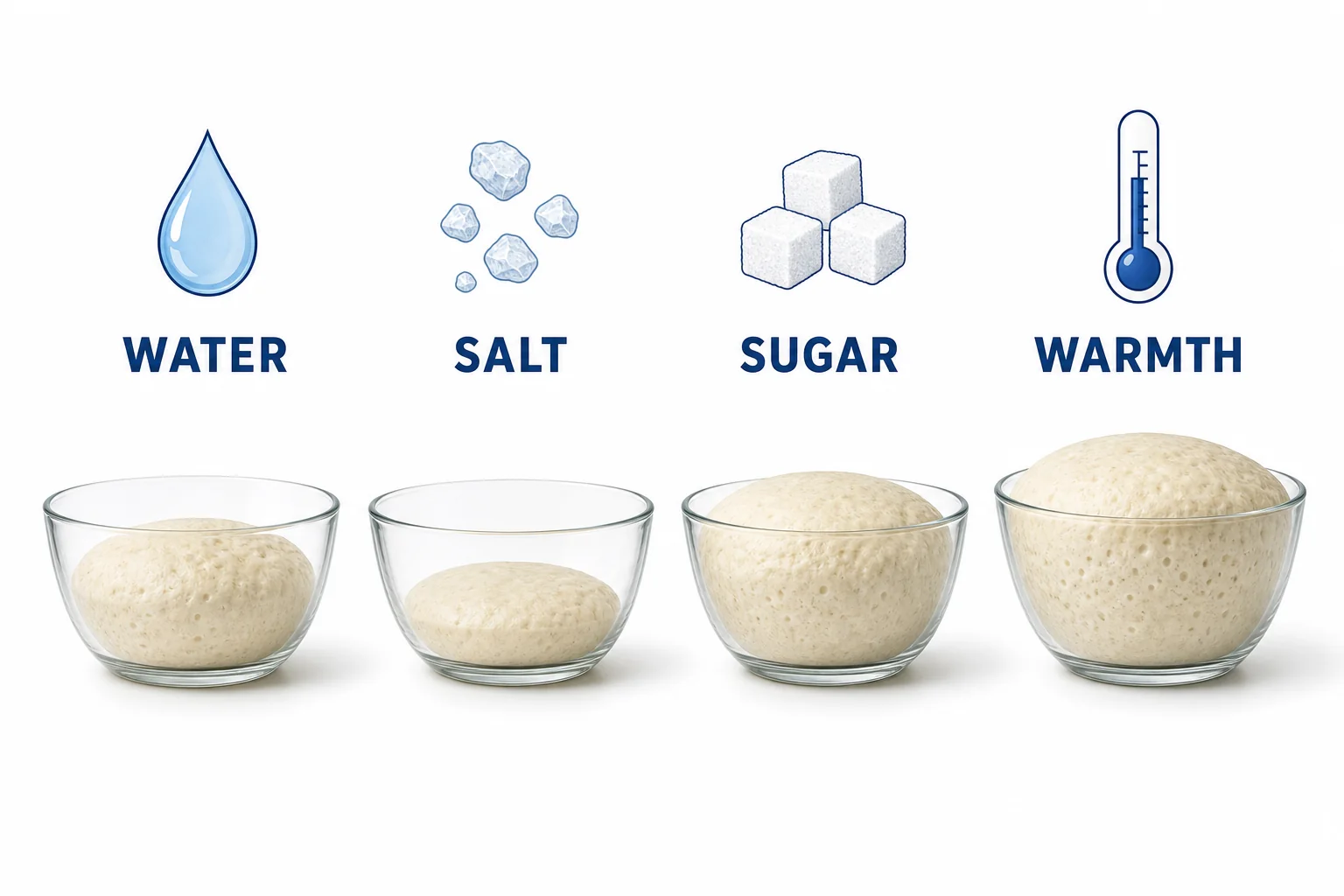
A comparison of bread dough samples showing how water, salt, sugar, and warmth affect rising.
Recipe choices change bubble growth.
Small changes in a recipe can change how bread rises. More water usually makes dough looser, so bubbles can stretch more easily. Too much water can make the dough hard to shape. Salt slows yeast and also strengthens gluten, so it helps control rising. Sugar feeds yeast, but a lot of sugar can pull water away from cells and slow them down. Fat coats flour particles and can make bread tender, but it can also weaken some gluten connections. Temperature matters too. Cool dough rises slowly and often develops more flavor. Warm dough rises faster, but heat that is too high can stop yeast early. Bread making is chemistry because each ingredient affects the particles, cells, and structures in the dough.

Bread rise depends on yeast activity and dough structure.

Vocabulary

Fermentation
A process in which yeast gets energy from sugar and releases carbon dioxide and ethanol.
Carbon dioxide
A gas made by yeast that forms bubbles and helps dough rise.
Gluten
A stretchy protein network in dough that traps gas bubbles.
Ethanol
An alcohol made during yeast fermentation that mostly leaves the bread during baking.
Oven spring
The quick rise of dough early in baking as gases expand and the loaf sets.

In the Classroom

Yeast balloon test

25 minutes | Grades 6-8

Students add yeast, warm water, and sugar to a bottle, then place a balloon over the top. As carbon dioxide forms, the balloon inflates and gives visible evidence that a gas was produced.

Gluten stretch comparison

30 minutes | Grades 6-8

Students mix small dough samples from bread flour and cake flour. After resting, they stretch each sample and compare how well it traps air bubbles.

Temperature and rise rate

45 minutes | Grades 6-8

Students place equal dough samples in cool, room temperature, and warm locations. They measure height change over time and graph the results.

Key Takeaways

  • Yeast cells use sugar and release carbon dioxide gas.
  • Carbon dioxide forms bubbles that push dough upward.
  • Gluten makes a stretchy network that traps the bubbles.
  • Heat expands the bubbles and sets the bread structure.
  • Ingredients and temperature change how fast and how well bread rises.