Why Does Vinegar React With Baking Soda?
A fizzy change that makes a gas
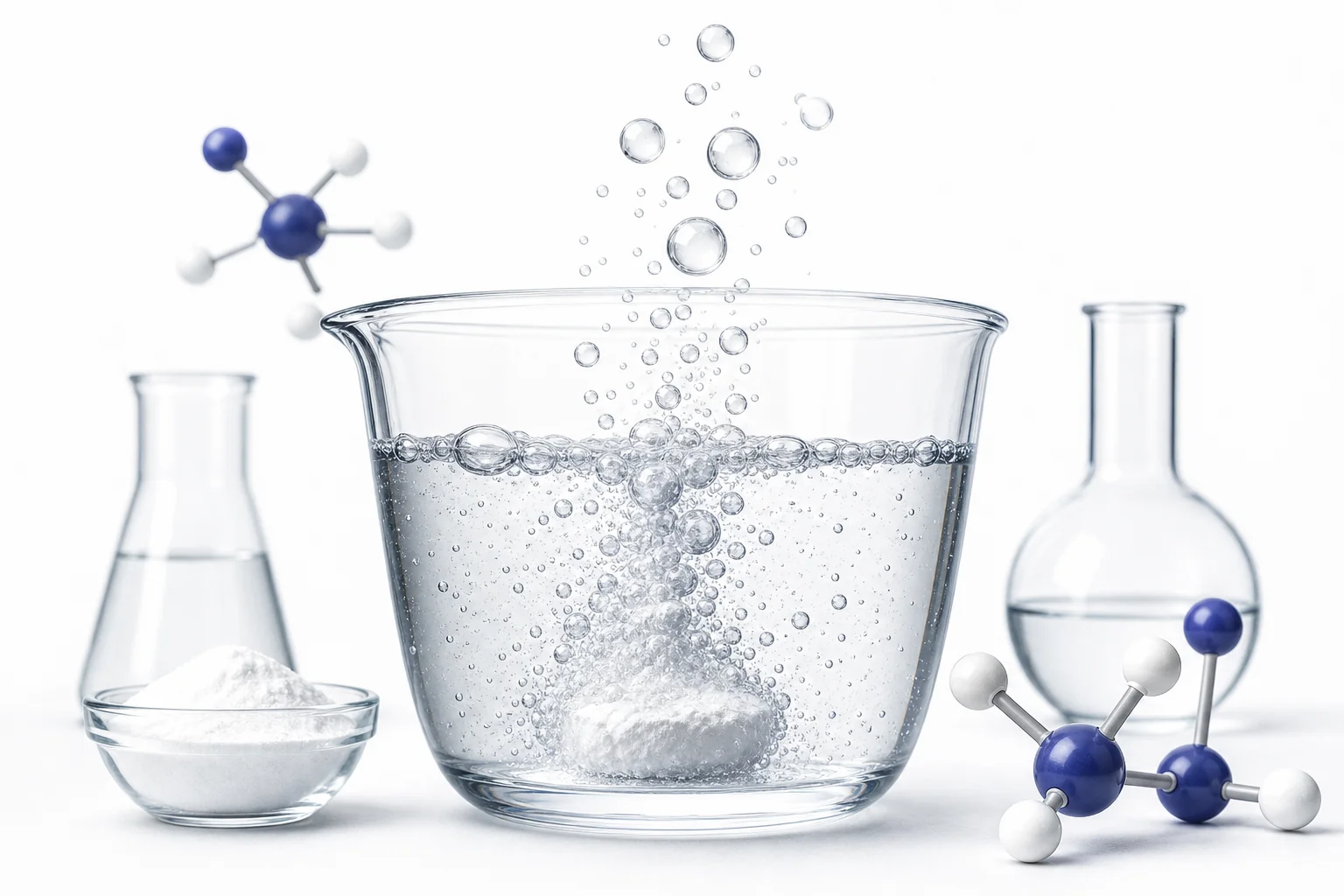
Vinegar reacts with baking soda because they are two substances that change each other when mixed. The bubbles are carbon dioxide gas leaving the liquid. The other new substances are water and a dissolved salt.
Vinegar and baking soda are common kitchen materials, but together they do something that feels surprising. A spoonful of baking soda sits quietly as a white powder. Vinegar looks like plain liquid. When they touch, foam rises and bubbles pop. That fizz is a sign that new substances are forming. This is not just mixing, like stirring sugar into water. It is a chemical reaction. Vinegar contains acetic acid. Baking soda is sodium bicarbonate. When the acid and the baking soda meet, their tiny particles rearrange. One product is carbon dioxide gas. The gas makes the bubbles that lift the foam. Other products stay in the cup as water and a dissolved salt called sodium acetate. This simple reaction helps students see that matter can change in ways we can observe, measure, and explain.
What is in the cup
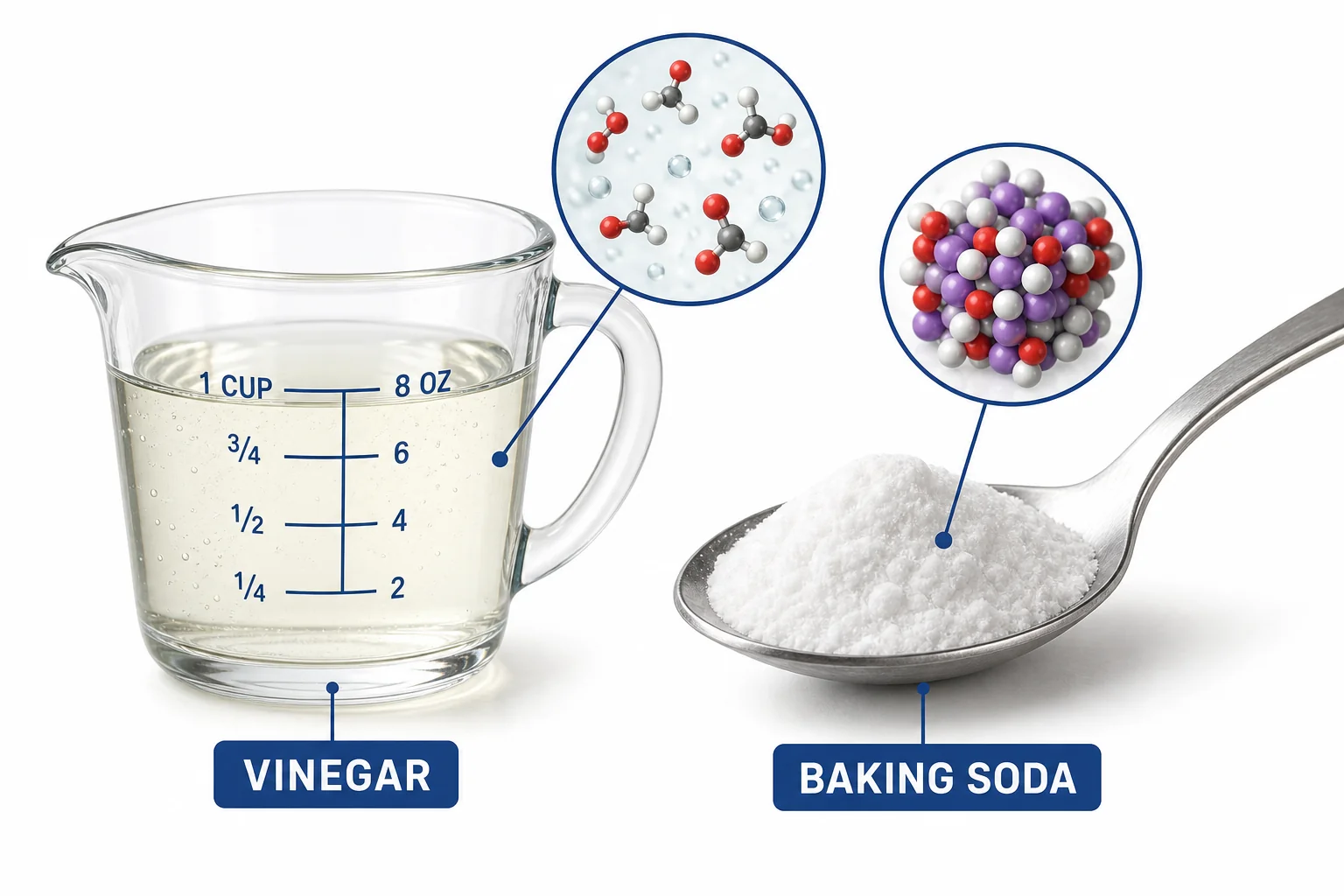
The reaction starts when acid particles meet bicarbonate particles.
The fizz is a gas
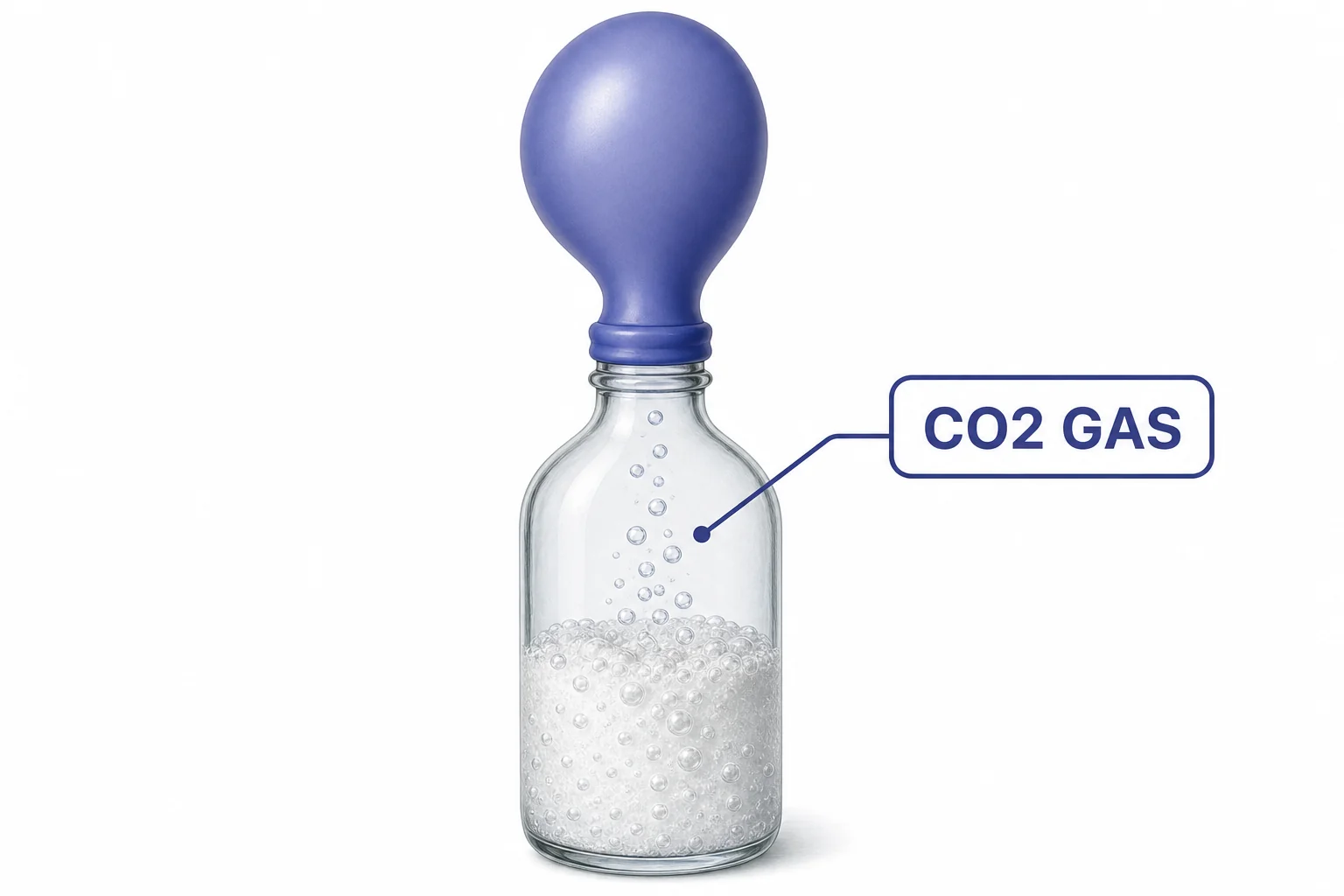
Bubbles are evidence that a new gas is being made.
New substances form
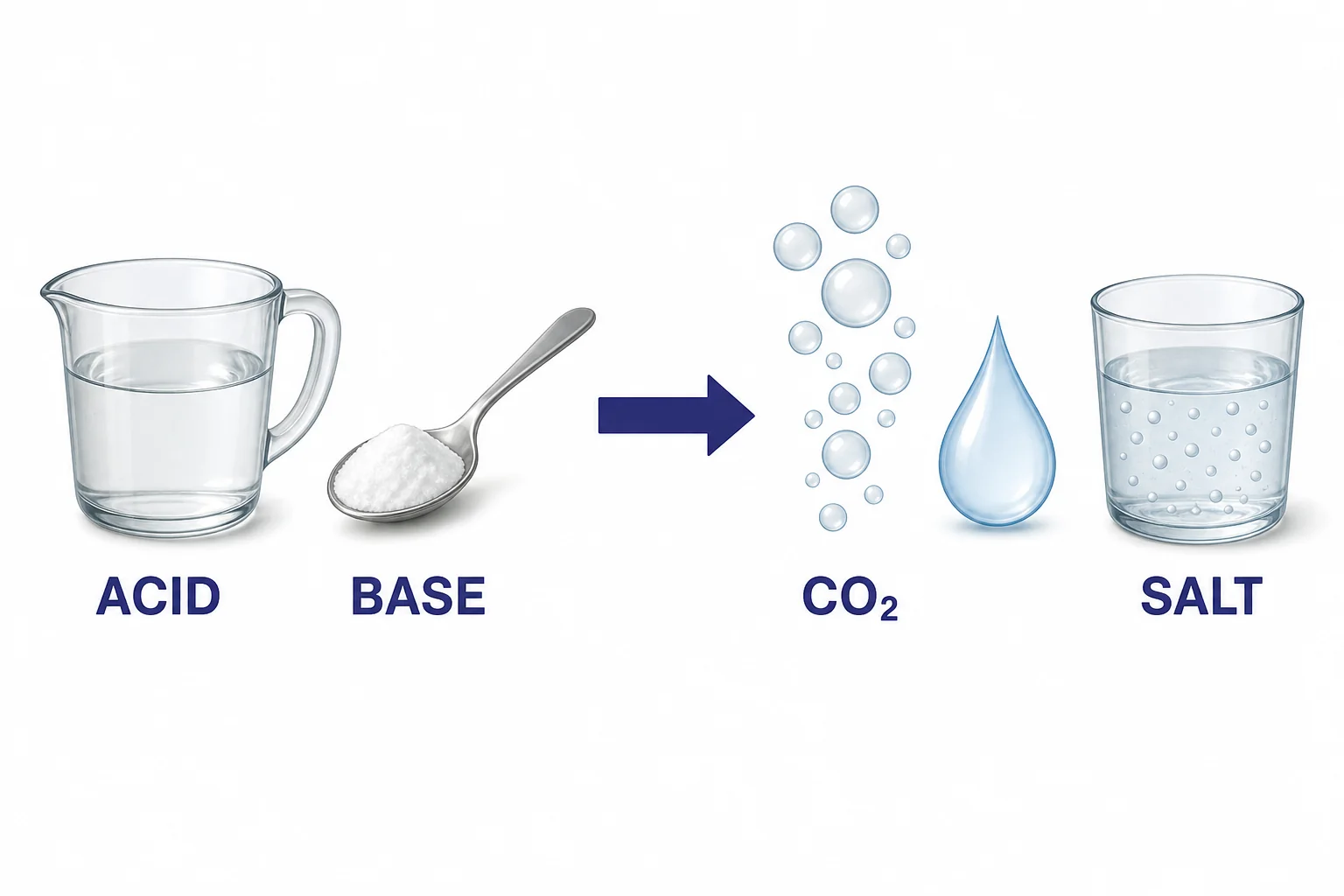
The reaction makes more than bubbles.
Matter is not lost
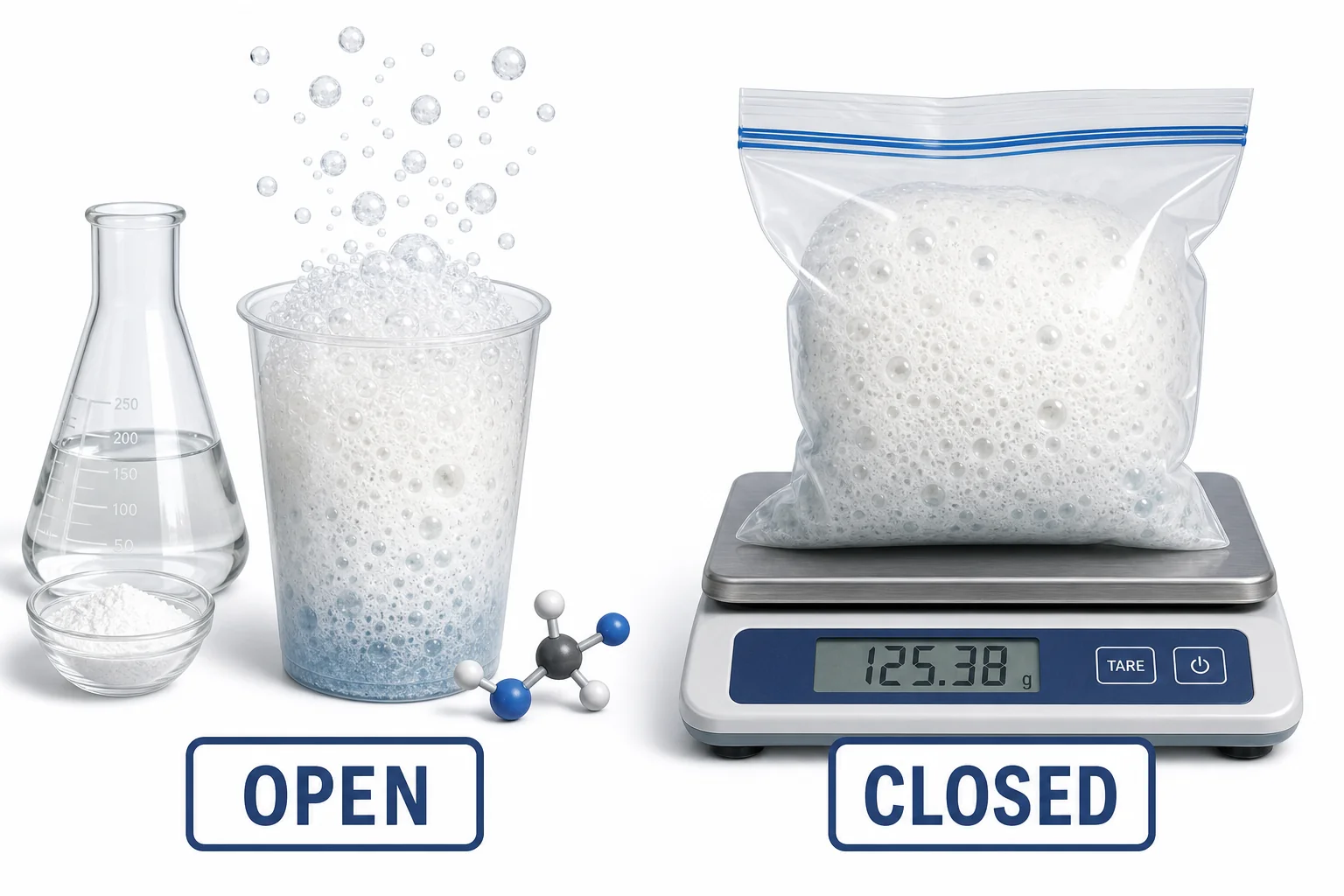
Lost gas can make mass seem to disappear in an open cup.
Changing the amounts
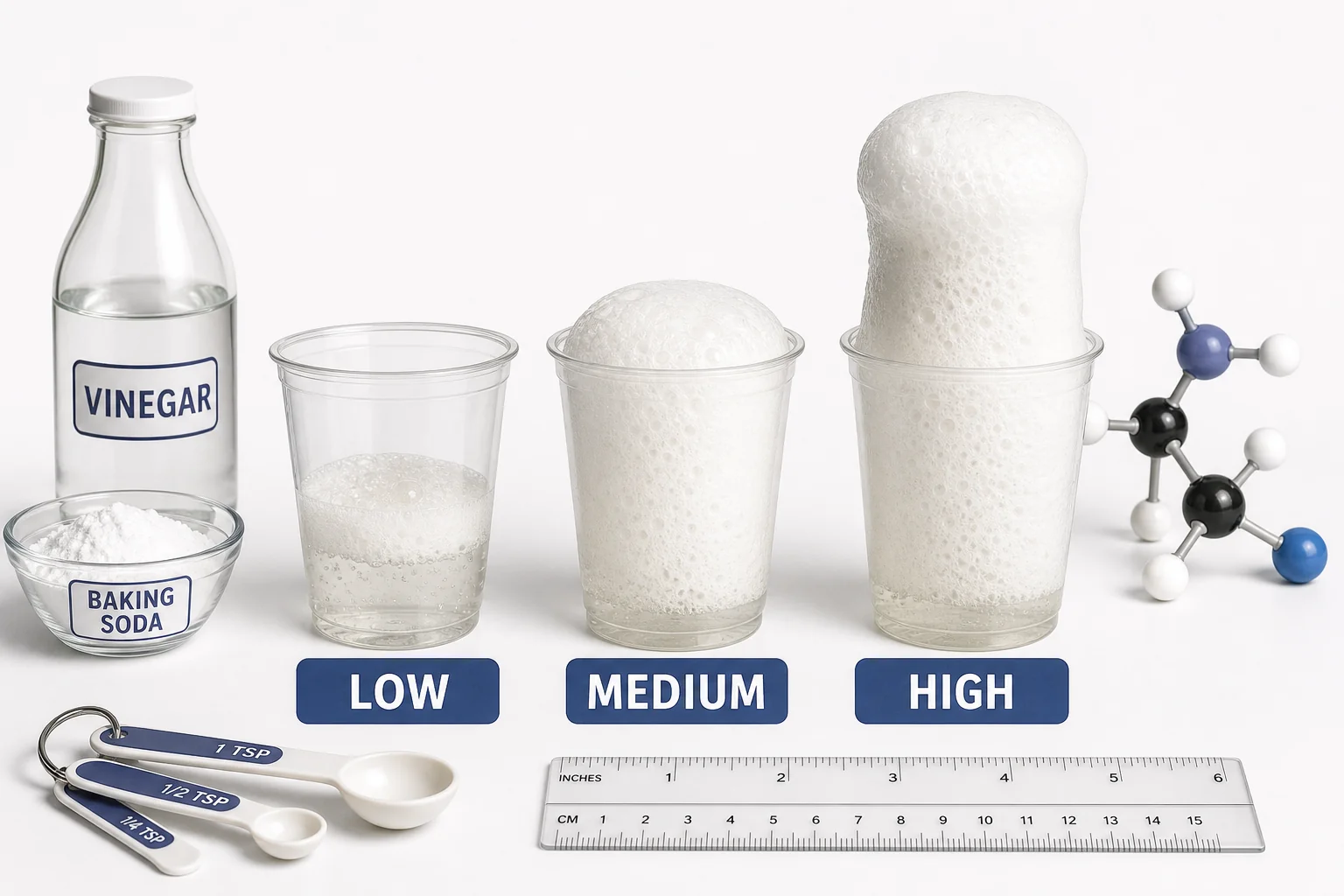
More fizz happens only when both reacting materials are available.
Vocabulary
- Chemical reaction
- A change in which substances become different substances.
- Acid
- A substance that can react with certain materials, including baking soda. Vinegar contains acetic acid.
- Base
- A substance that can react with an acid. Baking soda acts as a base in this reaction.
- Carbon dioxide
- A colorless gas made during the vinegar and baking soda reaction.
- Product
- A substance made by a chemical reaction.
- Conservation of matter
- The idea that matter is not created or destroyed during ordinary changes, even when it changes form or location.
In the Classroom
Balloon gas test
20 minutes | Grades 3-5
Place vinegar in a small bottle and baking soda in a balloon. Attach the balloon, tip in the powder, and watch the balloon inflate as carbon dioxide forms. Students compare the balloon before and after to identify evidence of a gas.
Open cup and sealed bag
30 minutes | Grades 4-5
Run the reaction once in an open cup and once in a sealed plastic bag. Students predict what will happen to the mass in each setup, then measure before and after. The comparison supports conservation of matter.
Fizz amount investigation
35 minutes | Grades 3-5
Keep the vinegar amount the same and change the amount of baking soda in three trials. Students record foam height or balloon size and look for a pattern. Discuss why the fizz stops when one reactant runs out.
Key Takeaways
- • Vinegar and baking soda react because acid particles meet bicarbonate particles.
- • The fizz is carbon dioxide gas made during the reaction.
- • Water and sodium acetate also form, even though they are harder to see.
- • Matter is not destroyed when the gas escapes into the air.
- • Changing the amounts of vinegar or baking soda can change how much gas forms.