Sign in to save

Bookmark this page so you can find it later.

Sign in to save

Bookmark this page so you can find it later.

Chemistry middle-school May 21, 2026

Why Does Cooking Change Food?

Heat rearranges food in useful ways
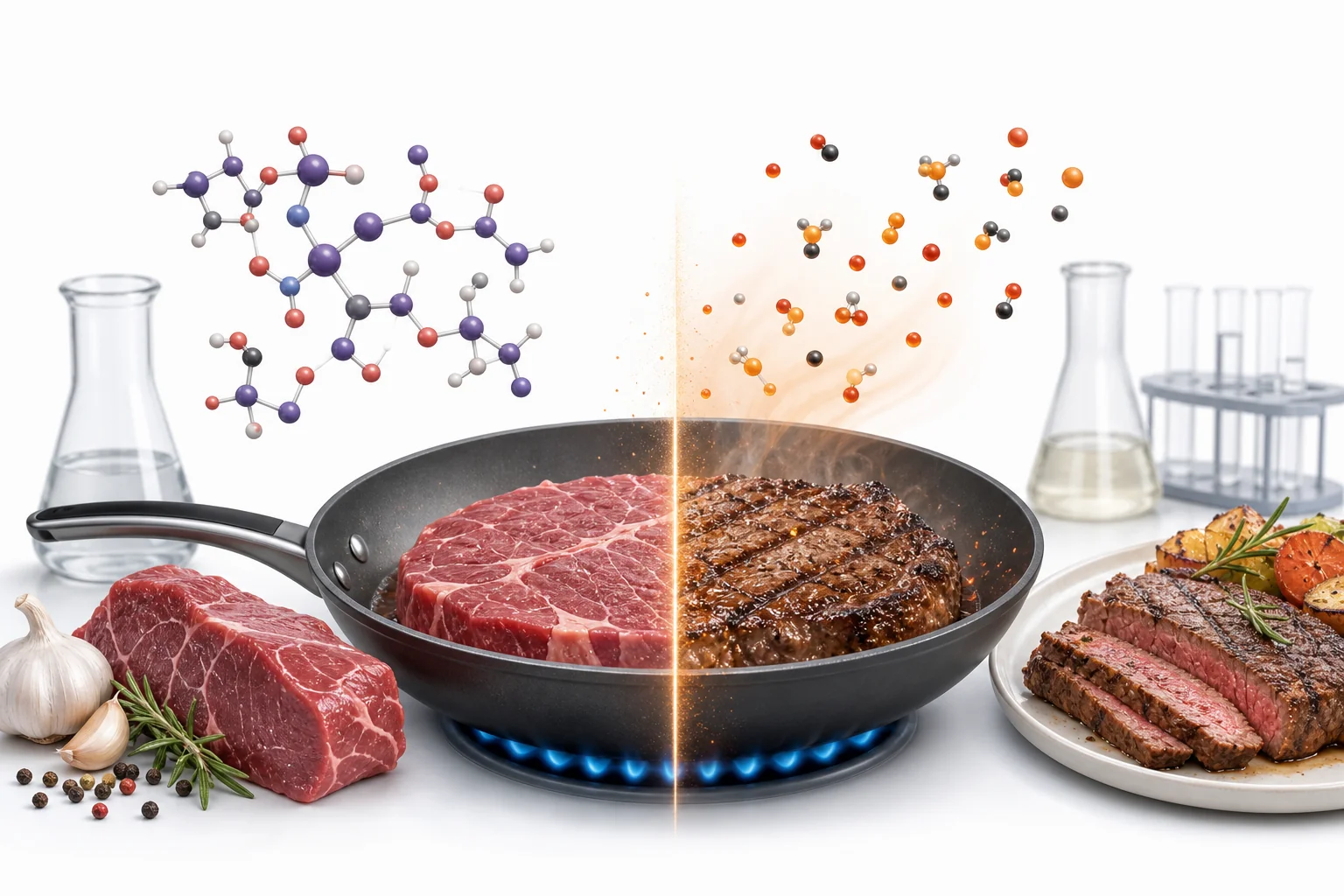
A science kitchen scene showing raw egg, cooked egg, bread browning, and pasta softening as examples of food changing during cooking.

Cooking changes food because heat gives tiny parts of food more energy. Some changes only move water or change shape, and some changes make new substances. That is why cooked food can look, smell, feel, and taste different from raw food.

Big Idea. NGSS MS-PS1-2 connects cooking to evidence that substances can change when their particles interact in new ways.

Cooking is chemistry you can see, smell, and taste. A raw egg turns solid. Bread becomes brown and crisp. Dry pasta bends and softens in boiling water. These changes happen because heat changes how particles move and how they stick together. Some cooking changes are physical changes. The food is still made of the same main substances, but its form changes. Melting butter is a simple example. Other cooking changes are chemical changes. New substances form, often with new smells, colors, and flavors. Toasting bread is one example. Middle-school chemistry asks students to use evidence to tell when substances are changing. Cooking gives clear evidence because the results are easy to observe. Students can connect these changes to particle motion, conservation of matter, and energy transfer. For a related classroom model, try the particle motion simulator.

Heat makes particles move
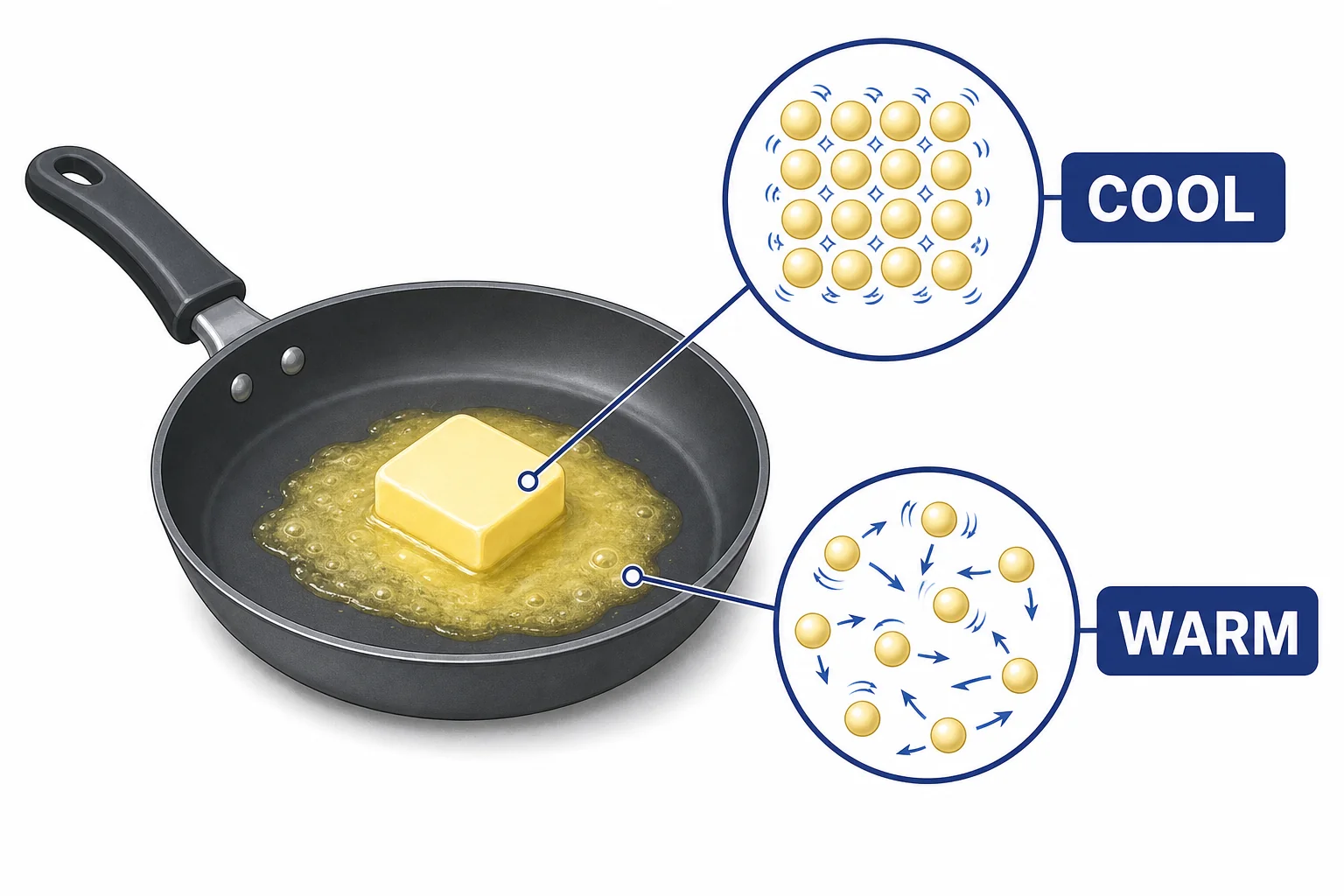
A pan warming butter with particle diagrams showing slower particles in solid butter and faster particles in melted butter.
Heat increases particle motion
Food is made of many kinds of particles, including water, sugars, proteins, fats, and starches. When food heats up, those particles move faster. Faster motion can weaken attractions that hold structures in place. That is why butter melts and why ice in a smoothie becomes liquid. These are physical changes because the particles are mostly the same before and after. Heat can also help particles bump into each other in ways that allow new bonds to form or old bonds to break. That is when a chemical change can happen. Cooking usually includes both types at once. A pancake batter spreads and loses water, which are physical changes. At the same time, its surface browns and forms new flavor compounds, which is a chemical change. The clues come from careful observation. Look for color change, new smells, gas bubbles, texture changes, or a change that is hard to reverse.

Heat changes how particles move, and that can change the food.

Physical changes in the pan
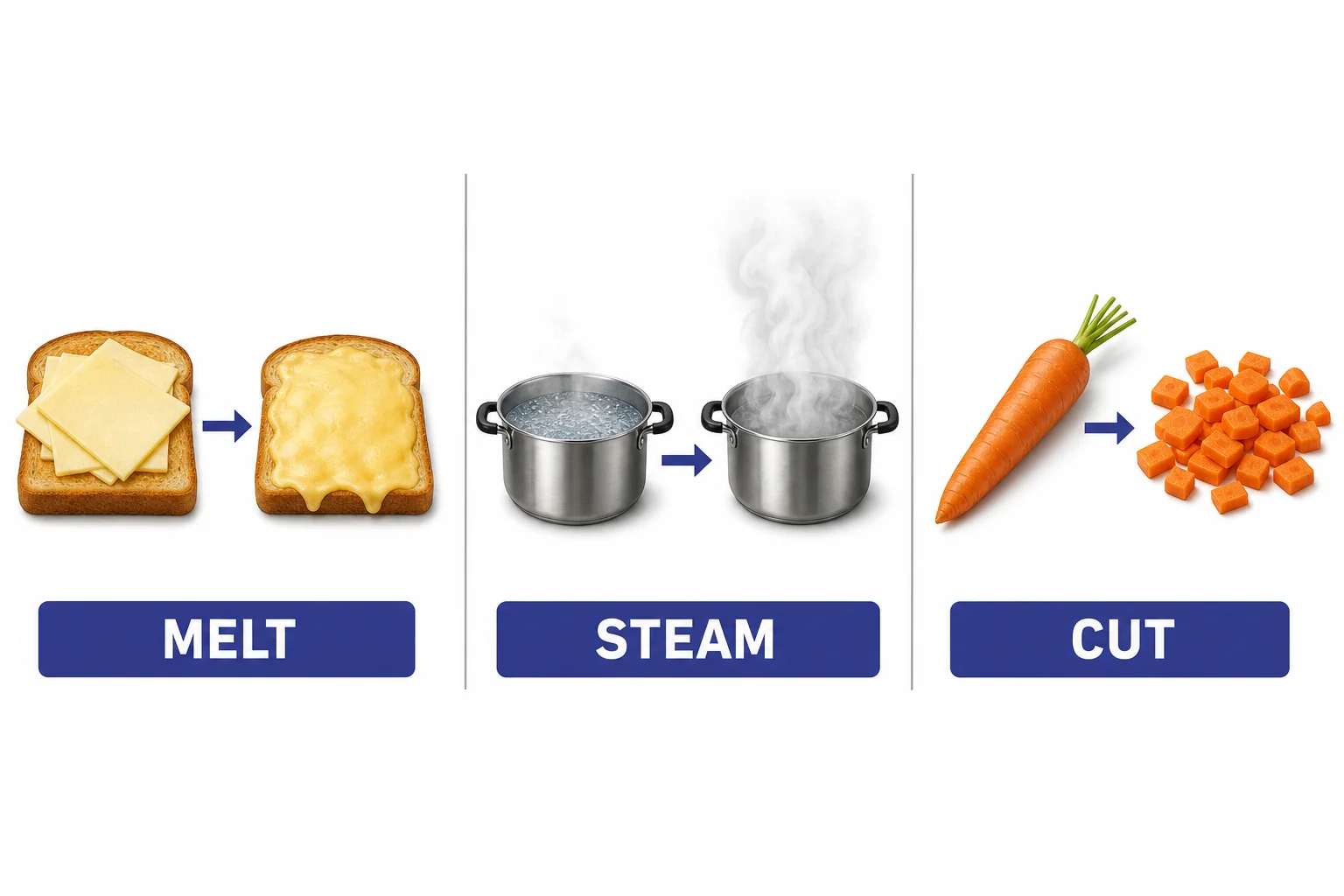
Examples of physical changes in cooking, including melting cheese, evaporating water, and chopped vegetables.
Physical changes alter form
A physical change changes the form or state of a substance without making a new substance. Melting, freezing, dissolving, cutting, and evaporating are common examples. Cooking uses many of them. Water in a soup can evaporate, which makes the soup thicker. Sugar can dissolve into tea. Cheese can melt on a sandwich. These changes can be important even when no new substance forms. They change texture, thickness, and how food feels in your mouth. Physical changes can also help chemical changes happen. If you chop an onion, you expose more surface area to air and heat. If water leaves the surface of bread, the surface can get hot enough to brown. Students can test physical changes by asking whether the same substance could be recovered. Water vapor from boiling soup can condense back into liquid water. Melted chocolate can harden again when cooled, although its texture may not return perfectly.

A physical change can affect texture without creating a new substance.

Proteins unfold and set
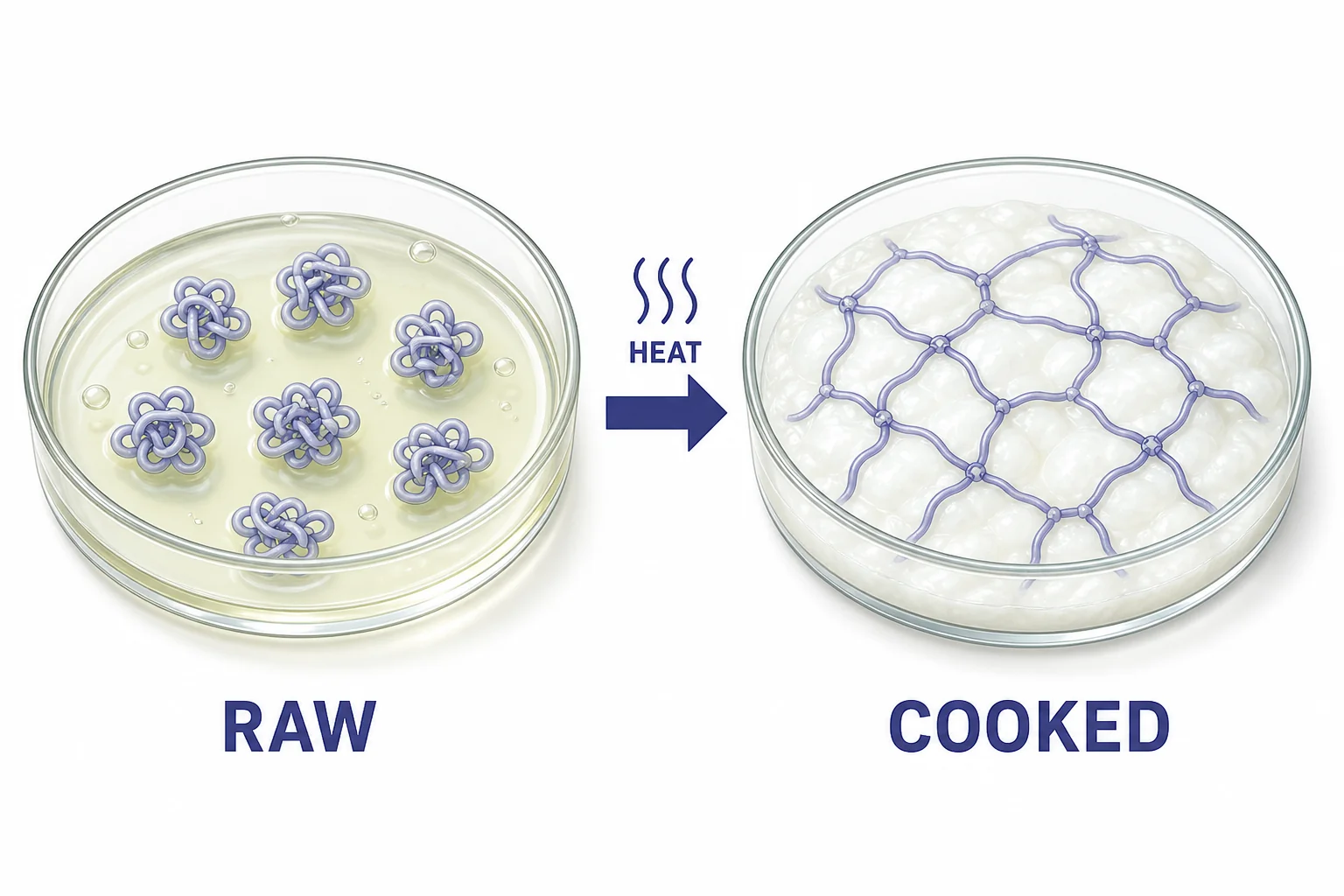
Protein molecules in raw egg white unfolding and linking together as the egg cooks.
Proteins unfold, then link
Proteins are long molecules folded into shapes. Those shapes matter. In raw egg white, protein molecules are folded and float in water. When the egg is heated, the proteins unfold. Then parts of different protein molecules stick to each other. This process is called denaturation. The loose network traps water and turns the clear liquid into a white solid. The same idea helps explain cooked meat, firm tofu, and some baked goods. This change is often hard to reverse because the new protein network is different from the starting arrangement. That does not mean matter disappeared. The atoms are still there, but they are arranged differently. This example fits NGSS MS-PS1 because students use evidence to explain how substances can have different properties after heating. In class, an egg is a strong model because color, texture, and flow change within minutes.

Heating proteins can change their shape and make food firm.

Starch swells in water
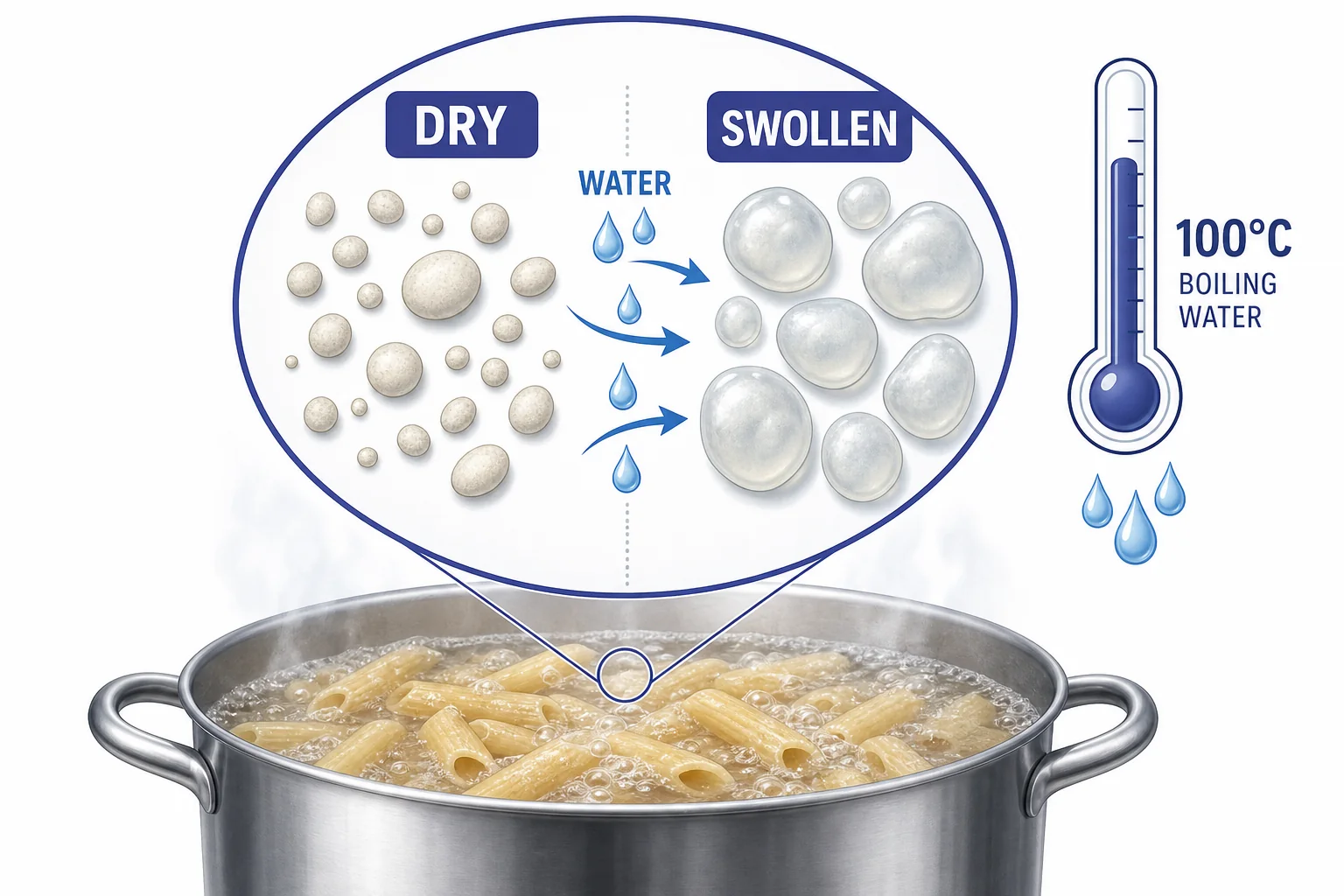
Starch granules in pasta absorbing water and swelling during boiling.
Water and heat soften starch
Many plant foods contain starch. Starch is common in pasta, rice, potatoes, oats, and flour. Starch grains are tiny packets made from long carbohydrate molecules. When starch is heated in water, water moves into the grains. The grains swell and soften. Some starch molecules leak out into the surrounding water. This process is called gelatinization. It explains why dry pasta becomes tender and why a sauce thickens when flour or cornstarch is cooked into it. This is not the same as gelatin dessert, even though the words sound related. Starch gelatinization depends on heat and water working together. If there is not enough water, the starch cannot swell well. If there is not enough heat, the grains stay firm. This is a useful example of how cooking changes properties such as softness, thickness, and shape without needing a flame.

Starch changes most when heat and water act together.

Browning makes new flavors
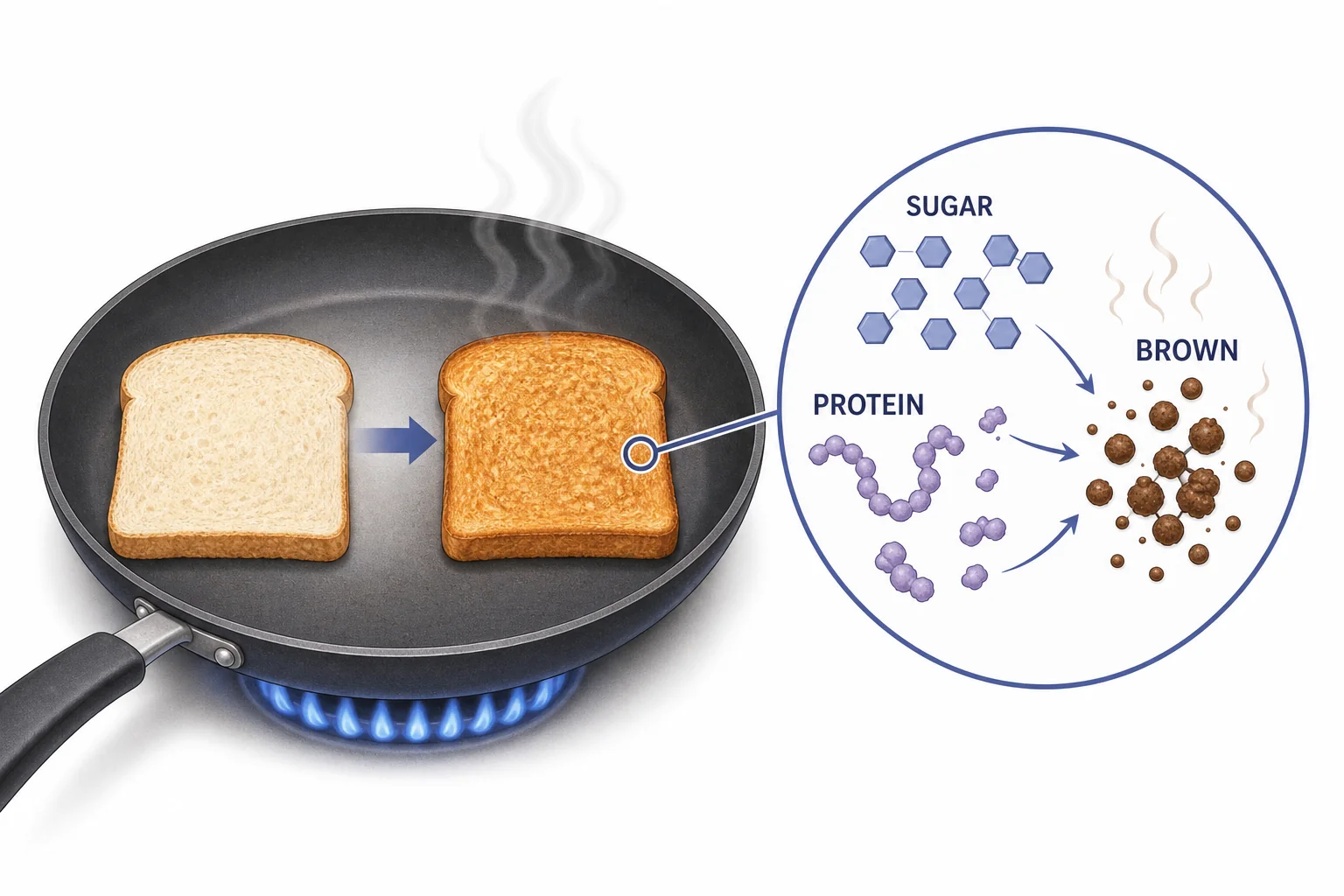
Toast browning as sugars and protein parts react on a dry hot surface.
Browning forms new substances
The brown crust on toast, roasted potatoes, seared meat, and cookies comes from chemical reactions. One important set of reactions is called the Maillard reaction. It happens when sugars and parts of proteins react on a hot, fairly dry surface. The reaction makes many new substances. Some are brown pigments. Others are smell and flavor compounds. This is why toasted bread smells different from plain bread. Water matters here too. A wet surface usually stays near the boiling point of water, which is not hot enough for strong browning. As the surface dries, its temperature can rise and browning speeds up. That is why boiled potatoes do not brown much, but roasted potatoes do. Burning is different. If food gets too hot for too long, reactions can produce bitter flavors and black carbon-rich material. Cooking is a balance between enough heat to create useful changes and too much heat that damages food.

Browning is evidence that new substances formed.

Vocabulary

Physical change
A change in form, size, or state that does not make a new substance.
Chemical change
A change that makes one or more new substances with new properties.
Denaturation
A change in a protein's shape, often caused by heat, acid, or stirring.
Starch gelatinization
The swelling and softening of starch grains when they are heated with water.
Maillard reaction
A set of browning reactions between sugars and protein parts that creates new colors, smells, and flavors.

In the Classroom

Egg white before and after heating

20 minutes | Grades 6-8

Students observe raw egg white and cooked egg white with a focus on color, flow, and texture. They use the evidence to decide which changes are physical and which suggest a chemical change.

Cornstarch sauce test

25 minutes | Grades 6-8

Students mix cornstarch with cold water, then compare it with a heated cornstarch mixture. They record how thickness changes and connect the result to starch grains swelling in water.

Toast browning evidence chart

15 minutes | Grades 6-8

Students compare bread before toasting, lightly toasted bread, and dark toast. They make an evidence chart using color, smell, texture, and reversibility to support a claim about chemical change.

Key Takeaways

  • Cooking changes food because heat changes particle motion and interactions.
  • Physical changes alter form or state without making a new substance.
  • Chemical changes make new substances with new properties.
  • Proteins can unfold and link together when heated.
  • Browning reactions create new colors, smells, and flavors on hot dry surfaces.