Understanding Simple Machines for Kids
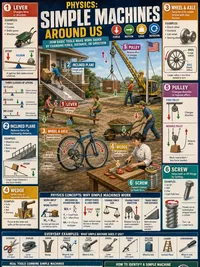
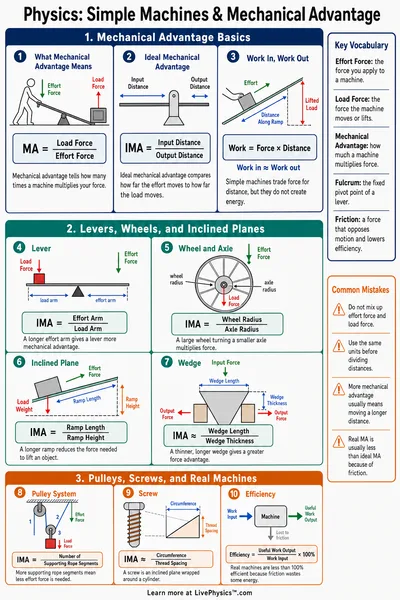
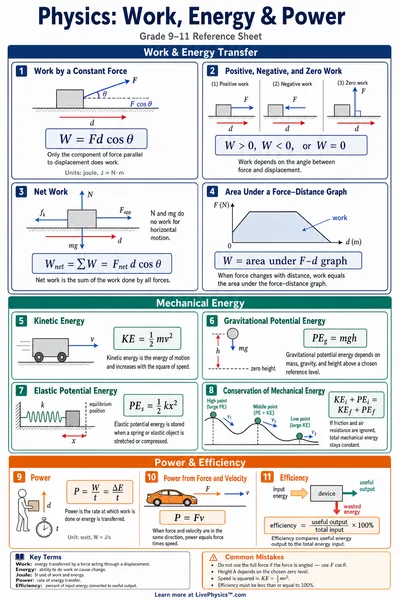
A simple machine does not remove the need for work. It changes how force is used, often by letting you push or pull with less force over a greater distance. This trade is important because lifting a heavy object straight up may be hard, while moving it slowly along a longer path can be manageable.
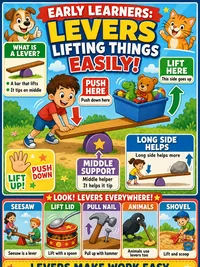
A lever turns around a fixed point called a fulcrum. A long handle gives your force more turning effect, so a crowbar can lift a heavy rock when the fulcrum is placed close to the rock. Scissors, bottle openers, seesaws, tongs, and your forearm are lever systems, though some are designed to increase speed rather than make a force smaller.
A ramp reduces the force needed to raise an object because the object gains height gradually. A longer ramp usually needs less pushing force, but you must push the load farther. Wheelchair ramps, loading ramps at trucks, and winding mountain roads use this same idea, so their slope matters a great deal.
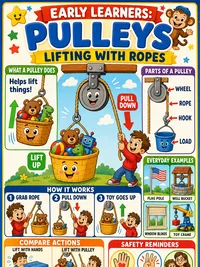
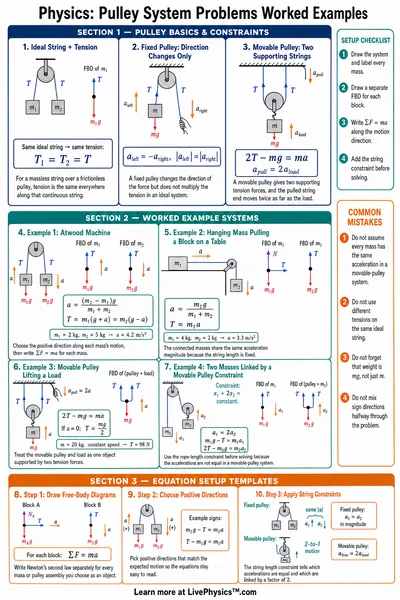
A pulley uses a rope around a wheel to change the direction of a pull or to share a load between sections of rope. A single fixed pulley is useful when pulling down is easier than pulling up, such as raising a flag. Several pulleys together can reduce the force needed to lift a load, but the rope must be pulled through a longer distance and friction can make the real result less perfect.
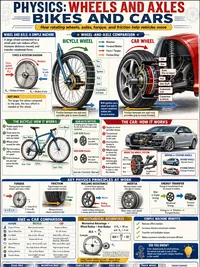
A wheel and axle works because a force applied at the edge of a large wheel can create a strong turning effect at a smaller axle. Door knobs, screwdrivers, steering wheels, and bicycle pedals use this principle in different ways. When studying simple machines, pay attention to the direction of the force, the distance moved, friction, and the location of the turning point, since these details explain why one setup feels easier than another.